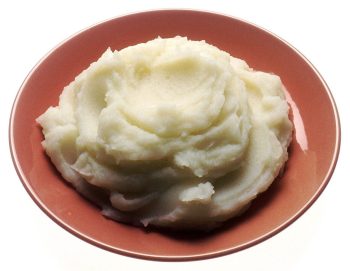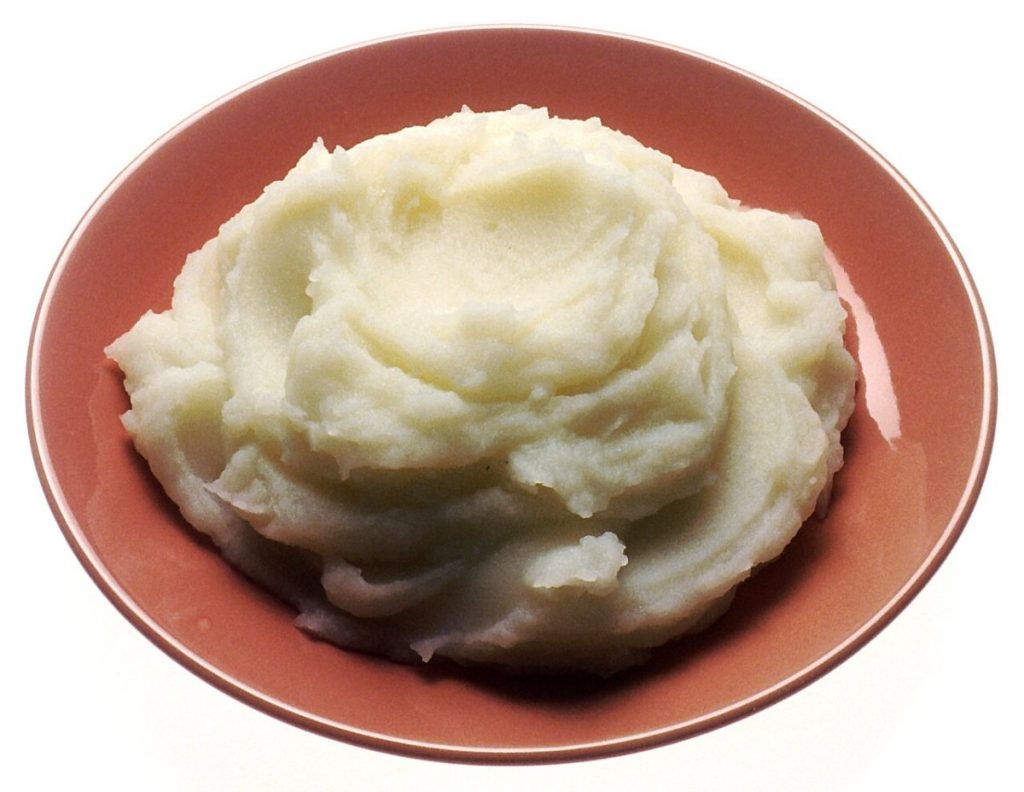
To make mashed potatoes, peel and cut starchy potatoes into even chunks, start them in cold salted water, and simmer until a knife slides in with no resistance. Drain well, let them steam dry for a minute, then mash or rice them and fold in warm butter and warm milk. Season to taste and serve hot.
The difference between fluffy and gluey comes down to three choices: the potato, the tool and how hard you work them. This guide covers all three, plus quantities for a crowd and a make-ahead plan for busy holiday kitchens.
Key facts
- Russets give the fluffiest mash; Yukon Golds give a creamier, buttery one. Waxy red potatoes suit chunky, skin-on mash.
- Plan about 1/2 pound of raw potatoes per person, a little more for leftovers.
- Start potatoes in cold water so they cook evenly from edge to center.
- Warm the butter and milk before adding them.
- Never use a blender or food processor; it makes potatoes gluey.
- Refrigerate leftovers within 2 hours and eat them within 3 to 4 days.
In this guide
- Which potatoes are best for mashing?
- What you need
- How do you make mashed potatoes step by step?
- Masher, ricer or mixer: which tool should you use?
- Can you make mashed potatoes ahead?
- How do you fix gluey or runny mashed potatoes?
- FAQ
Which potatoes are best for mashing?
Potatoes vary in how much starch they hold, and starch is what makes mash light or dense. Potatoes USA’s guide to potato types groups them into starchy russets, all-purpose yellows and waxy reds, and that split maps neatly onto mashing.
| Potato | Texture when mashed | Best for |
|---|---|---|
| Russet (Idaho) | Light, fluffy, absorbs butter and milk | Classic holiday mash |
| Yukon Gold or other yellow | Dense, creamy, naturally buttery | Rich, smooth mash; holds well when made ahead |
| Red or other waxy | Firm, can turn pasty if overworked | Smashed, skin-on potatoes |
Can’t decide? Use half russets and half Yukon Golds. You get the fluff of one and the flavor of the other.
What you need
This serves 6 to 8 as a side.
- 4 pounds russet or Yukon Gold potatoes
- 1 tablespoon kosher salt for the cooking water, plus more to taste
- 1/2 cup (1 stick) unsalted butter
- 1 to 1 1/2 cups whole milk, half-and-half or a mix
- Black or white pepper
- Optional: a few garlic cloves, a bay leaf, chives, sour cream or cream cheese
How do you make mashed potatoes step by step?
- Peel and cut evenly. Peel the potatoes and cut them into roughly 1 1/2-inch chunks. Pieces the same size cook at the same speed, so none turn to mush while others stay hard. Rinse off the surface starch.
- Start in cold water. Put the potatoes in a large pot, cover with cold water by an inch and add the salt. Add a couple of peeled garlic cloves or a bay leaf if you like. Starting cold lets the centers cook through before the outsides fall apart.
- Simmer gently. Bring to a boil, then lower the heat to a steady simmer. Cook 15 to 20 minutes, until a paring knife slides into the biggest piece with no resistance.
- Warm the dairy. While they cook, heat the butter and milk together in a small pan until the butter melts. Cold dairy cools the potatoes and makes them gummy as you stir.
- Drain and steam dry. Drain well, then return the potatoes to the hot, empty pot over low heat for a minute, shaking gently, so the excess moisture steams off. Dry potatoes soak up more butter.
- Mash or rice. Mash by hand or press through a ricer straight back into the pot. Stop as soon as they’re smooth.
- Fold in the dairy. Pour in about two-thirds of the warm butter and milk and fold with a spatula. Add more until you reach the texture you like.
- Season and serve. Taste, then add salt and pepper. Serve hot, with a pat of butter on top or a ladle of turkey gravy from the pan drippings.
Masher, ricer or mixer: which tool should you use?
Every time you crush a cooked potato cell, it releases starch. A little starch gives a creamy body. A lot turns mash into paste. The tool decides how much you release.
- Potato ricer or food mill: the smoothest, lightest result with the least work. Best for silky holiday mash.
- Hand masher: rustic and slightly lumpy, which many people prefer. Fine for any potato.
- Hand or stand mixer: fast and fluffy if you use the lowest speed for 30 seconds or so. Go longer and texture suffers. Our stand mixer vs hand mixer guide explains which suits small batches.
- Blender, food processor or immersion blender: skip them. The blades shear the potato and you’ll get glue.
Can you make mashed potatoes ahead?
Yes, and it frees up a burner on the big day. Make them up to two days ahead with a little extra butter, spread them in a shallow dish so they cool quickly, cover and refrigerate. To reheat, warm them gently in a covered baking dish at 350°F, in a slow cooker on low, or in a heavy pot over low heat with a splash of hot milk, stirring until steaming. Our one-oven Thanksgiving dinner plan shows how to fit reheating around the turkey.
On food safety, the advice from FoodSafety.gov is to refrigerate cooked food within 2 hours of cooking (1 hour if it’s above 90°F). Leftovers should be eaten within 3 to 4 days and reheated until hot all the way through, to 165°F. For ideas on using them up, see our four-day Thanksgiving leftovers plan.
How do you fix gluey or runny mashed potatoes?
Gluey or gummy
You can’t undo overworked starch, but you can disguise it. Spread the potatoes in a buttered baking dish, top with cheese or breadcrumbs and bake until golden. Nobody will mind.
Runny
Stir them in the pot over low heat for a few minutes to drive off moisture, or fold in a spoonful of instant potato flakes. Next time, add the milk gradually.
Lumpy
The potatoes were undercooked. Push them through a ricer or sieve, or simmer the lumps in a little milk until soft and mash again.
Bland
Salt the cooking water properly next time. For now, add salt a pinch at a time, plus more butter, and taste again.
FAQ
How many potatoes do I need per person?
About 1/2 pound of raw potatoes per person, or roughly one medium russet. Add a pound or two if you want leftovers.
Should I peel potatoes for mashed potatoes?
Peel russets for smooth mash. Thin-skinned Yukon Golds and reds can be left unpeeled for a rustic version; just scrub them well.
Why are my mashed potatoes gluey?
They were overworked, usually in a blender or food processor or by beating too long. Waxy potatoes also turn pasty more easily than russets.
Can I use something other than milk?
Yes. Half-and-half or cream makes them richer, warm stock makes them lighter, and olive oil with an unsweetened plant milk makes them dairy-free.
Can I freeze mashed potatoes?
Yes, especially rich ones made with plenty of butter or cream. Freeze in flat bags, thaw in the fridge and reheat with a splash of milk, stirring well.
The short version
Pick russets or Yukon Golds, cut them evenly, start them in cold salted water, dry them after draining, and add warm butter and milk with a gentle hand. That’s the whole secret. Find more holiday sides in our recipe collection.
Featured photo: Mashed Potatoes by Renee Comet, public domain.