The short answer to stand mixer vs hand mixer: if you bake bread, make big batches of cookie dough, or whip egg whites often, a stand mixer earns its counter space. If you mostly make cakes from a box, whip cream and mash the odd batch of potatoes, a good hand mixer does the job, costs far less and lives in a drawer.
It comes down to what you cook, how often, and how much room you have. Power ratings on the box won’t tell you much, so it helps to know what actually separates the two.
Below is a side-by-side comparison, then a closer look at power, capacity, specific tasks, attachments, footprint and cost tiers, so you can match the machine to your kitchen.
Key takeaways
- Stand mixers do everything a hand mixer can and handle thick batters and bread dough far better.
- Consumer Reports notes that wattage and number of speeds don’t necessarily translate into better performance.
- America’s Test Kitchen says kneading by hand can take up to 25 minutes versus about 8 in a stand mixer with a dough hook.
- Hand mixers suit light jobs like whipped cream, egg whites and cake batter, and store easily.
- Measure the space under your cabinets before buying a stand mixer.
Stand mixer vs hand mixer, side by side
| Stand mixer | Hand mixer | |
|---|---|---|
| Best at | Bread dough, stiff cookie dough, big batches, long whipping | Whipped cream, egg whites, cake batter, small jobs |
| Hands-free? | Yes | No, you hold and move it |
| Heavy dough | Built for it with a dough hook | Usually not up to the job |
| Attachments | Paddle, whisk, dough hook; optional add-ons | Beaters, sometimes a whisk or hooks |
| Storage | Counter space or a heavy lift from a cabinet | A drawer or cabinet |
| Cost tier | Mid to high | Low to mid |
| Best for | Regular bakers and bread makers | Occasional bakers, small kitchens |
That summary tracks Consumer Reports’ mixer buying guide: stand mixers can do everything hand mixers can do and are more capable with thick batters and bread dough, while hand mixers are easy to store and don’t need counter space.
Power: why wattage is a poor guide
It’s tempting to compare watts and assume the bigger number wins. Consumer Reports says manufacturers tend to emphasize wattage and number of speeds, but neither figure necessarily translates into better performance. A well-designed mixer with a lower rating can outwork a poorly designed one with a higher figure.
It also says three well-differentiated speeds are sufficient on a hand mixer. A dial with a dozen settings that all feel similar isn’t an upgrade. Look instead for a low speed that genuinely starts slowly, so flour and sugar don’t fly out of the bowl.
How power shows up in practice
- Stiff dough: a stand mixer powers through without bogging down; a hand mixer will strain.
- Long jobs: the stand mixer keeps going while you do something else.
- Light mixtures: both are more than strong enough for cream, eggs and batter.
Buy the mixer for the hardest thing you bake every month, not the hardest thing you might bake once a year.
Capacity and the tasks that decide it
Bowl size is where stand mixers pull away. A stand mixer comes with its own bowl, sized for full batches of dough, while a hand mixer can work in any bowl you own. Check the bowl capacity on any model against the largest recipe you make regularly, like a double batch of cookie dough or two loaves of bread.
Bread dough
This is the clearest divide. America’s Test Kitchen says it takes up to 25 minutes to knead dough by hand and about 8 minutes in a stand mixer with the dough hook, and that hand kneading often leads cooks to add too much flour. A hand mixer isn’t a substitute. Consumer Reports says hand mixers usually aren’t up to kneading bread and that trying can tax the motor beyond its capability.
One caution even for stand mixer owners: America’s Test Kitchen notes that prolonged running of the motor can, over time, cause the latch that locks the tilt head on some mixers to stop working. Knead only as long as the recipe needs.
Meringue and whipped egg whites
Both mixers whip egg whites well. America’s Test Kitchen recommends a very clean metal bowl and a pinch of cream of tartar for stability. Soft peaks droop slightly from the whisk, stiff peaks stand up tall, and over-whipped whites look curdled and separated, which means starting over.
The difference is endurance. A big batch of meringue or a Swiss buttercream can take several minutes of continuous whipping, which is easy with a stand mixer’s whisk and tiring with a hand mixer. For a single batch of topping for a pie, the hand mixer is perfectly fine and gives you more control.
Everyday jobs
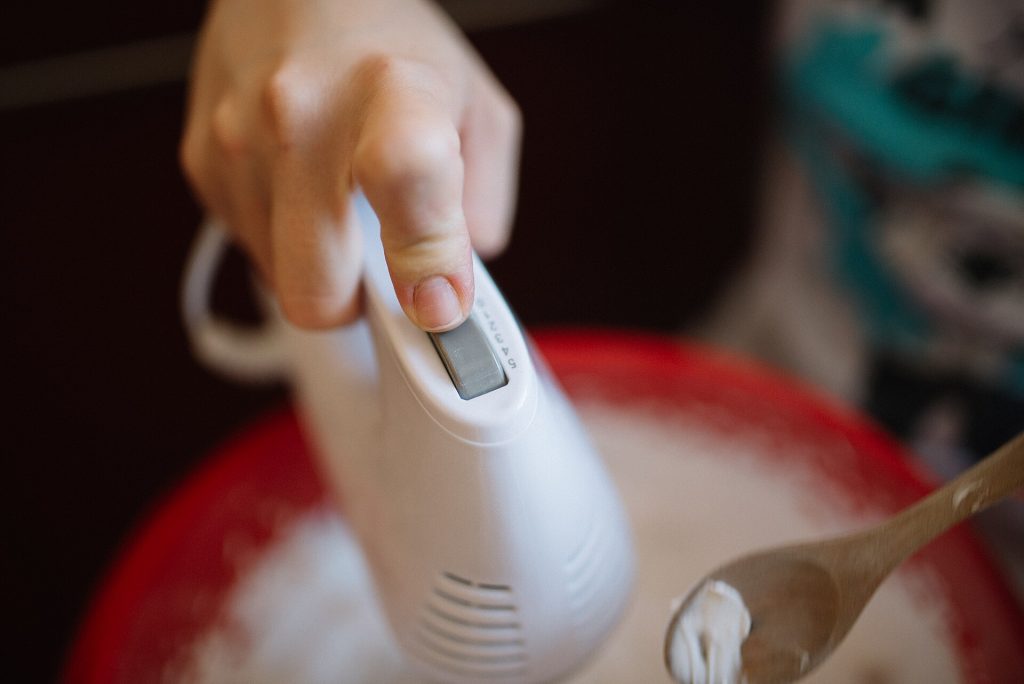
Cake batter, whipped cream, mashed potatoes and quick frostings are hand mixer territory. Consumer Reports lists whipping cream or egg whites, mixing cake batter, and making mayonnaise or aioli from scratch among the light-duty tasks hand mixers excel at.
Attachments and footprint
What comes in the box
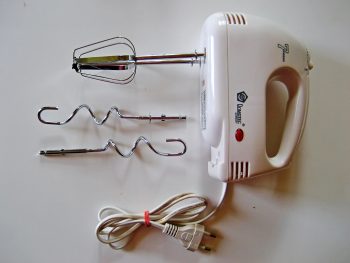
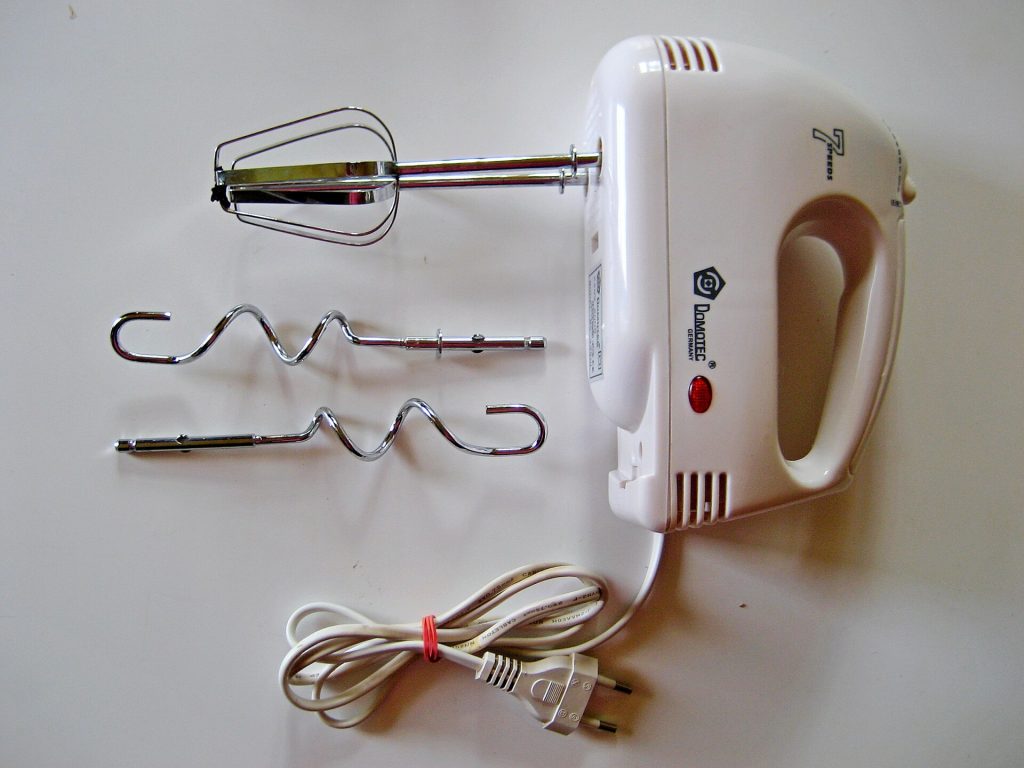
Consumer Reports says most stand mixers come with a paddle, whisk and dough hook, and premium models can take extras like pasta makers, spiralizers and meat grinders. If you’d genuinely use those, a stand mixer becomes a small kitchen system rather than a single tool. Hand mixers usually come with beaters and sometimes a whisk or dough hooks.
On hand mixers, Consumer Reports suggests looking for wire beaters without the thick center post of traditional beaters, because they are easier to clean.
Footprint and weight
Stand mixers are heavy and take up counter space, or must be lifted out of a cabinet to use, which Consumer Reports notes can be challenging given their weight. Before you buy, check that there’s enough clearance between your counter and the bottom of your cabinets.
- Tilt-head stand mixers: the head tips back to add ingredients and change the bowl. Measure clearance with the head raised.
- Bowl-lift stand mixers: a lever raises and lowers the bowl while the head stays still, which can suit lower cabinets.
- Hand mixers: store in a drawer, often with a case for the attachments.
Cost tiers and who each one suits
Prices move constantly, so think in tiers rather than numbers. Consumer Reports’ testing makes the point that a lower price doesn’t have to mean poor performance, especially for hand mixers.
- Entry hand mixer: fine for occasional cakes and cream. Prioritize a slow first speed and easy-release beaters.
- Mid-range hand mixer: steadier motor, better beaters, a storage case. The sweet spot for most small kitchens.
- Entry stand mixer: hands-free mixing for regular cookie and cake bakers. Check it handles a stiff dough before relying on it for bread.
- Mid to premium stand mixer: heavier build, larger bowl and an attachment hub. Worth it if you bake bread weekly or want pasta and grinding attachments.
Who should buy which
- Get a stand mixer if you make bread or pizza dough, bake in big batches, or whip meringues and buttercream often.
- Get a hand mixer if you bake a few times a month, have little counter space, or mostly whip cream and mix batters.
- Get both if you bake a lot. A hand mixer is handy for quick jobs when hauling out the big machine feels like overkill.
FAQ
Can a hand mixer knead bread dough?
Not well. Consumer Reports says hand mixers usually aren’t up to kneading bread, and trying can overwork the motor. Knead by hand or use a stand mixer.
Is a higher-wattage mixer always better?
No. Consumer Reports says wattage and number of speeds don’t necessarily translate into better performance. Look at test results and design instead.
Which is better for meringue?
Both can whip stiff peaks. A stand mixer is easier for large batches or long whipping; a hand mixer is fine for smaller amounts.
Is a tilt-head or bowl-lift stand mixer better?
Neither is universally better. Tilt-head designs are easy to use but need clearance when raised; bowl-lift models suit lower cabinets.
Make the call with your recipe box
Pull out the recipes you actually made in the last three months and count how many needed dough, big batches or long whipping. If that number is high, get the stand mixer. If not, a good hand mixer will serve you well. For more tools worth the drawer space, browse our kitchen gear guides, and try the machine out on an easy homemade bread or a big batch of cookies.
Featured photo: Миксер ДОМОТЕК by Schekinov Alexey Victorovich, BY-SA 4.0.