- Many layout issues come from rushed or owner-led decisions without input from service staff
- Poor design leads to slow service, higher labour costs, and staff burnout
- Chefs often notice inefficiencies early but aren’t involved in the design process
- Improvements can often be made without major renovations or downtime
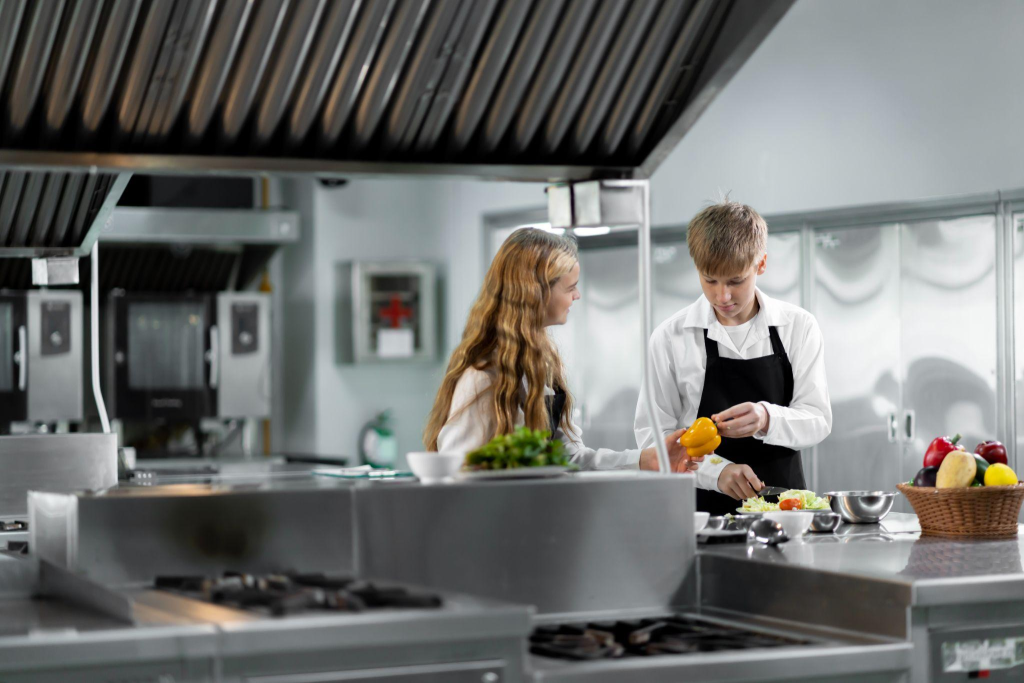
You can tell when a kitchen layout was designed by someone who’s never worked a busy Saturday night. You feel it in the tight corners, the awkward reach to the coolroom, and the constant bumping of elbows during prep. If your team is always stepping over each other or shifting trays mid-rush, it’s not just bad luck — it’s a bad fitout.
Many owners underestimate the impact of their kitchen’s layout on the rhythm of service. It’s not just about fitting equipment into a space. It’s about the invisible flow — how food moves, how staff communicate, how quickly things reset between dockets. And when the layout isn’t correct, no amount of staff training or expensive equipment will fix it.
The speed problem no one notices until service starts
Everything may appear fine when you first open it. Benches are polished, appliances are in, and the workflow makes sense on paper. But once service kicks off, cracks start to show. Your staff are constantly sidestepping each other. Plates are stacking up near the pass. The fryer is too close to the grill, allowing heat to build up in the wrong spots. Or worse, key ingredients are stored metres from the prep station.
What’s happening is death by a thousand tiny inefficiencies. Each misplaced sink, fridge, or bench adds seconds to every task. That doesn’t sound like much until it multiplies across dozens of tickets per night. Suddenly, your kitchen’s running behind, wait staff are stalling at the pass, and your diners are left wondering why it’s taking so long for a chicken schnitzel.
These delays aren’t always evident at first. But over time, they drain your team. Prep takes longer. Clean-down runs late. Staff fatigue builds. And because the layout is fixed, the problem doesn’t go away — it just becomes the new normal.
Why professional planning beats doing it on the fly
Many restaurant kitchens are put together based on intuition. You find yourself shifting appliances around to make room for a new prep bench, or squeezing in a coolroom wherever it fits. It might seem efficient in the moment, especially if you’re racing to open on time, but these kinds of decisions usually come back to bite during service.
That’s why the most efficient kitchens tend to come from proper planning. It’s not just about choosing equipment — it’s about understanding how people move through the space, where bottlenecks happen, and how service can keep flowing even when you’re three tickets deep. That level of thinking is at the heart of good commercial kitchen design, although most people don’t refer to it as such. They just know it works.
The kitchens that hold up best over time usually aren’t the flashiest or the most expensive. They’re the ones where chefs can turn, reach, and move without bumping into someone. Where everything has a logical spot and nothing important is out of arm’s reach. Getting that right takes more than common sense — it takes someone who’s built spaces specifically for high-volume, high-pressure service. And when it’s done well, you’ll feel the difference every single shift.
The real cost of an inefficient kitchen
It’s easy to view kitchen fitouts as a one-time capital expense. However, what often gets overlooked is how much money a poorly designed space can cost over time. Staff turnover, for one, tends to spike in kitchens that are frustrating to work in. When every shift feels like a battle with the layout, even your best team members begin to think about leaving.
Then there’s the added labour. Extra minutes per task might not sound like much until you’re paying two people to do the work that one person could handle in a more efficient space. Multiply that across months, and your payroll starts carrying a problem that isn’t on the books.
Even compliance becomes harder. In tight kitchens, the risk of cross-contamination increases. Cleanliness slips. Gear wears down faster from being crammed into corners it wasn’t meant for. You may not notice it until the health inspector points it out — or worse, when a serious incident forces a shutdown.
Profit margins in hospitality are already razor-thin. When your layout is slowing everything down, you’re not just losing time — you’re losing money.
What chefs wish they could say during the build
If you’ve ever seen a chef walk through a new kitchen and quietly frown, chances are they’ve already spotted the problems. The door that opens into the wrong space. The oven is too far from the pass. The storage that somehow ended up nowhere near the prep area. These things seem minor during construction, but chefs know they’ll cause headaches later.
Most cooks aren’t involved in the design process, even though they’re the ones who will be using the space daily. And while a few might speak up, many don’t — either because decisions are already made, or because they’ve learned not to bother.
The result is a fit-out that looks great on handover day but never quite feels right during service. It might pass inspections, meet safety codes, and impress guests who peek into the kitchen, but the people working the line know it’s harder than it needs to be.
If chefs had more input early on, they’d probably ask for simpler things: better sightlines to the pass, fewer pinch points, and enough workspace to keep hot and cold tasks separate. These aren’t extravagant requests — they’re the practical details that make long shifts more bearable and service more consistent.
Fixing the problem doesn’t always mean starting over
If your kitchen’s already built and running, tearing it apart probably isn’t realistic. The good news is that most layout problems can be improved without a complete overhaul. It starts with identifying exactly where the friction points are. Maybe it’s a prep station that’s too far from storage, or a pass that’s constantly overcrowded. Once you pinpoint the issue, even small changes can have a significant impact.
Shifting a fridge, adding mobile benches, or reorganising storage can ease pressure during peak hours. Even adjusting workflows — like where dockets are placed or how plating areas are structured — can reduce chaos and speed things up. These are things a good consultant can help you spot quickly, especially if they’ve worked in hospitality themselves.
The key is not to accept daily frustration as just part of the job. When staff are working around the layout instead of with it, you’re missing out on the efficiency you’ve already paid for. Even modest tweaks can make the kitchen feel more spacious and the work feel less like a constant workaround.