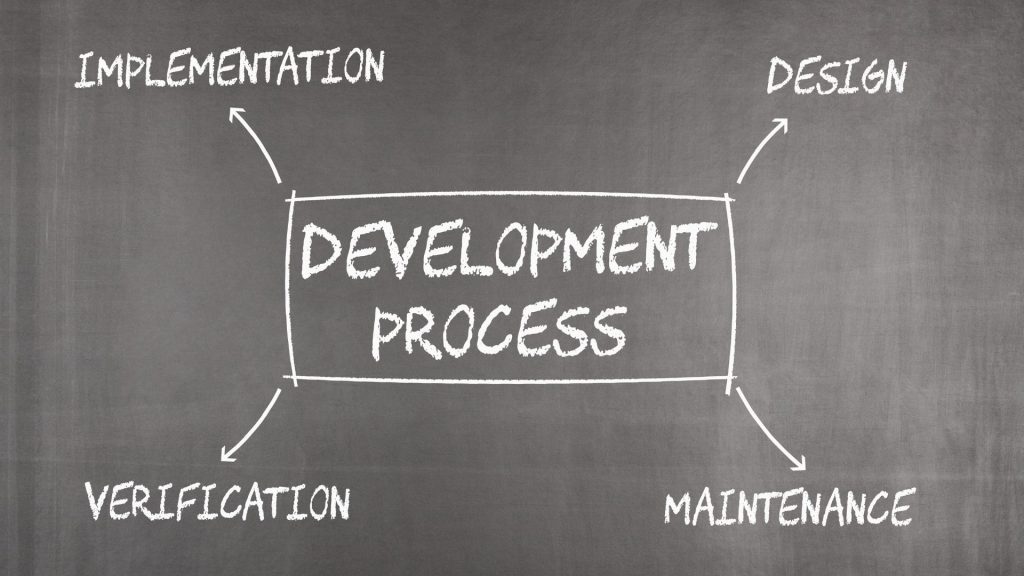
Most companies pour enormous resources into product development and still end up with something the market simply doesn’t want. Here’s a number that should stop you cold: approximately 80–85% of consumer products fail within two years. That’s not a minor hiccup, that’s a systemic problem. The encouraging part? It’s largely preventable. Teams that follow a structured, intentional product development process consistently improve their odds of building what the market actually wants. Let’s walk through exactly what that looks like.
The Modern Product Development Process: Key Stages and Why They Matter
A strong foundation changes everything. The product development process isn’t just a list of steps you tick off, it’s a living, breathing system connecting ideation, testing, iteration, and launch into one coherent workflow.
From Concept to Market: Mapping the Full Journey
Every product worth building starts with a problem genuinely worth solving. From there, teams move through research, concept validation, design, prototyping, and production. Each phase informs the next. Skip one, and you’ll almost always pay for it twice in time, money, and morale.
A company that specializes in rapid prototyping and on-demand manufacturing regularly partners with product teams to bridge early design concepts and production-ready parts. Their use of 3d printing prototype methods allows ideas to be validated far sooner, compressing traditional timelines and enabling faster iteration cycles well before any commitment to full-scale production.
Early Testing and Feedback Cycles
Here’s a mistake you’ve probably seen or made: waiting until a product feels “finished” before gathering real feedback. It’s one of the most expensive habits in product development. Early user testing, even with rough, imperfect prototypes, surfaces genuine problems while they’re still cheap to fix. Improving product quality starts here, not at the end of the line.
Understanding what’s at stake is step one. Now let’s look at how a structured development process actually turns ambitious ideas into market-ready results.
Building Better Products: Proven Product Design Best Practices
Knowing the stages is one thing. Executing them well is where competitive advantage is actually won. These are the product design best practices that consistently separate good products from genuinely great ones.
Embracing Human-Centered and User-Driven Design
Real customer insight isn’t gathered in a conference room; it never has been. Contextual interviews, usability testing, and journey mapping reveal pain points your internal team will almost certainly miss on their own. Involving real users early isn’t just a best practice; it’s the foundation of building better products that resonate beyond the launch window.
Leveraging Next-Gen Tools for Superior Product Quality
Deep user knowledge is your foundation. Pair it with the right tools, and you accelerate everything. AI-driven simulation, digital twins, and predictive analytics let teams catch design flaws before a single physical component gets manufactured, reducing both cost and risk in ways that are hard to overstate.
Agile Product Development: Speed and Flexibility in Action
Agile methodologies aren’t just for software teams anymore. Cross-functional teams running focused sprints with clear goals and honest retrospectives consistently outperform their traditionally structured counterparts. Teams that adopted agile hardware approaches saw a 20% drop in knowledge-processing time and 17% fewer engineering change orders annually. That’s measurable. That’s real.
Strong practices lay the groundwork, but organizations that truly future-proof themselves push further, rethinking development from the foundation up.
Smarter Development Strategies: Moving Beyond Conventional Methods
The teams winning today’s markets aren’t just executing faster. They’re thinking differently about how development works structurally, culturally, and strategically.
Integrating Automation and Digital Transformation
Automating repetitive workflows, QA documentation, regression testing, and approval routing frees your most skilled people for work that genuinely demands their expertise. Cloud-based collaboration tools ensure distributed teams stay aligned and moving, regardless of geography or time zone.
Automation sharpens how you build today. Sustainability ensures what you build stays relevant and responsible tomorrow.
Sustainability and Future-Proofing in Product Development
Designing for longevity, recyclable materials, waste reduction, and early regulatory alignment isn’t just an ethical stance. It’s increasingly a market expectation and a competitive differentiator. Customers notice. Regulators are catching up fast.
Designing with the future in mind requires commitment. Data keeps every decision honest and every process continuously improving.
Data-Driven Decisions for Product Excellence
Teams that track meaningful KPIs, defect rates, cycle times, and customer satisfaction scores make sharper decisions, faster. Improving product quality isn’t a project with a finish line. It’s an ongoing discipline, fueled entirely by honest, well-interpreted data.
From Prototype to Production: Compressing Your Time-to-Market
Even groundbreaking ideas stall without a clear, efficient path from early prototype to full production.
Maximizing MVPs With 3D Printing Prototypes
Organizations increasingly rely on a 3d printing prototype approach to accelerate MVP validation. Additive manufacturing lets teams produce and test tangible design models within days, not weeks, so flaws get caught and corrected early, when changes are far less disruptive and dramatically less expensive.
Manufacturing Readiness and Scaling Strategies
Applying Design for Manufacturability (DFM) principles early prevents the painful redesigns that derail scaling efforts. Lean manufacturing and just-in-time supply chain strategies further reduce overhead once production volumes climb.
Getting to market quickly matters enormously, but the most enduring products keep evolving long after launch day.
Continuous Feedback and Iteration: Sustaining Long-Term Product Quality
Post-launch isn’t the finish line. It’s where the next improvement cycle begins.
Creating Feedback Loops for Unmatched Quality
In-market feedback from actual users is the most honest signal your team will ever receive. Building structured channels for that input and genuinely acting on it is what distinguishes products that improve from products that stagnate.
Post-Launch Support and Lifecycle Management
Consistent post-launch support builds trust and brand loyalty that compounds over time. Products that evolve alongside shifting user needs stay relevant far longer than those frozen at their launch-day state.
Your Questions About Smarter Product Development, Answered
What’s the most effective way to ensure user needs are met throughout the product development process?
Run structured user interviews and usability tests at every major milestone, not just at launch. Continuous input prevents costly course corrections and keeps teams genuinely aligned with what customers need.
Which technologies beyond 3D printing are improving product design quality most rapidly?
Digital twins, AI-based simulation tools, and cloud-based PLM platforms are transforming quality assurance. They allow teams to model real-world performance virtually, catching failures well before physical production begins.
How can companies stay agile while scaling production?
Modular product architectures and tiered supplier relationships help considerably. Keeping core teams small and decision-making fast, even as production volumes grow, preserves the flexibility that makes agile worth practicing.
What’s the biggest risk of over-relying on digital tools in product design?
Teams can gradually lose practical intuition. Digital simulations are powerful, but they’re imperfect. Pairing data-driven tools with hands-on testing and seasoned engineering judgment consistently produces the most reliable outcomes.
Final Thoughts on Building Better Products
The path to building better products isn’t one breakthrough moment; it’s a series of smart, disciplined choices made consistently at every stage of development. Committing to proven product design best practices, applying genuinely smarter development strategies, and relentlessly prioritizing improving product quality is what separates teams that ship products people love from those that don’t. The product development process works when you trust it and work it with real discipline. Start focused, stay curious, keep iterating. That’s the whole game right there.