Should you wash raw chicken? No. The USDA’s advice is plain: the best practice is not to wash poultry, because rinsing spreads bacteria around your sink and counters instead of removing them. Cooking chicken to 165°F is what makes it safe.
That one surprises plenty of confident home cooks, and it is not the only kitchen habit that gets passed down without being checked. Below we take five common food-safety myths one at a time, set each against what the USDA, the CDC and university researchers actually found, and give you the simple habit to use instead.
Key takeaways
- Do not rinse raw chicken. In a USDA study, 60% of people who washed poultry had bacteria in their sink afterwards.
- Thaw in the fridge, in cold water or in the microwave, never on the counter.
- The five-second rule does not hold up: Rutgers researchers found bacteria can transfer instantly.
- Hot leftovers can go straight into the fridge. Get them there within 2 hours, in shallow containers.
- Colour is not a doneness test. Use a food thermometer: 165°F for all poultry.
Myth 1: Rinsing raw chicken makes it cleaner
The myth: a quick rinse under the tap washes away bacteria and slime, so the bird goes into the pan cleaner.
The fact: water does not kill bacteria, it moves them. In a USDA observational study of home cooks, 60% of the participants who washed raw poultry had bacteria in their sink afterwards, and 14% still had bacteria there even after they tried to clean the sink. Worse, 26% of those who washed their poultry transferred bacteria from it to the salad lettuce they made next.
The USDA also notes that soaking in brine or rinsing with vinegar or lemon juice does not reliably destroy bacteria either. Splashing is the problem, and a splash can travel further than you think.
What to do instead
- Take the chicken straight from the package to the pan, tray or cutting board.
- Pat it dry with paper towels if you want crisp skin, then bin the towels straight away.
- Make salads and other ready-to-eat food before you handle raw meat.
- Wash your hands for 20 seconds and clean, then sanitise, anything the raw chicken touched.
- Cook poultry, whole or ground, to 165°F.
Myth 2: Thawing on the counter is fine if you cook it well
The myth: the middle is still frozen, so a few hours on the counter will not hurt, and cooking kills whatever grew anyway.
The fact: the CDC warns against thawing food on the counter because bacteria multiply quickly in the parts of the food that reach room temperature. The outside of a roast or a pack of thighs warms up long before the centre thaws. The CDC lists three safe ways to thaw: in the refrigerator, in cold water, or in the microwave.
- Fridge: the safest and easiest. It takes planning, so move meat down a day or more ahead; a whole turkey can take several days.
- Cold water: keep the food sealed in a leak-proof bag, fully submerged, and cook it as soon as it has thawed.
- Microwave: the fastest, but it heats unevenly, so cook the food immediately afterwards.
Water does not wash bacteria away. It just gives them a ride around your kitchen.
Myth 3: The five-second rule
The myth: food that is picked up off the floor within five seconds has not had time to pick anything up.
The fact: researchers at Rutgers University tested four surfaces (stainless steel, ceramic tile, wood and carpet) with four foods (watermelon, bread, buttered bread and gummy candy) at contact times from under one second to five minutes. Longer contact did mean more transfer, but lead researcher Donald Schaffner summed up the headline plainly: bacteria can contaminate instantaneously.
Moisture mattered most. Watermelon picked up the most bacteria and gummy candy the least. Carpet, perhaps surprisingly, transferred less than tile or stainless steel. In other words, the risk depends on the food, the floor and what is on it, not a countdown.
A sensible rule of thumb
If a wet or sticky food lands on a kitchen floor that sees raw meat juices or outdoor shoes, bin it. The stopwatch does not change that.
Myth 4: Let leftovers cool before they go in the fridge
The myth: putting hot food in the fridge is bad for the fridge and the food, so leave the pot on the stove to cool first.
The fact: the USDA’s leftovers guidance says hot food can be placed directly in the refrigerator, or chilled quickly in an ice or cold-water bath first. What matters is speed. Bacteria grow rapidly between 40°F and 140°F, which is exactly the range a pot passes through as it sits on the stove.
- Refrigerate leftovers within 2 hours of cooking, or within 1 hour if the room is above 90°F.
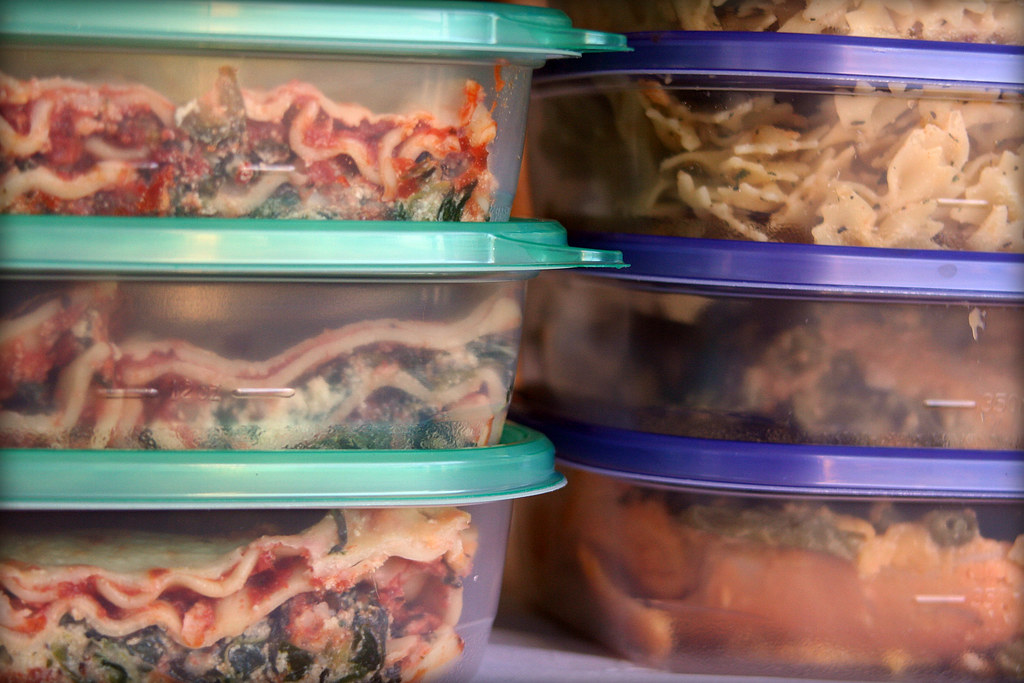
- Divide big batches into shallow containers so they chill quickly. A deep stockpot of soup cools far too slowly.
- Cut large roasts into smaller portions before storing.
- Eat refrigerated leftovers within 3 to 4 days, or freeze them for 3 to 4 months.
- Reheat leftovers to 165°F.
For more habits like this, browse our meal prep guides, where fast cooling makes a real difference to how long batch cooking keeps.
Myth 5: Pink means undercooked, clear juices mean done
The myth: cut into the thickest part; if there is no pink and the juices run clear, it is cooked.
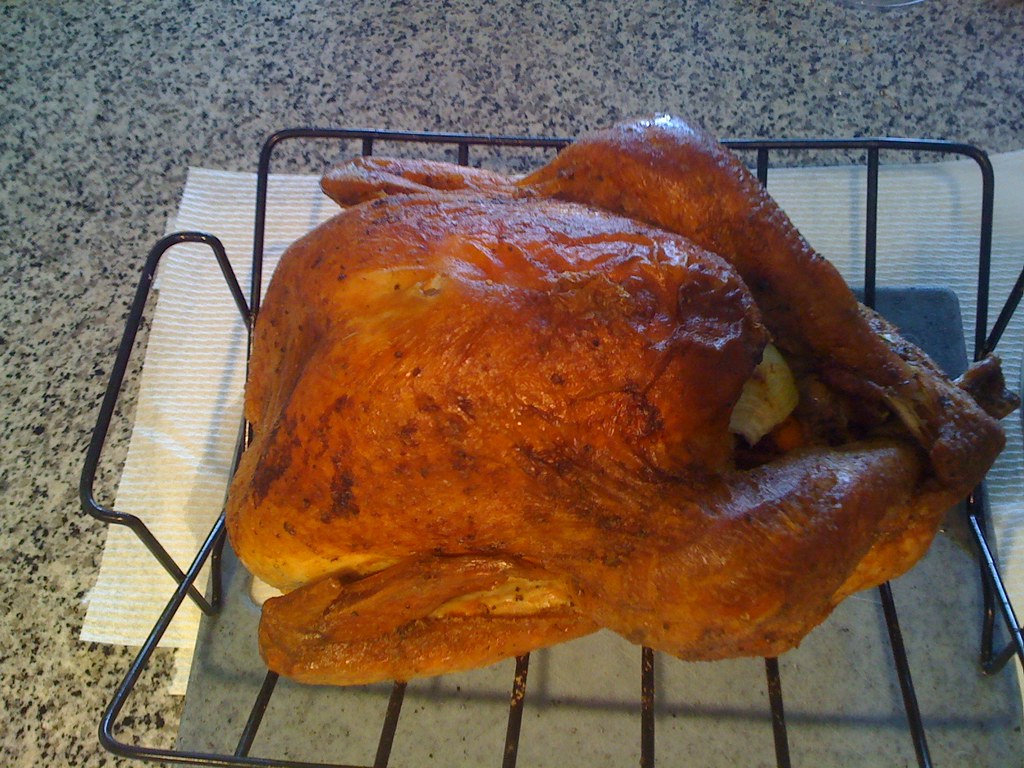
The fact: colour and texture are unreliable. The CDC says you can’t tell whether food is safely cooked by checking its colour and texture, seafood aside, and that the only way to know is to use a food thermometer. Colour can mislead in both directions, so a thermometer settles the argument.
Use these minimum internal temperatures from the USDA: 165°F for poultry, whole or ground; 160°F for ground meats; and 145°F for whole cuts of beef, pork and lamb, followed by a 3-minute rest. Check in the thickest part, away from bone.
All five myths at a glance
| Myth | Fact | Do this instead |
|---|---|---|
| Rinsing raw chicken cleans it | Rinsing spreads bacteria to the sink and nearby food | Cook it straight from the pack to 165°F |
| Counter thawing is fine | Outer layers reach room temperature and bacteria multiply | Thaw in the fridge, cold water or microwave |
| The five-second rule | Bacteria can transfer instantly, especially to wet food | Judge by food, floor and mess, not seconds |
| Cool leftovers before refrigerating | Hot food can go straight into the fridge | Refrigerate within 2 hours in shallow containers |
| Pink or clear juices tell you doneness | Colour and texture are not reliable | Use a food thermometer |
Want the full picture? Our cooking tips section covers knife skills, heat control and more of the everyday kitchen basics.
Food safety FAQ
Is it safe to rinse chicken with vinegar or lemon juice?
The USDA says rinsing with vinegar or lemon juice, or soaking in brine, does not reliably destroy bacteria. It still carries the splash risk of rinsing with plain water.
How long can cooked food sit out?
No more than 2 hours at room temperature, or 1 hour if it is above 90°F, such as at a summer picnic.
Do I need a thermometer if I cook chicken all the time?
Yes. Experience helps with timing, but both the CDC and USDA say a thermometer is the reliable way to confirm poultry has reached 165°F.
How long do leftovers last in the fridge?
The USDA says 3 to 4 days in the refrigerator, or 3 to 4 months in the freezer. Reheat them to 165°F before eating.
One habit to change tonight
Pick the myth you still follow and swap it for the habit in the table. For most kitchens that is the tap: next time you cook chicken, skip the rinse, pat it dry, and check it with a thermometer. If you do not own one yet, our guide to kitchen thermometers is a good place to start.
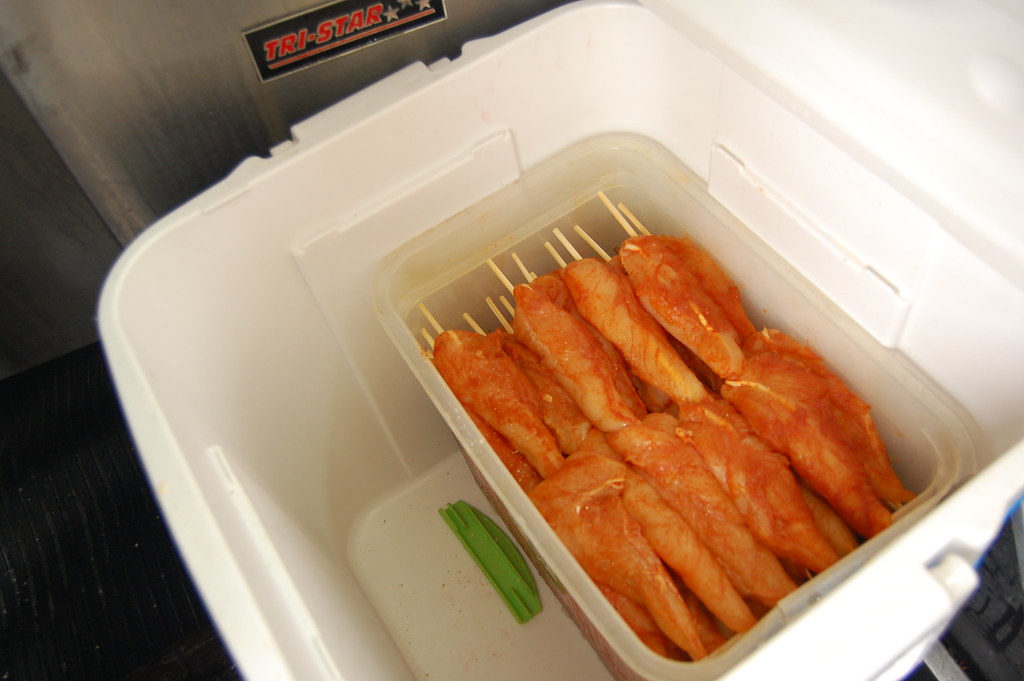
Featured photo: spice-rubbed raw chicken by Southern Foodways Alliance, BY 2.0.