A meat thermometer is the only reliable way to know that meat and poultry are cooked safely without overcooking them. For most home cooks, a fast digital instant-read model covers almost everything; a leave-in probe is worth adding if you roast large cuts or turkeys. Whichever you use, the tip goes into the thickest part of the meat, away from bone, fat and gristle.
Color and cooking times are guesses. A thermometer turns those guesses into a number you can trust, which is why it’s the tool that pays for itself fastest in a kitchen.
This guide explains how the common types differ, exactly where to probe a turkey, a roast and a chicken, the USDA safe minimum temperatures, and how to check your thermometer is still telling the truth.
Key takeaways
- Digital instant-read thermometers are the most versatile; leave-in probes are best for big roasts and turkeys.
- Probe the thickest part, away from bone, fat and gristle. For a whole bird, check the thigh, wing and breast.
- USDA minimums: 165°F for all poultry, 160°F for ground beef and pork, 145°F plus a 3-minute rest for whole cuts of beef, pork, veal and lamb.
- Check accuracy in ice water: a properly stirred glass of crushed ice and water should read 32°F.
- Clean the probe after every use, especially between raw and cooked food.
In this guide
- The main types of meat thermometer
- Where to probe: turkey, roasts, chicken and more
- Safe minimum temperatures
- How to calibrate or check your thermometer
- Habits that make readings reliable
- FAQ
- Put your thermometer to work this week
The main types of meat thermometer
USDA’s Food Safety and Inspection Service keeps a detailed guide to kitchen thermometers, and the differences mostly come down to speed and whether the thermometer stays in the food while it cooks.
| Type | Reading time (USDA) | Stays in the oven | Best for |
|---|---|---|---|
| Digital instant-read (thermocouple) | 2 to 5 seconds | No | Everything, especially thin cuts and quick spot checks |
| Digital instant-read (thermistor) | About 10 seconds | No | Everyday checks on roasts, chicken, burgers |
| Dial instant-read (bimetal) | 15 to 20 seconds | No | Thick foods, on a budget |
| Oven-safe dial (bimetal) | 1 to 2 minutes | Yes | Large roasts and whole birds |
| Leave-in probe with cord | About 10 seconds | Probe stays in, display outside | Turkeys, roasts, smoking |
| Pop-up disposable | Pops at a set temperature | Yes | A backup only; confirm with another thermometer |
Instant-read
This is the workhorse. You open the oven or lift the lid, take a reading, and close it again. According to USDA, thermocouple models reach and display the final temperature the fastest of all food thermometers. Faster readings mean less heat escaping from the oven and fewer chances to burn your hand over a grill.
Leave-in probe
A metal probe goes into the meat at the start, and a cable runs out of the oven door to a display on the counter. Most let you set an alarm for your target temperature. You never need to open the oven to check a turkey, which keeps the heat steady.
Wireless probe
Wireless models work the same way without the cable. The probe sits in the meat and sends readings to a base unit or phone app, which is handy on a grill or smoker when you want to walk away. Check the range and battery life before you rely on one for a long cook, and still confirm the final temperature with an instant-read in a second spot.
Oven-safe dial
The classic round-faced thermometer stays in a roast for the whole cook. It’s cheap and needs no batteries, but it reads slowly and USDA says it must go 2 to 2 1/2 inches deep, so it only suits thick cuts.
Where to probe: turkey, roasts, chicken and more
A thermometer is only as good as where you put it. You’re looking for the coldest part of the food, which is almost always the thickest part, and bone throws readings off because it conducts heat differently.
Whole turkey or chicken
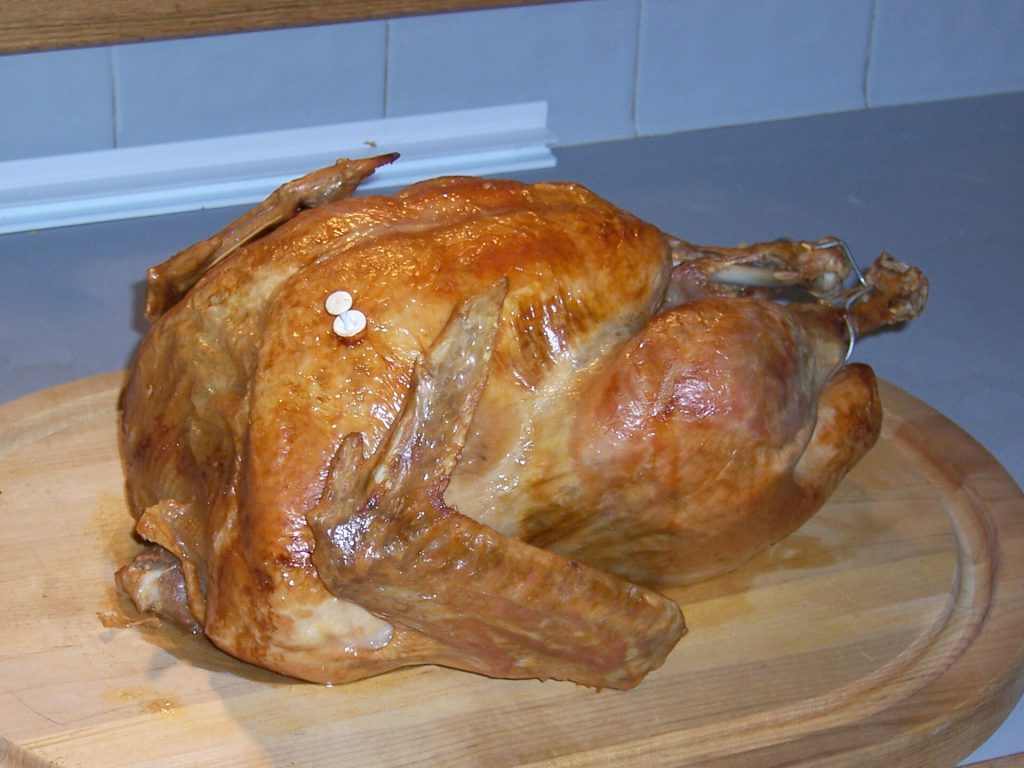
USDA says to check three places: the innermost part of the thigh, the innermost part of the wing, and the thickest part of the breast. All three need to reach 165°F. Slide the probe in parallel to the bone in the thigh without touching it. If you’ve stuffed the bird, the center of the stuffing also has to reach 165°F.
Roasts
Insert the probe from the side, midway into the thickest part of the roast, avoiding bone, fat and gristle. On a bone-in rib roast, aim for the center of the eye of meat.
Chicken pieces, steaks and chops
Go into the thickest part, away from the bone. For thin pieces like cutlets, chops and burgers, USDA recommends inserting the thermometer through the side so the whole sensing area reaches the center.
Burgers and sausages
Probe sideways into the middle of the thickest patty or link. With a batch on the grill, check more than one, since some will be closer to the hot spot than others.
Find the thickest part, miss the bone, and trust the number over the color.
Safe minimum temperatures
These are the safe minimum internal temperatures from the federal FoodSafety.gov chart. Rest time means leaving the meat off the heat for that long before carving or eating.
- All poultry, whole or ground, including stuffing: 165°F (74°C)
- Ground beef and pork, including sausage: 160°F (71°C)
- Beef, pork, veal and lamb steaks, roasts and chops: 145°F (63°C) with a 3-minute rest
- Fresh ham: 145°F (63°C) with a 3-minute rest
- Fish: 145°F (63°C), or until the flesh is no longer translucent and separates easily
- Egg dishes like quiche and frittata: 160°F (71°C)
- Leftovers and casseroles: 165°F (74°C)
These are safety minimums, not quality targets. Many cooks take beef higher by preference, and it’s fine to cook poultry thighs beyond 165°F for more tender meat. Just don’t go below the minimum.
How to calibrate or check your thermometer
Thermometers drift, especially cheap dial models and any that have been dropped. A quick check takes two minutes.
The ice water test
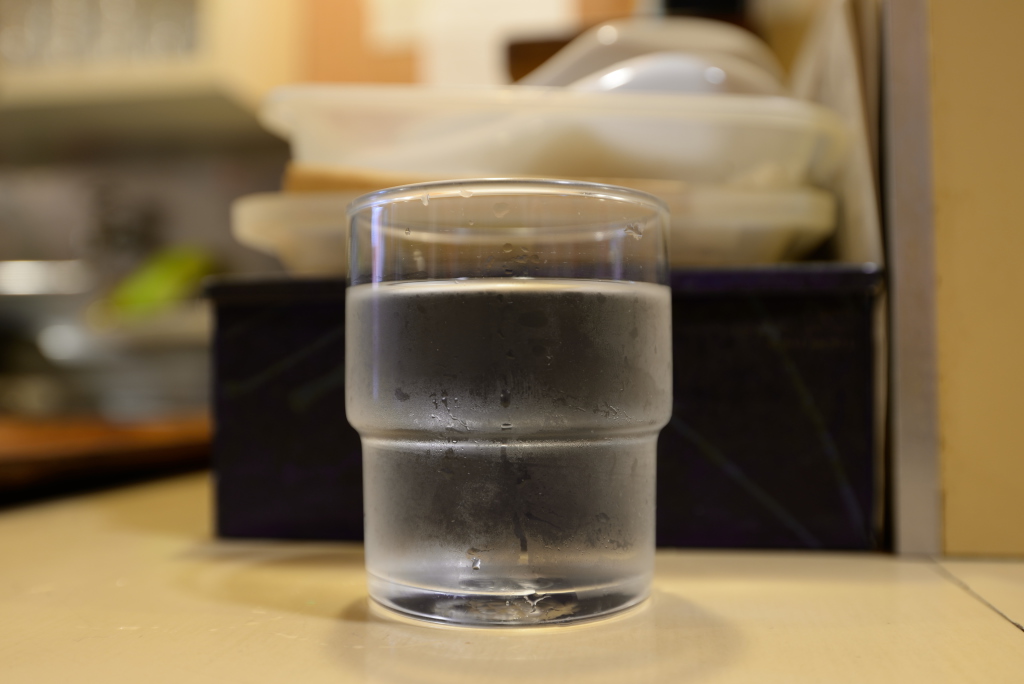
- Fill a tall glass to the top with crushed ice, then add water to fill the gaps.
- Stir and wait about a minute so the water chills evenly.
- Put the stem into the center of the glass, at least 2 inches deep, without touching the sides or bottom.
- Wait for the reading to settle. It should read 32°F.
That method comes from Penn State Extension. If a dial thermometer reads off, leave it in the ice water and turn the calibration nut under the dial with small pliers or a wrench until it shows 32°F. Penn State notes that digital thermometers generally can’t be calibrated, though some have a reset function; check yours against the ice water test, and if it reads off and has no adjustment, replace it.
The boiling water test
Water boils at 212°F at sea level, but the boiling point drops as elevation rises, so this test is less reliable if you live at altitude. Ice water gives the same answer everywhere, which is why it’s the better choice for most home cooks.
How often
Penn State suggests calibrating bimetal thermometers often, and any time one has been dropped. At home, a check before a big holiday cook and after any fall is a sensible routine.
Habits that make readings reliable
- Wait for the number to stop moving. Readings rise for a few seconds after you insert the probe.
- Check more than one spot. The lowest reading is the one that counts.
- Clean between raw and cooked. Wash the probe with hot soapy water after checking raw or partly cooked meat, so you don’t carry bacteria into finished food.
- Don’t leave instant-reads in the oven. Only oven-safe dials and probes with heat-rated cables belong inside.
- Respect the rest time. For whole cuts of beef, pork, veal and lamb, reach 145°F and then let the meat rest for 3 minutes before carving.
- Keep a spare battery. Digital models tend to die at the worst moment.
Once you trust your thermometer, recipes like a simple roast chicken become far more forgiving.
FAQ
Do I need a meat thermometer if my turkey has a pop-up timer?
Yes. Treat the pop-up as a hint, not a verdict, and confirm with a thermometer in the thigh, wing and breast.
How deep should the thermometer go?
It depends on the type. USDA says bimetal dial thermometers need 2 to 2 1/2 inches, thermistor and probe thermometers at least 1/2 inch, and thermocouples 1/4 inch or more.
Can I use one thermometer for meat and candy?
Many digital instant-reads cover the range for both. Check the maximum temperature on yours before using it for sugar work or oil.
Why does my chicken look pink at 165°F?
Color isn’t a reliable sign of doneness. If the thermometer reads 165°F in the thickest parts, poultry has reached the safe minimum.
Put your thermometer to work this week
Test your thermometer in ice water tonight, then use it on your next chicken or pork chop and note where you pulled it and how it tasted. Within a few meals you’ll cook by numbers without thinking about it. For more tools worth owning, browse our kitchen gear guides or read our turkey roasting tips.
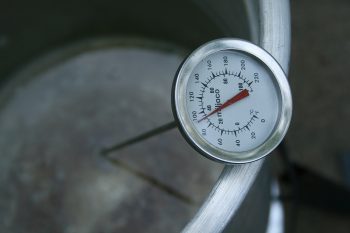
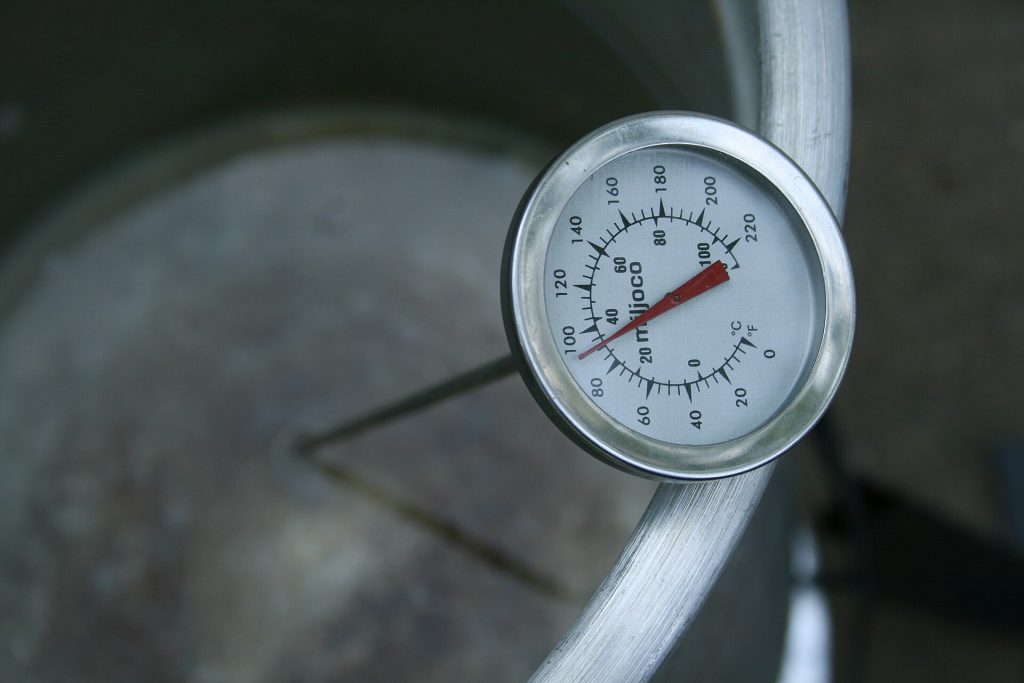
Featured photo: 2008-09-20 Thermometer reading by Ildar Sagdejev (Specious), BY-SA 4.0.