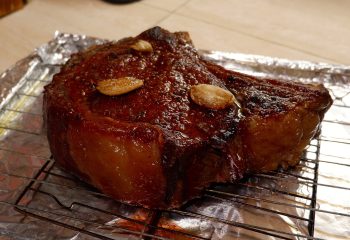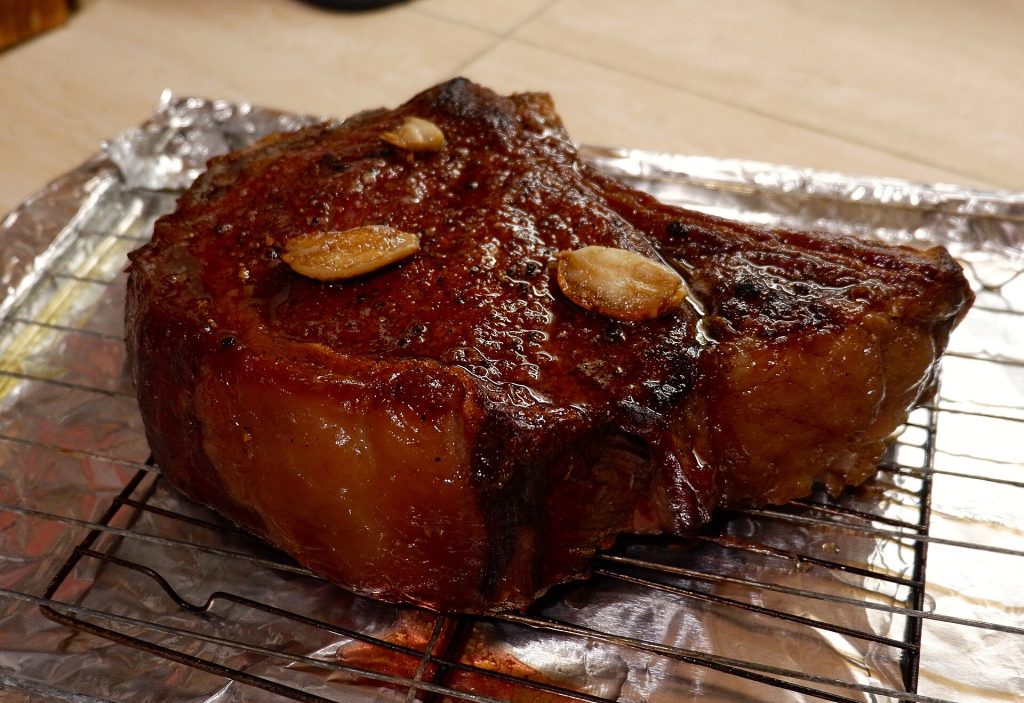
No, searing does not seal in juices. The searing meat myth has been repeated since the 1800s, but a seared steak loses moisture just like an unseared one, and often a little more. What searing really does is create browning and flavour, which is a perfectly good reason to do it.
Plenty of other kitchen rules rest on similar folklore. Some make you cook pork to shoe leather, some waste good olive oil, and one could put more alcohol in a dish than you think.
Here are six common cooking myths, taken one at a time, with what the evidence says and what to do instead at the stove.
Key takeaways
- Searing adds flavour through browning; it doesn’t lock moisture in.
- Salt meat either well ahead of time or right before cooking, and it will be juicy either way.
- Whole cuts of pork are safe at 145°F with a 3-minute rest, even if slightly pink.
- Closed white and cremini mushrooms take on very little water when rinsed; gilled types absorb more.
- Oil in pasta water floats on top; stirring and plenty of water are what stop sticking.
- USDA data show a dish simmered for 2 1/2 hours can still hold about 5% of the alcohol added.
Six myths at a glance
| Myth | Fact | What to do instead |
|---|---|---|
| Searing seals in juices | Seared meat still loses moisture | Sear for flavour, and don’t overcook |
| Salting early dries meat out | Timing matters more than salt itself | Salt well ahead, or just before cooking |
| Pork must be cooked until white | USDA says 145°F plus a 3-minute rest | Use a thermometer, not colour |
| Never wash mushrooms | Closed caps absorb very little water | Rinse quickly, then dry |
| Oil in pasta water stops sticking | The oil mostly floats on the surface | Use enough water and stir early |
| Alcohol burns off in cooking | A good share can remain | Check USDA retention figures |
Three myths about cooking meat
Myth 1: Searing meat seals in the juices
The idea goes back a long way. The Exploratorium, San Francisco’s science museum, traces it to the German chemist Justus von Liebig and the chef Auguste Escoffier, an idea dating back to around 1850.
The problem is physics. As the Exploratorium explains, water molecules are much smaller than proteins and move through muscle tissue easily. The sizzle you hear when a steak hits the pan is water escaping as steam; if searing really formed a watertight barrier, that sound would stop. The museum suggests a simple kitchen test: cook two identical steaks the same way, sear only one, and weigh both before and after. The seared steak typically ends up lighter.
The fact: searing is for flavour
Browning is the payoff. The Exploratorium notes that the flavourful brown compounds on a good crust form through reactions between amino acids and sugars at temperatures above about 140°C (280°F). Boiling water tops out at 100°C, which is why a boiled piece of beef never browns. So sear for taste and colour, and protect juiciness the reliable way: pull the meat off the heat at the right temperature and let it rest.
A crust is flavour, not armour. Juiciness comes from not overcooking, full stop.
Myth 2: Salting meat before cooking dries it out
This one contains a half-truth. Salt does draw moisture to the surface of meat, and if you salt a steak and cook it a few minutes later, you’ll see beads of liquid that make browning harder. That observation turned into a blanket rule: salt only at the end.
The fuller picture is about timing. Given enough time, that surface brine is drawn back into the meat, seasoning it more deeply. That’s the idea behind dry-brining a turkey or salting a roast the night before. In practice, you have two good options:
- Salt well ahead. An hour or more before cooking, or overnight uncovered in the fridge for roasts and thick chops. Pat dry before searing.
- Salt right before cooking. Season just as the meat goes into the pan, before much moisture has had time to come out.
The awkward middle ground, salting a few minutes ahead and then letting it sit wet on the board, is the only version that works against you.
Myth 3: Pork has to be cooked until it’s white
Many home cooks were taught that pork has to be cooked until it’s white all the way through. That advice is out of date. In May 2011, USDA lowered its recommendation for whole cuts of pork from 160°F to 145°F with a three-minute rest.
The current FoodSafety.gov temperature chart lists pork steaks, roasts and chops at 145°F with a 3-minute rest time, and explains that the rest matters because it lets the innermost parts of the meat become fully and safely cooked. Pork cooked this way can still look slightly pink and be safe. Two caveats: ground pork is a different case and appears separately on the chart, and colour isn’t reliable in either direction, so use a thermometer rather than your eyes.
Two myths about mushrooms and pasta
Myth 4: Never wash mushrooms
The warning is that mushrooms act like sponges, soak up water and never brown. America’s Test Kitchen put this to the test by weighing mushrooms before and after a minute submerged in water. Its finding: mushrooms without exposed gills retained almost no water, while varieties with exposed gills soaked up as much as 25 percent of their weight.
In their test, white mushrooms took on about a tablespoon of water per pound, while oyster mushrooms absorbed about a quarter cup per pound. So give button, cremini and similar closed-cap mushrooms a quick rinse in a colander and spread them on a towel to dry. Wipe or brush the delicate, open-gilled kinds instead, and start them in a hot, uncrowded pan so any extra water evaporates fast.
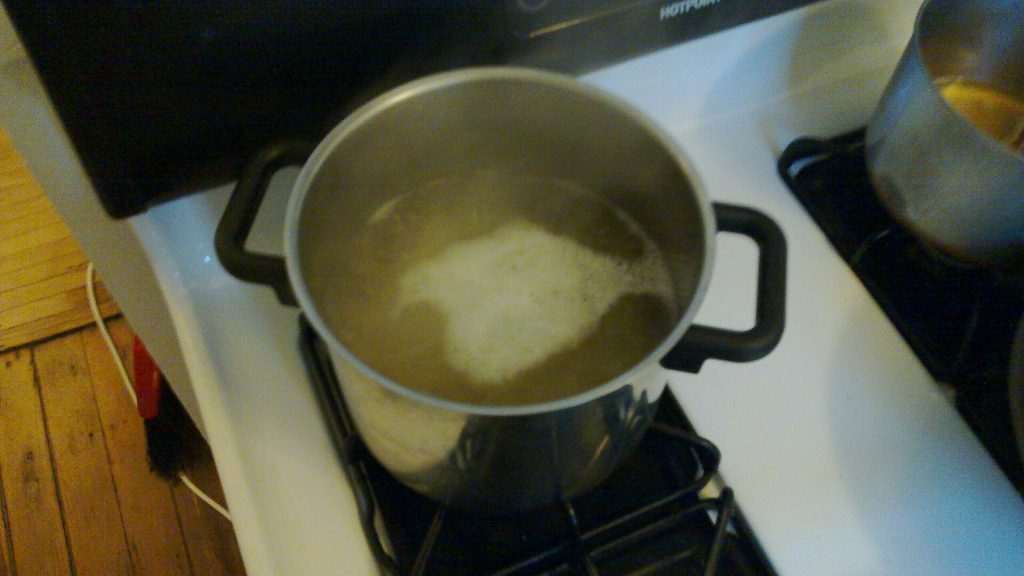
Myth 5: Oil in the pasta water stops sticking
A glug of oil in the pot is one of the most common habits in home kitchens. It doesn’t do what people hope. Oil and water don’t mix, so most of the oil floats on the surface while the pasta cooks underneath. When you drain the pot, the pasta passes through that slick of oil, which can leave it slippery enough that the sauce slides off.
What actually prevents sticking is plain technique:
- Use a big pot with plenty of water so the pasta has room to move.
- Bring it to a full rolling boil before the pasta goes in, and salt it well.
- Stir during the first two minutes, when the surface starch is stickiest.
- Save a mug of pasta water before draining and use it to loosen the sauce.
For more practical fixes like these, see our guide to cooking pasta properly.
The alcohol myth, by the numbers
Myth 6: The alcohol cooks off
People often assume every drop of wine or brandy disappears in the pan. The USDA Table of Nutrient Retention Factors suggests otherwise. Its alcohol figures show how much of the alcohol added to a dish remains after different methods.
- Stirred into hot liquid and removed from heat: 85% retained
- Flamed: 75%
- No heat, stored overnight: 70%
- Not stirred in, baked 25 minutes: 45%
- Stirred in, baked or simmered 15 minutes: 40%
- 30 minutes: 35%
- 1 hour: 25%
- 2 hours: 10%
- 2 1/2 hours: 5%
Flaming, the most theatrical method, still leaves about three quarters of the alcohol behind. Long braises get the level down, but not to zero. If you’re cooking for someone who avoids alcohol entirely, use stock, juice or a splash of vinegar in place of the wine.
FAQ
Should I sear meat before braising it?
Yes, for flavour. Browning creates a deeper, savoury taste in the finished stew. It just won’t make the meat any juicier.
Is pink pork safe to eat?
Whole cuts of pork cooked to 145°F and rested for 3 minutes are safe even if they still look a little pink, according to FoodSafety.gov. Check with a thermometer.
Does alcohol burn off when you flambé?
Not most of it. USDA retention data put flamed dishes at about 75 percent of the original alcohol.
Is it fine to rinse mushrooms?
For closed-cap varieties like white and cremini, yes. A quick rinse adds very little water. Dry them well before cooking.
Put it to the test tonight
Pick one myth and test it at home this week: weigh two steaks, or rinse half a punnet of cremini and cook them side by side with the unwashed half. Seeing the result yourself is more convincing than any rule. For more science-backed kitchen habits, browse our cooking tips and our guide to using a meat thermometer.
Featured photo: 2019-10-04 – 45 Day Dry Aged Reverse Seared Bone In Rib Eye 03 by Key West Wedding Photography, BY 2.0.