When it comes to olive oil vs canola oil, and the newer contender avocado oil, there is no single winner. All three are mostly unsaturated fat and all three appear on the American Heart Association’s list of healthier cooking oils. Canola has the least saturated fat and a neutral taste, extra virgin olive oil has the most flavor, and avocado oil handles the highest heat but costs more.
So the real question is which bottle suits the job in front of you. A peppery olive oil that makes a tomato salad sing is wasted in a deep fryer, and a neutral oil won’t do much for a bowl of beans.
Below, we compare the three on fat profile, smoke point, flavor, cost and storage, using figures from Harvard’s Nutrition Source, the AHA, olive oil and canola industry bodies, and university research.
Key takeaways
- Canola is about 7% saturated fat, olive oil about 13%, according to Harvard’s Nutrition Source.
- Olive oil is richest in monounsaturated fat (about 72%); canola carries more polyunsaturated fat (about 29%).
- Published smoke points vary by grade and source: extra virgin olive oil is typically 350–410°F, refined olive oil 390–470°F.
- Avocado oil has a smoke point above 482°F, per Oklahoma State University Extension, which makes it the high-heat specialist.
- Store all three in a cool, dark cupboard, buy sizes you’ll finish, and throw out oil that smells stale.
In this guide
- The fat profiles side by side
- Smoke points, and why the numbers vary
- Flavor: what each oil brings to the pan
- Best uses in a home kitchen
- Cost tiers and how to shop
- Storing oil so it stays fresh
- FAQ
- Set up a two-bottle kitchen
The fat profiles side by side
All three oils are built mostly from unsaturated fats, which the AHA groups as the “good” fats, as opposed to saturated and trans fats. The differences are in the mix. The table below uses the composition figures published by the Harvard T.H. Chan School of Public Health’s Nutrition Source for olive and canola, and the ranges given by Oklahoma State University Extension for avocado oil.
| Olive oil | Canola oil | Avocado oil | |
|---|---|---|---|
| Saturated fat | About 13% | About 7% | Not given separately; 70–90% of fatty acids are unsaturated |
| Monounsaturated fat | About 72% | About 58% | Oleic acid alone makes up 50–70% |
| Polyunsaturated fat | About 8% | About 29% | Linoleic acid 10–20% |
| Typical smoke point | 350–410°F (extra virgin); 390–470°F (refined) | About 400–468°F depending on source | Above 482°F |
| Flavor | Fruity to peppery (extra virgin); mild (refined) | Neutral | Mild and buttery |
| Relative cost | Mid to high | Low | High |
What the numbers mean in the kitchen
Canola’s claim to fame is its low saturated fat. The Canola Council of Canada puts it at 7%, “the least of the common culinary oils”, and Harvard lists canola among the good plant sources of omega-3 fats, alongside flax seeds, walnuts and soybean oil. Olive oil leans hard on monounsaturated fat, mostly oleic acid, which is part of why it’s so stable in the bottle.
Avocado oil looks a lot like olive oil on paper. Oklahoma State University Extension notes that its oleic acid content, along with tocopherols and phytosterols, is why it’s often compared to olive oil.
How this fits the guidelines
Two simple benchmarks help. The American Heart Association suggests choosing oils with less than 4 grams of saturated fat per tablespoon, and all three oils here make its list of healthier options, with avocado named among the specialty oils that can be healthy choices. The Dietary Guidelines for Americans, 2025–2030, say saturated fat should generally stay under 10% of daily calories, and advise prioritizing oils with essential fatty acids, such as olive oil, when you cook with fat.
Beyond that, the guidelines themselves note that more high-quality research is needed on which fats best support long-term health. For a home cook, that’s a good reason to rotate oils by task rather than swear loyalty to one.
Smoke points, and why the numbers vary
A smoke point is the temperature at which an oil starts to give off smoke. University of Illinois Extension advises that once oil reaches that point, it’s no longer fit to eat and should be thrown out. The AHA says the same thing more plainly: if your oil starts to smoke or catches fire, don’t use it.
Here’s the catch. Published smoke points aren’t fixed numbers, and sources disagree. Illinois Extension lists extra virgin olive oil at 320°F and canola at 400°F. The North American Olive Oil Association gives extra virgin a range of 350–410°F and refined or light olive oil 390–470°F, explaining that fresher oils with lower free fatty acids smoke at higher temperatures. The Canola Council gives regular canola 468°F.
- Extra virgin olive oil: 320°F to 410°F depending on the source and the oil’s quality.
- Refined or light olive oil: 390–470°F, per the NAOOA.
- Canola oil: 400°F (Illinois Extension) to 468°F (Canola Council).
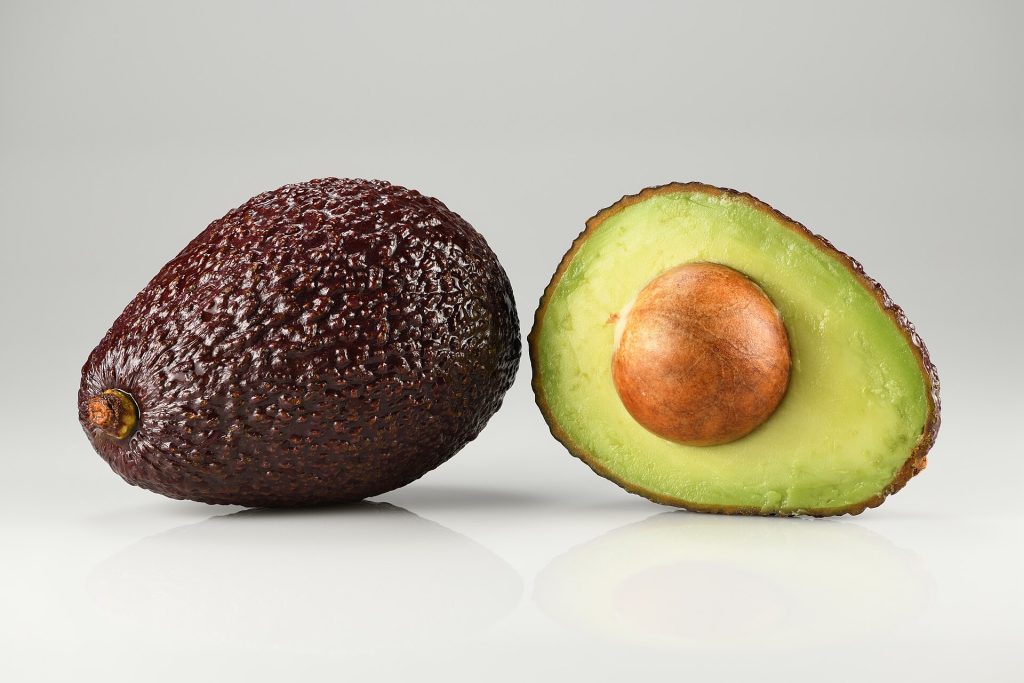
- Avocado oil: above 482°F, per Oklahoma State University Extension.
The practical takeaway is the one Illinois Extension gives: for frying and stir-frying, pick an oil with a smoke point of at least 400°F. Refined olive oil, canola and avocado oil all clear that bar. Extra virgin olive oil is happy at a sauté or a medium-heat roast, but save it for gentler jobs if your pan is ripping hot.
Smoke point is a range, not a rule. Watch the pan, not just the label.
Flavor: what each oil brings to the pan
Olive oil
Extra virgin olive oil is the one you taste. Depending on the olives, it can run from grassy and fruity to bitter and peppery, with a little catch at the back of the throat. Refined and “light” olive oils are lighter in flavor, not in calories, which makes them a quieter all-rounder.
Canola oil
The Canola Council describes canola’s taste as neutral with a light texture. That’s exactly what you want in a cake, a stir-fry or a mayonnaise where you want other flavors to lead.
Avocado oil
Oklahoma State University Extension describes avocado oil as mildly buttery. UC Davis researchers go further: fresh, authentic virgin avocado oil tastes grassy, buttery and a little like mushrooms. Refined versions are much milder.
Best uses in a home kitchen
Most home cooks do fine with two oils: a neutral one for heat and baking, and a good extra virgin olive oil for finishing. Here’s how the three split the work.
| Task | Best pick | Why |
|---|---|---|
| Salad dressings and drizzling | Extra virgin olive oil | Flavor is the point, and no heat is involved |
| Sautéing vegetables | Olive oil or canola | Medium heat suits both |
| Baking cakes and muffins | Canola | Neutral taste lets butter, vanilla or spice lead |
| Stir-frying and searing | Avocado, canola or refined olive oil | Smoke points of 400°F or more |
| Shallow pan-frying | Avocado oil | OSU Extension notes its high smoke point suits this |
| Homemade mayonnaise | Canola, or half canola and half olive | A strong extra virgin can overpower the other flavors |
For recipes that lean on each style, see simple homemade salad dressings and a weeknight stir-fry guide.
Cost tiers and how to shop
Prices move with harvests and shops, so we won’t quote numbers. The pattern on most supermarket shelves is steady, though, and it’s easy to plan around.
- Everyday tier: canola. Usually the cheapest of the three, and the one to buy in larger bottles for frying and baking.
- Middle tier: refined or “pure” olive oil. A mild, versatile oil for general cooking.
- Top tier: extra virgin olive oil and avocado oil. Buy these in smaller bottles and use them where you’ll notice them.
Avocado oil’s price has a simple cause. Oklahoma State University Extension points out that global production is small. Quality is the other worry. In a 2020 UC Davis study of 22 avocado oil samples, 82 percent were either stale before their expiration date or mixed with other oils, and three bottles labeled “pure” or “extra virgin” were almost entirely soybean oil.
Shopping tips that apply to all three
- Look for a harvest or production date and choose the most recent. UC Davis advises this over relying on the best-before date alone.
- Pick dark glass or tins over clear bottles.
- Buy a size you’ll finish before the oil goes stale.
- Smell a new bottle when you open it, so you know what fresh smells like and can spot the change later.

Storing oil so it stays fresh
Heat, light and air are what wear oil down. The AHA’s advice is to store oils in a dark, cool place, and UC Davis specifically recommends a cool, dark cabinet rather than the shelf next to the stove, which is where many of us keep the bottle.
- Keep the everyday bottle small and refill it from a larger one stored in a cooler cupboard.
- Cap bottles tightly after each use.
- Smell the oil before you cook with it. UC Davis says rancid oil smells stale, sort of like play dough, and the AHA says to throw out any oil that smells bad.
- Don’t reuse frying oil. The AHA advises against reusing or reheating any cooking oil.
Oklahoma State University Extension advises that oils containing polyunsaturated fats be kept away from light and at low temperature. Canola, with about 29% polyunsaturated fat, is the one of the three that most benefits from a cool spot.
FAQ
Is olive oil healthier than canola oil?
Both are on the AHA’s list of healthier cooking oils. Canola has less saturated fat, while olive oil has more monounsaturated fat. The Dietary Guidelines single out olive oil as an example of a cooking oil to prioritize.
Can you fry with extra virgin olive oil?
For sautéing and medium-heat cooking, yes. The NAOOA puts its smoke point at 350–410°F. For deep-frying or searing, choose an oil rated at 400°F or more.
Is avocado oil worth the price?
If you do a lot of high-heat cooking, it earns its place. Buy a small bottle from a recent production date, since quality varies widely.
Should I keep oil in the fridge?
A cool, dark cupboard away from the stove is what the AHA and UC Davis recommend, and it’s enough for most households.
Set up a two-bottle kitchen
This week, look at the oils you already own. Move them away from the stove, check the dates, and smell each one. Then settle on two bottles: canola or avocado oil for heat and baking, and a fresh extra virgin olive oil for finishing. For more on cooking well at home, browse our healthy eating guides or read how to add healthy fats to everyday meals.
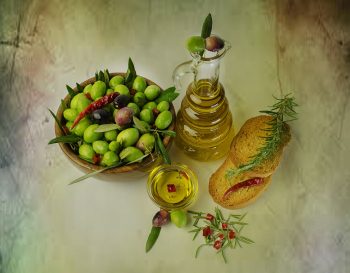
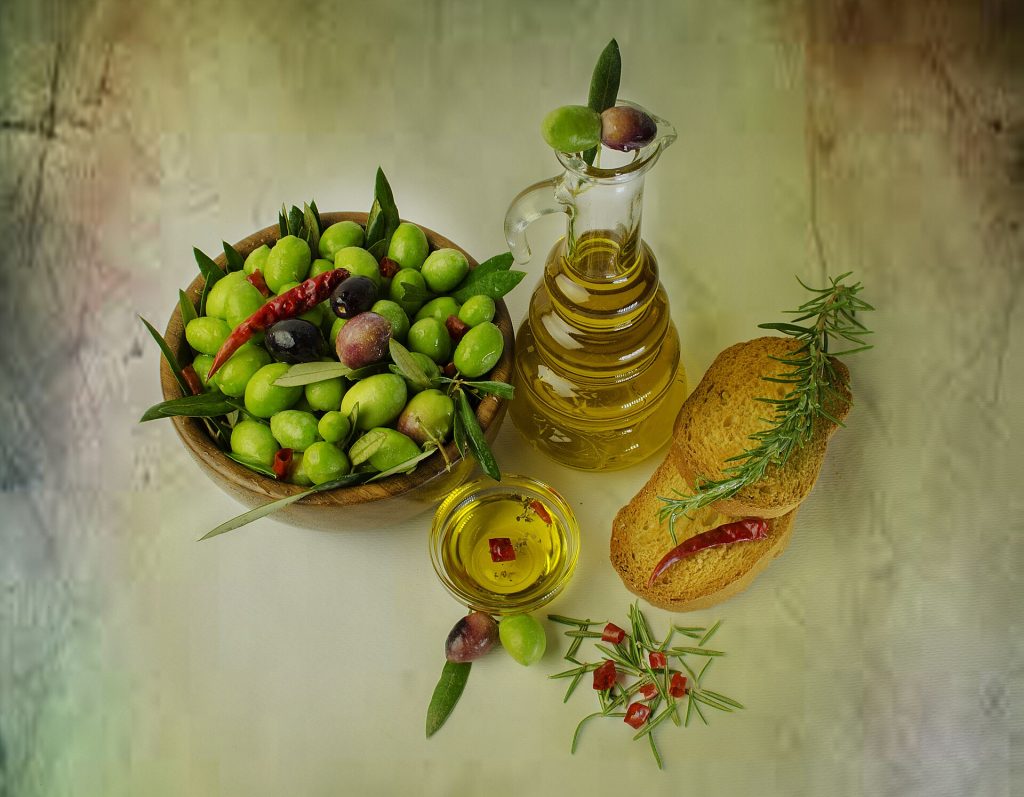
Featured photo: Egyptian Olives by Dina Said, BY-SA 4.0.