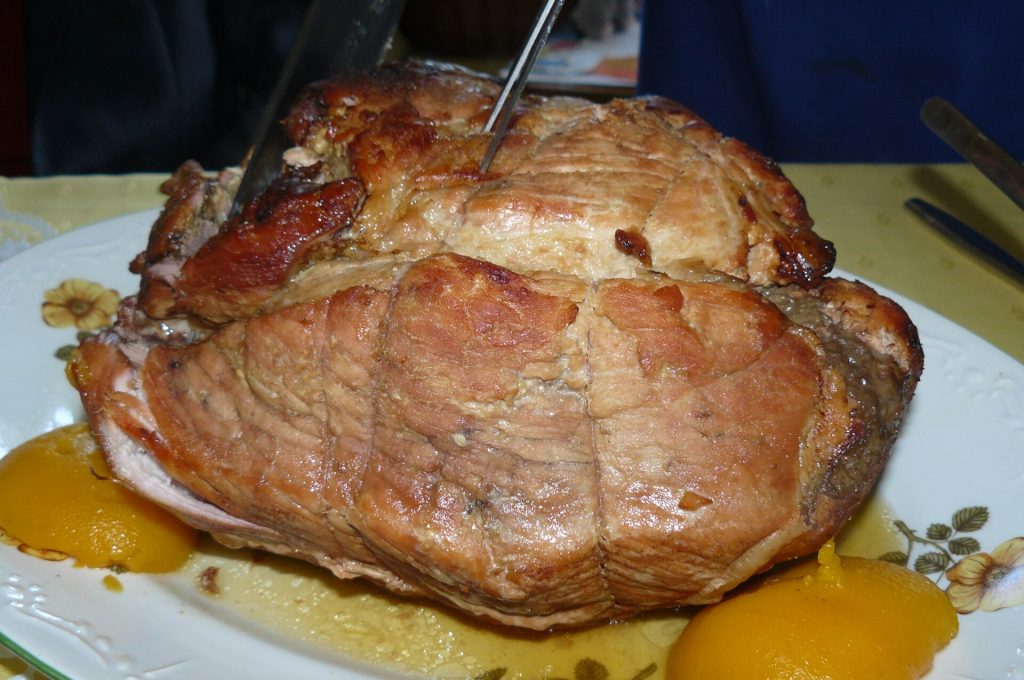
The best holiday ham for most home cooks is a fully cooked, bone-in city ham. It only needs reheating, it serves a crowd, and the bone flavors soup for days afterwards. Spiral-cut saves you carving; boneless is easiest to slice; and a salty, dry-cured country ham is a project for fans.
Labels are where most shoppers get stuck. “Fully cooked”, “cook before eating”, “water added” and “ham and water product” all mean different things, and they change how you cook the ham and what you’re paying for.
This buyer’s guide walks through the types, the label terms, how much to buy per person, and the temperatures and storage times the USDA recommends.
Key takeaways
- City hams are wet-cured with a brine; country hams are dry-cured with salt and aged for months.
- Plan on 1/4 to 1/3 pound per person for boneless ham, and 1/3 to 1/2 pound for bone-in.
- Reheat fully cooked hams from USDA-inspected plants to 140°F; other cooked hams to 165°F.
- Fresh or cook-before-eating ham must reach 145°F, then rest for 3 minutes.
- Spiral-cut ham and leftovers keep 3 to 5 days in the fridge or 1 to 2 months in the freezer.
City ham or country ham
Almost every supermarket holiday ham is a city ham. According to University of Kentucky animal sciences course material, city hams are wet-cured: pumped with a brine of water, salt, sweetener, phosphate, nitrite, spices and seasonings. The result is moist, mild and sweet-savory, and it’s usually sold fully cooked.
Country ham is a different animal. The same University of Kentucky material describes it as dry-cured with salt, sweetener and spices, for anything from 90 to 100 days to several months. To carry the name, it must lose at least 18% of its original weight and contain at least 4% salt. The USDA Food Safety and Inspection Service adds that country hams can be aged for more than a year and typically lose 20 to 25% of their weight, which concentrates the flavor.
| City ham | Country ham | |
|---|---|---|
| Cure | Wet-cured with a brine | Dry-cured with salt and aged |
| Texture | Moist and tender | Firm and dense |
| Flavor | Mild, sweet-savory | Intensely salty and savory |
| Usually sold | Fully cooked | Uncooked and whole |
| Prep | Reheat and glaze | Soak, simmer, then glaze and brown |
| Best for | A big family meal | Thin slices on biscuits or a buffet |
Preparing a country ham
The USDA’s method is to soak a country ham for 4 to 12 hours in the refrigerator, then simmer it for 20 to 25 minutes per pound, drain, glaze and brown it at 400°F for 15 minutes. If you find mold on a whole country ham, FSIS says not to discard it: wash it with hot water and scrub the mold off with a stiff vegetable brush.
Bone-in, boneless or spiral-cut
Once you’ve picked a cure, the next choice is the cut. Each has a real trade-off.
Bone-in
A bone-in ham takes more work to carve, but you get more flavor and a meaty bone for soup or beans. You also need to buy more weight per person, since part of what you pay for is bone.
Boneless
Boneless hams are pressed into a neat shape, carve into even slices and waste nothing. They’re a good choice for smaller gatherings, sandwiches, or cooks who don’t want to wrestle with a bone.
Spiral-cut
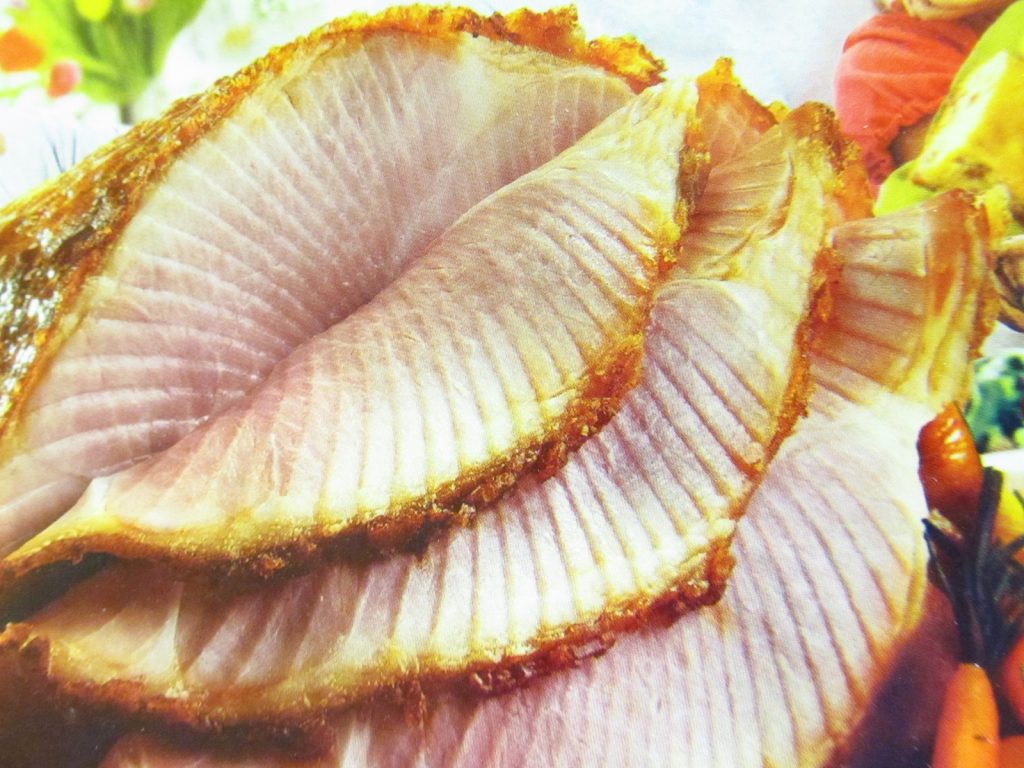
A spiral-cut ham is a cooked ham sliced in one continuous spiral, a method FSIS dates to 1957. It’s the fastest route to the table. FSIS notes that spiral-cut hams are best served cold, because reheating can dry out the slices and make the glaze separate. If you do warm one, cover it with foil and heat it at 325°F for about 10 minutes per pound.
Buy the ham for the meal you’re actually cooking: bone-in for flavor, boneless for ease, spiral-cut for speed.
Reading the label
The front label tells you how much work the ham needs. The fine print tells you how much of it is actually ham.
Cooking labels
- Fully cooked or cooked: FSIS says this ham needs no further cooking. You can eat it straight from the package or reheat it.
- Cook before eating: the ham must be cooked to a safe internal temperature before serving.
- Fresh or uncured: an uncured leg of pork that must be cooked. It turns grayish-white when cooked rather than pink.
- “Cook thoroughly”: FSIS says this appears on products that look ready to eat but need cooking.
Water and protein labels
FSIS rules link these names to the ham’s protein content, so they’re a quick guide to how much brine you’re buying.
| Label | What FSIS says it means |
|---|---|
| With natural juices | At least 18.5% protein |
| Water added | At least 17% protein, with up to 10% added solution |
| Ham and water product | Less than 17% protein; the label must state the percentage of added ingredients |
Lower protein means more water, and more water means you pay ham prices for brine. If you’re choosing between two hams at a similar price per pound, the one with fewer qualifiers usually gives you more meat. Sweet cures are defined too: honey must be the main or equal sweetener in a “honey-cured” ham.
How much ham to buy
FSIS gives simple serving guidelines: 1/4 to 1/3 pound per serving for boneless ham, and 1/3 to 1/2 pound per serving for bone-in ham. Aim for the upper end if you want leftovers, or if ham is the only main.
| Guests | Boneless ham | Bone-in ham |
|---|---|---|
| 6 | 1.5–2 lb | 2–3 lb |
| 10 | 2.5–3.5 lb | 3.5–5 lb |
| 16 | 4–5.5 lb | 5.5–8 lb |
| 24 | 6–8 lb | 8–12 lb |
These totals are the FSIS per-serving figures multiplied out and rounded, so treat them as a starting point. If there are several other mains, go with the lower numbers.
Reheating and cooking temperatures
Temperature is the one place not to guess. Use a food thermometer in the thickest part of the ham, away from the bone. The temperatures below come from FSIS and the FoodSafety.gov safe minimum temperature chart.
| Type of ham | Internal temperature |
|---|---|
| Fresh or cook-before-eating ham | 145°F, then rest for 3 minutes |
| Fully cooked ham in USDA-inspected packaging | Reheat to 140°F |
| Spiral-cut ham repackaged outside the plant | Reheat to 165°F |
| Any other cooked ham | Reheat to 165°F |
| Leftovers | Reheat to 165°F |
FSIS recommends an oven set no lower than 325°F for cooking ham. For a glaze, brush it on in the last stretch of heating so the sugars don’t scorch. For glaze ideas, see easy ham glaze recipes.

Storing ham and leftovers
Ham keeps better than most roasts, but the clock still starts once the package is opened. These are FSIS storage times.
| Ham | Refrigerator | Freezer |
|---|---|---|
| Cooked, vacuum-sealed, unopened | 2 weeks or use-by date | 1–2 months |
| Cooked, whole, store-wrapped | 7 days | 1–2 months |
| Spiral-cut and leftovers | 3–5 days | 1–2 months |
| Cured, cook-before-eating, uncooked | 5–7 days or use-by date | 3–4 months |
| Country ham, whole and uncut | Up to 1 year at room temperature | Not needed |
| Country ham, cooked | 7 days | 1 month |
- Slice leftovers off the bone before refrigerating so they chill quickly.
- Freeze in meal-sized portions for soups, fried rice and pasta.
- Save the bone in the freezer for split pea soup or a pot of beans.
FAQ
Is a fully cooked ham safe to eat cold?
Yes. FSIS says fully cooked ham can be eaten straight from the package. Spiral-cut hams are best served cold.
What’s the difference between city ham and country ham?
City ham is wet-cured with a brine and usually sold fully cooked. Country ham is dry-cured with salt, aged, and needs soaking and cooking.
How much ham do I need per person?
FSIS suggests 1/4 to 1/3 pound of boneless ham, or 1/3 to 1/2 pound of bone-in ham, per serving.
What temperature should I reheat ham to?
140°F for cooked ham packaged in a USDA-inspected plant, and 165°F for other cooked hams and leftovers.
Your ham shopping plan
Count your guests and multiply by the FSIS serving sizes. Decide on bone-in or boneless, then read the label for “fully cooked” and for water-added terms before you compare prices. Put a food thermometer on your list if you don’t have one. For more holiday planning, browse our lifestyle guides or read planning a stress-free holiday dinner.
Featured photo: Polish ham. Baked with vodka (Poznan) by MOs810, BY-SA 4.0.