Most people who try salad meal prep give up by Wednesday. The Monday salad is great. By midweek the lettuce has gone limp, the croutons have turned soft, and the cucumbers have left a puddle at the bottom of the container. The ingredients usually aren’t the problem. Where they sit in relation to each other is.
A jar salad fixes that by stacking ingredients in a set order, so the wettest items stay at the bottom and the most fragile ones stay high and dry until you’re ready to eat. Get the order right and a salad you pack on Sunday can still crunch on Thursday. This guide covers the layering method, the jar size that works best, a one-hour prep plan and five combinations worth putting on rotation.
Why Salads Go Soggy and How Jars Help
Leafy greens wilt when they sit against dressing, salt or acidic ingredients. Salt and acid pull water out of the leaf cells, the same process that softens cucumbers in a pickle brine. In a flat container, everything touches everything. The dressing spreads, the tomatoes leak, and the damage starts within hours.
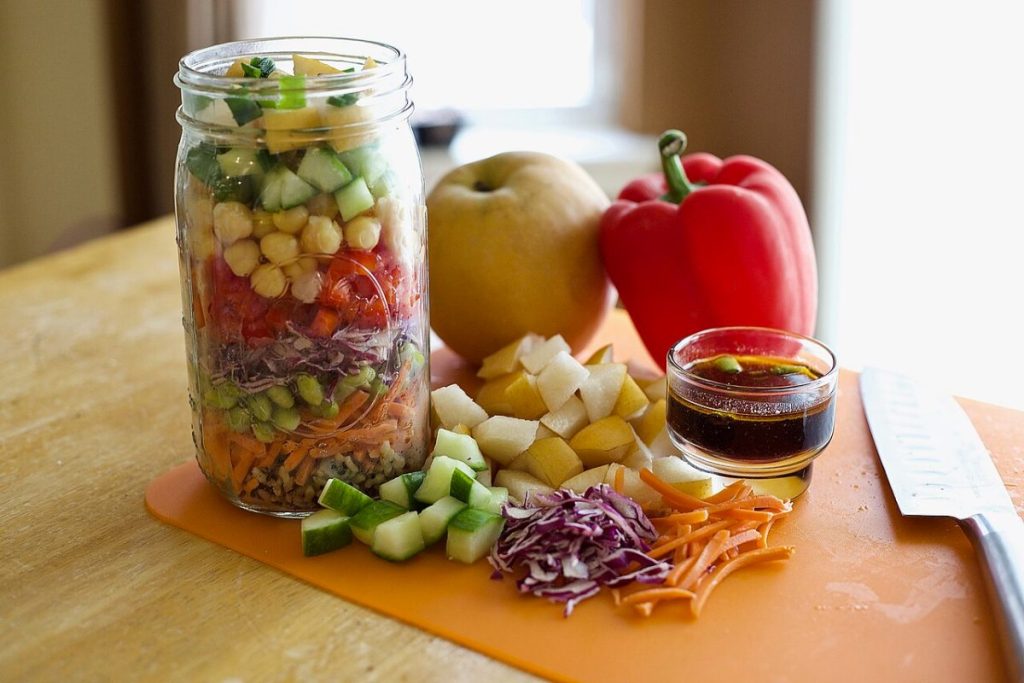
A tall, narrow jar keeps ingredients stacked instead of mixed. Gravity holds the dressing at the bottom, and a dense layer of firm vegetables acts as a wall between the dressing and the greens. A tight lid limits air exposure, which slows browning on cut produce. Glass also won’t absorb odors or stain from beet and tomato juice, so the same jars stay clean after months of weekly use.
The Five-Layer Order That Keeps Everything Fresh
Think of the jar as five zones, stacked bottom to top. Each layer protects the one above it, and the order matters more than the recipe.
Layer 1: Dressing
Start with two to four tablespoons of dressing in the bottom of the jar. Vinaigrettes work best because they pour easily and coat everything once you mix. Creamy dressings work too, though very thick ones can be hard to shake loose. If you like a heavily dressed salad, keep the extra in a small separate container and add it at lunch.
Layer 2: Hard, Sturdy Vegetables
This is your barrier layer. Carrots, cucumbers, bell peppers, radishes, celery, snap peas and red onion can sit in dressing for days without breaking down. They actually pick up flavor as they go, a bit like a quick marinade. Pack this layer tightly so the dressing can’t creep upward.
Layer 3: Grains, Beans and Softer Produce
Next come the heartier fillers: chickpeas, black beans, lentils, quinoa, farro, corn and roasted sweet potato. Cherry tomatoes belong here too, but leave them whole. A sliced tomato leaks juice into everything around it, while a whole one keeps its juice sealed inside until you bite into it. Make sure any cooked grains are fully cooled before they go in.
Layer 4: Protein and Cheese
Grilled chicken, hard-boiled eggs, baked tofu, shrimp and cheeses like feta or cheddar sit in the middle of the jar, well above the dressing. That distance keeps proteins from turning slick and keeps crumbled cheese from dissolving into a paste.
Layer 5: Greens, Nuts and Seeds
Greens go on top, packed firmly with about an inch of headroom left if you plan to shake the salad in the jar. Sturdier greens hold up longest: romaine, kale, shredded cabbage and baby spinach will outlast butter lettuce or spring mix by a day or two. Finish with nuts or seeds sprinkled over the greens, or keep them in a small bag if you want maximum crunch.
A few ingredients don’t belong in the jar at all until the day you eat. Add these right before lunch:
- Avocado, which browns quickly once cut
- Croutons, tortilla strips and crispy onions
- Sliced apples or pears, unless tossed in lemon juice
- Delicate herbs like basil, which bruise and darken
Choosing the Right Jar
A 32-ounce quart jar holds a full meal-sized salad with room for all five layers. A 16-ounce pint works for a side salad or a lighter lunch paired with soup or a sandwich. For a full workweek, a matching set of five quart jars lets you prep everything in one pass and grab a new one each morning.
The mouth of the jar matters as much as the size. Wide-mouth Mason jars make layering easier and give you room to shake everything together right before you eat. A regular-mouth jar works, but you’ll spend more time pushing greens through a narrow opening and fishing out the last chickpeas with a fork. Glass jars with metal or plastic lids also go straight into the dishwasher, which keeps weekly cleanup quick.
How to Prep a Week of Lunches in One Hour
The trick to finishing in an hour is doing things in parallel. Start anything that cooks first, then chop while it cooks. Before you begin, have these on the counter:
- Five quart jars with lids
- A salad spinner and a clean kitchen towel
- A sheet pan and a pot for grains
- A small jar for mixing dressing
Minutes 0 to 15: Start Everything That Cooks
Get quinoa or farro simmering on the stove, set eggs boiling, and put chicken, tofu or cubed sweet potatoes in the oven on a sheet pan. These take the longest, so they need a head start.
Minutes 15 to 35: Wash, Dry and Chop
Wash your greens and dry them completely. Spin them, then roll them in a towel to pull off the last drops. Wet greens are the biggest reason jar salads fail, since trapped water turns leaves slimy by day three. Then chop your sturdy vegetables and drain and rinse any canned beans.
Minutes 35 to 45: Mix the Dressings
A basic vinaigrette takes two minutes: three parts oil to one part vinegar or citrus, a spoonful of Dijon mustard, a pinch of salt and pepper. Shake it in a small jar. Make one big batch if you’re using the same dressing all week, or two smaller batches if you want variety.
Minutes 45 to 60: Cool and Assemble
Let everything cooked cool to room temperature before it goes in a jar. Warm grains or chicken release steam, and that condensation lands right on your greens. Then set up an assembly line. Line up all five jars and add the dressing to every jar, then the sturdy vegetables to every jar, and so on up the layers. Working layer by layer is faster than building one jar at a time. Seal them and store them upright in the fridge.
Five Jar Salad Combinations to Try
Each of these follows the same five-layer order. Mix and match across the week so Friday’s lunch doesn’t taste exactly like Monday’s.
Greek Chickpea Salad
Start with a red wine vinaigrette seasoned with oregano. Add cucumber, red onion and green bell pepper, then chickpeas, whole cherry tomatoes and kalamata olives. Top with crumbled feta and chopped romaine. This one gets better by day two as the cucumbers and onions soak up the dressing.
Southwest Black Bean Salad
Use a lime and cilantro vinaigrette with a pinch of cumin. Layer red bell pepper, red onion and jicama, then black beans, corn and quinoa. Add grilled chicken and shredded cheddar or cotija, and finish with romaine and toasted pepitas. Bring half an avocado to slice in at lunch.
Sesame Ginger Noodle Salad
Pour in a sesame ginger dressing made with soy sauce, rice vinegar, fresh ginger and sesame oil. Add shredded carrots, red cabbage and snap peas, then cooked soba noodles and shelled edamame. Toss the noodles in a little sesame oil first so they don’t clump. Add baked tofu, then top with napa cabbage, sliced green onion and chopped peanuts.
Harvest Kale Salad
Begin with an apple cider vinaigrette sweetened with a touch of maple syrup. Add diced celery and red onion, then roasted sweet potato, farro and dried cranberries. Layer on goat cheese or shredded chicken, then chopped kale and toasted pecans. Massage the kale with a few drops of oil before packing it to soften the leaves. Kale is the sturdiest green on this list, so this is a smart pick for Thursday or Friday.
Cobb-Style Salad
Go with a buttermilk ranch or a red wine vinaigrette. Add cucumber and celery, then whole cherry tomatoes. Next come chopped hard-boiled eggs, diced chicken and crumbled blue cheese. Top with romaine and crumbled bacon. Keeping the bacon at the very top, away from any moisture, helps it stay crisp.
Tips for Keeping Jar Salads Fresh All Week
Plan the order you eat them. Salads with cooked chicken or shrimp should be eaten earliest in the week, while bean-based and vegetarian jars hold up well for Thursday and Friday. The USDA recommends eating cooked poultry and other leftovers within three to four days, so schedule your meat-based jars accordingly.
Fold a paper towel and tuck it on top of the greens before sealing the lid. It absorbs extra moisture and can buy you another day of crispness. Always store jars upright. A jar tipped on its side lets the dressing run straight into the greens and undoes all your careful layering.
Finally, don’t freeze jar salads. Fresh vegetables and greens turn mushy once thawed, and glass jars filled to the top can crack as their contents expand.
FAQ
How long do mason jar salads last in the fridge?
Most jar salads stay fresh for four to five days when the greens are fully dry and the layers are in the right order. Salads with cooked meat or seafood are best eaten within three to four days.
Can I eat the salad straight from the jar?
Yes. Leave about an inch of space under the lid, then seal it and shake hard for a few seconds to spread the dressing. If you packed the jar to the top, pour it into a bowl instead. That flips the layers so the dressing lands on top and falls through everything else.
What size jar is best for a lunch salad?
A 32-ounce quart jar is the standard choice for a full lunch. A 16-ounce pint jar is better for a side salad or a smaller appetite.
Can I use creamy dressing in a jar salad?
Yes. Ranch, Caesar and yogurt-based dressings all work. If yours is especially thick, thin it with a splash of water or milk so it coats the salad more evenly when you mix it.
Your Next Step This Week
Pick two of the combinations above, shop for five jars’ worth of ingredients, and block off one hour on Sunday. Follow the layer order, dry your greens well, and eat your chicken salads first. By Thursday, you’ll open a jar and find a salad that still tastes like you made it that morning.
Photo: A Healthier Michigan from Detroit, United States, via Wikimedia Commons (CC BY-SA 2.0).