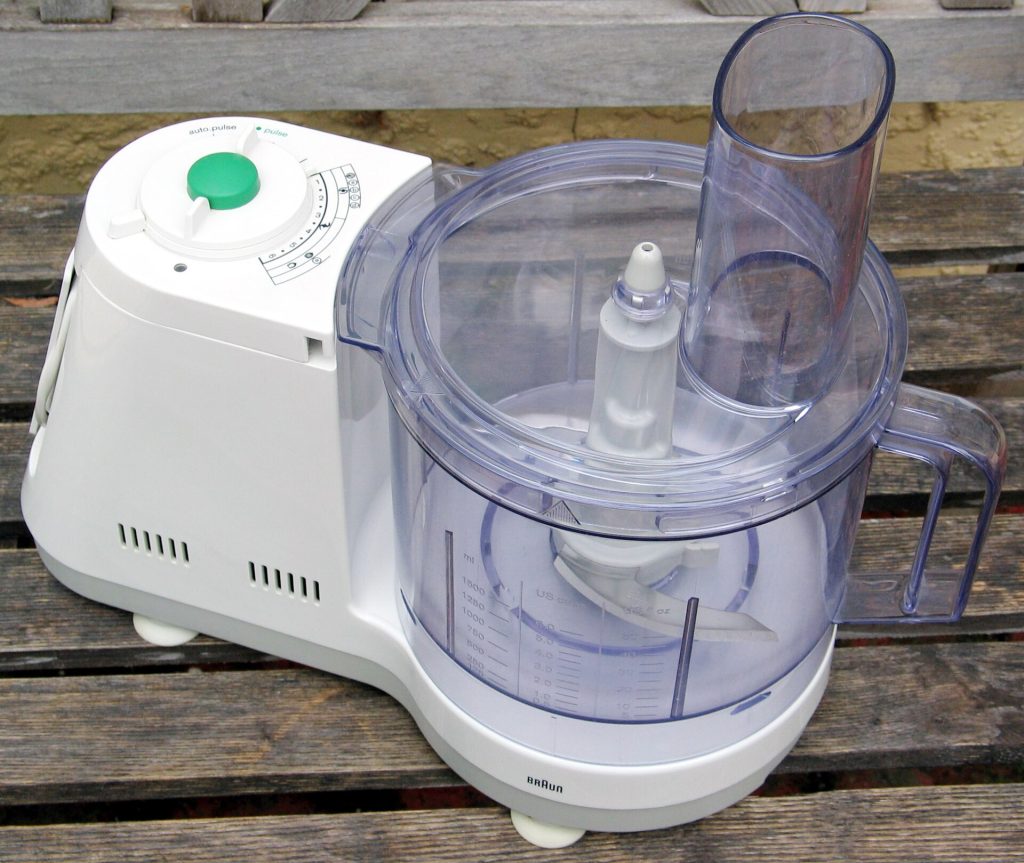
The short answer on food processor vs blender: a food processor is built for solid and thick foods, like chopping, slicing, shredding and mixing dough, while a blender is built for liquids, turning them into smooth purées, smoothies and soups. The wide, flat bowl of a processor moves food around the blade. The tall, narrow jar of a blender pulls liquid down into a vortex.
There’s overlap in the middle, with things like pesto, hummus and salsa, which is why the choice confuses people. But the shape of each machine tells you almost everything about what it does well.
Here’s how they differ in design, a task-by-task comparison, how to purée hot soup without a mess, and a straight answer on whether your kitchen needs both.
Key takeaways
- Food processors have a wide bowl and a flat S-shaped blade, plus slicing and shredding discs.
- Blenders have a tall jar and a blade at the base that relies on liquid to create a vortex.
- Use a processor for chopping, shredding, pastry and dough; use a blender for smoothies, silky soups and drinks.
- Blend hot liquids in small batches with the lid vented and covered with a towel.
- Most home cooks can start with one machine and add the other if their cooking calls for it.
How the two machines are built
Food processor
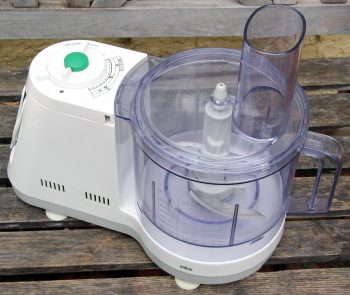
A processor has a wide, flat-bottomed bowl with an S-shaped blade that sits low on a central post. It spins food outward and lets it fall back, so solid pieces get cut rather than liquefied. A feed tube in the lid lets you add ingredients while it runs, and most come with discs for slicing and shredding.
The pulse button is the processor’s most important control. Short bursts chop evenly without turning onions or nuts to paste.
Blender
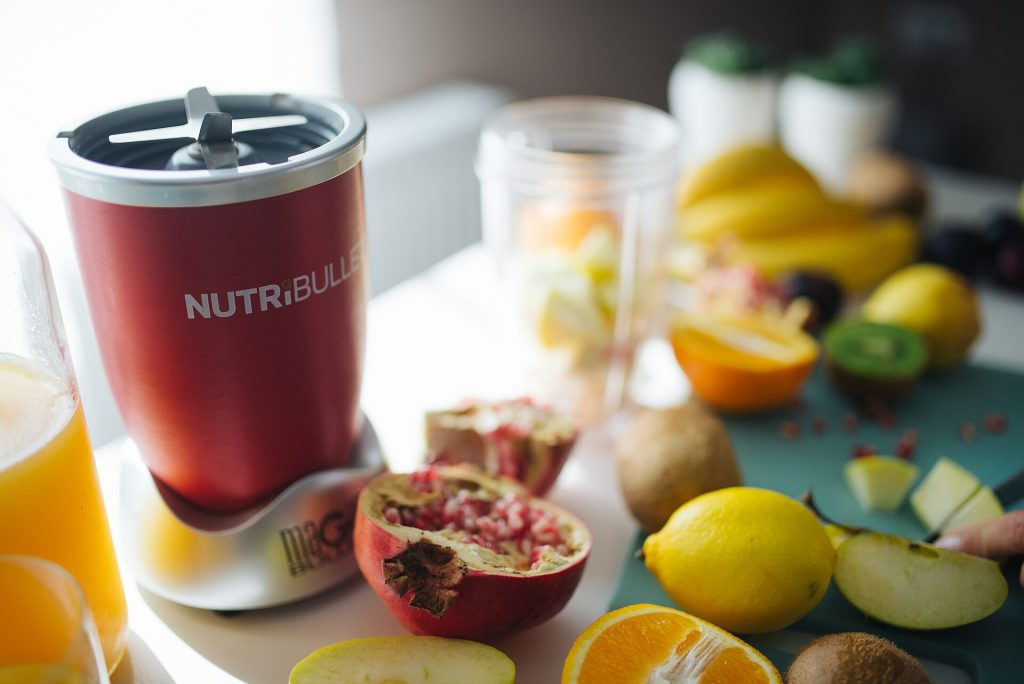
A blender has a tall, tapered jar with a blade assembly at the very bottom. When there’s enough liquid, the spinning blade pulls everything down in a vortex and circulates it past the blades over and over. That’s what gives you a truly smooth smoothie or velvety soup.
Without enough liquid, the blade spins in an air pocket and the food above it doesn’t move. That’s why thick mixtures stall in a blender but are no trouble for a processor.
Food processor vs blender, task by task
| Task | Food processor | Blender |
|---|---|---|
| Chopping onions, herbs, nuts | Best: pulse for even pieces | Poor: tends to purée or stall |
| Slicing and shredding | Best, with discs | Not possible |
| Pie and tart pastry | Excellent for cutting in butter | Not suitable |
| Bread and pizza dough | Good for small batches | Not suitable |
| Pesto, hummus, dips | Good, slightly textured | Good, smoother; needs more liquid |
| Smoothies and frozen drinks | Poor: leaks, uneven | Best |
| Puréed soups | Workable but less smooth; can leak | Best, with hot-liquid care |
| Crushing ice | Poor | Good on most models |
| Nut butter | Good, with patience | Needs a powerful model and a tamper |
The processor’s bowl has a hole in the middle for the blade post, so thin liquids can seep out when it’s overfilled. The blender’s jar is sealed at the base, which is why it handles liquids without drama.
The jobs each machine does best
Food processor: prep work in bulk
Shredding a block of cheese, slicing potatoes for a gratin or chopping a mountain of vegetables for soup takes seconds with the right disc or blade. This is where a processor earns its counter space.
Food processor: pastry and dough
Pulse cold butter into flour until it looks like coarse crumbs with a few pea-sized pieces, then drizzle in ice water with the machine pulsing until the dough just clumps. The speed keeps the butter cold, which is what gives you a flaky crust. Many processors can also knead a small batch of bread or pizza dough in about a minute.
Food processor: textured sauces and dips
Salsa, pesto, chunky hummus and breadcrumbs all come out better in a processor because you can control the texture with pulses. For pesto, the National Center for Home Food Preservation advises storing it in the fridge for no more than 3 days, or freezing it in freezer jars or containers with 1/2 inch of headspace.
Blender: smoothies and shakes
Frozen fruit, yogurt and milk need a vortex to become smooth. A blender does this in under a minute; a processor leaves chunks and may leak.
Blender: silky soups and sauces
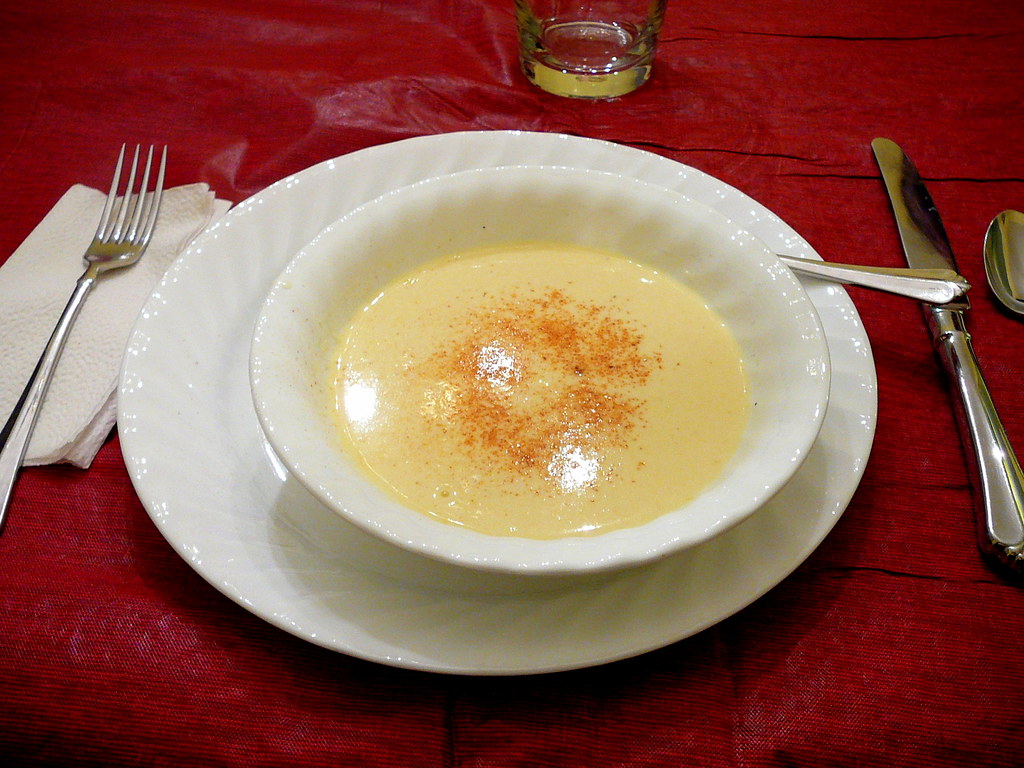
For restaurant-smooth butternut squash soup or a velvety tomato sauce, a blender’s high speed and closed jar give the finest texture. It’s also the better tool for emulsified dressings and batters, like crêpe batter.
Blender: drinks and ice
Frozen cocktails, slushies and crushed ice are blender jobs. Check your model’s manual before blending ice, since not all are designed for it.
If it pours, reach for the blender. If you’d eat it with a fork, reach for the processor.
Blending hot soup safely
Hot liquid is the one blender job that can hurt you. Steam expands quickly when hot soup is spun at high speed, and it can push the lid off and spray scalding liquid. These habits prevent it:
- Let it cool a little. Give the soup 5 to 10 minutes off the heat before blending.
- Fill it partway. Work in batches, keeping the jar no more than about half full.
- Vent the lid. Remove the small center cap so steam can escape, and hold a folded kitchen towel over the opening.
- Start low. Begin on the lowest speed and increase gradually.
- Follow the manual. Some jars aren’t rated for hot contents, and some models have their own instructions for hot blending.
A stick or immersion blender avoids the problem entirely, since you blend right in the pot. It won’t be quite as silky as a countertop blender, but for weeknight soups it’s often good enough.
Once the soup is blended, cool leftovers quickly. The USDA’s leftovers guidance says to refrigerate within 2 hours and to divide a big pot into smaller containers so it chills faster.
Capacity, cleanup and who needs both
Capacity
Both machines list a capacity, but the usable amount is smaller than the number on the box. A processor’s liquid capacity is well below its dry capacity because of the center post. A blender needs headroom for the vortex, and even more for hot food.
Cleanup
- Processors have more parts: bowl, lid, pusher, blade and discs. Rinse them straight away before food dries on.
- Blenders can often be cleaned by blending warm water with a drop of dish soap, then rinsing.
- Handle both blades by the hub, never the edge, and keep them out of a sink full of soapy water where you can’t see them.
- Always unplug before reaching into either machine.
Storage
A processor with its discs takes up more cupboard space. A blender is taller but has fewer pieces. Keep whichever you use most on the counter, because tools that live in a cupboard get used less.
Who needs both
If you only have room for one, choose by the way you cook.
- Start with a processor if you bake pies, make a lot of slaws, gratins and dips, or chop vegetables in volume.
- Start with a blender if smoothies, puréed soups, sauces and drinks are your routine.
- Own both if you cook from scratch most days and regularly find yourself forcing one machine to do the other’s job.
A stick blender is a useful third option for small spaces, since it handles soups and smoothies in a cup. Combined with a small processor, it covers most jobs. Our guide to basic knife skills is worth a look too, since many small chopping tasks are faster by hand.
FAQ
Can a blender replace a food processor?
For liquid jobs, yes. For chopping, slicing, shredding and pastry, no. A blender will purée what you wanted chopped.
Can I make hummus in a blender?
Yes, and it often comes out smoother, but you’ll need more liquid and may need to stop and scrape down the jar.
Is a mini chopper worth it?
For small jobs like a single onion, garlic or a handful of herbs, a mini chopper is handy. It won’t handle dough or large batches.
Why does my food processor leak?
It’s usually overfilled with liquid. Process thin mixtures in smaller batches, or switch to a blender.
Sort your recipes before you buy
Look at the last five things you made and sort them into processor jobs and blender jobs. That list tells you which machine to use more, which one to buy first, and whether you need the other at all. For more tool guides, browse our kitchen gear section or read our favorite soup recipes.
Featured photo: Food Processor 2 by Donovan Govan, BY-SA 3.0.