How much protein per day do you need? The long-standing Recommended Dietary Allowance is 0.8 grams per kilogram of body weight, which works out to about 0.36 grams per pound. For a 150-pound (68 kg) adult that is roughly 54 grams a day. The newest US Dietary Guidelines set a higher goal of 1.2 to 1.6 grams per kilogram, and older adults and athletes are often advised to aim above the minimum too.
That is a lot of numbers for something most of us just want to cook dinner around. So this explainer keeps it practical: where each figure comes from, who each one is meant for, how much protein is actually in the food on your shelf, and how to spread it across breakfast, lunch and dinner without turning your kitchen into a lab.
One note before we start. This is general nutrition information from public sources, not personal medical advice. If you are pregnant, managing a health condition or following a plan from your doctor, their number beats any number here.
Key takeaways
- The RDA is 0.8 g of protein per kilogram of body weight (0.36 g per pound), a minimum set to cover almost everyone.
- The 2025–2030 Dietary Guidelines for Americans set a goal of 1.2 to 1.6 g per kilogram per day.
- Research cited by UC Davis suggests older adults may need about 1.5 g/kg, and athletes 1.2 to 1.8 g/kg depending on sport.
- A 3-ounce portion of fish or chicken gives around 19 to 21 g; an egg about 6 g; half a cup of beans about 8 g.
- Splitting protein across meals is a simple habit, and it matters most as you get older.
In this guide
- Where the 0.8 gram figure comes from
- The newer 1.2 to 1.6 gram goal
- Older adults and active people
- How much protein is in everyday foods
- Spreading protein across your meals
- FAQ
- Work out your own number tonight
Where the 0.8 gram figure comes from
The 0.8 figure is the Recommended Dietary Allowance, or RDA. As Harvard Health Publishing puts it, the RDA is 0.8 grams of protein per kilogram of body weight, or 0.36 grams per pound. It is the amount you need to meet basic nutritional requirements, which makes it a floor rather than a target.
To use it, multiply your weight in pounds by 0.36. Harvard’s own example is a 50-year-old sedentary woman who weighs 140 pounds: she needs about 53 grams of protein a day. A 180-pound man doing the same sum lands at about 65 grams.
A percentage way of looking at it
Nutrition scientists also describe protein as a share of your calories. The UC Davis Department of Nutrition notes that the acceptable range for adults is 10 to 35 percent of daily calories from protein, and that going above 35 percent is generally thought of as safe. Harvard Health adds that the average American already gets around 16 percent of daily calories from protein.
In other words, most home cooks are not short of protein. The more useful questions are whether you get enough at each meal, and whether it comes packaged with good things like fibre and healthy fats.
The newer 1.2 to 1.6 gram goal
The 2025–2030 Dietary Guidelines for Americans arrived at the start of 2026. According to MedlinePlus, the guidelines say adult and child goals are 1.2 to 1.6 grams of protein per kilogram of body weight per day, from foods such as meat, poultry, seafood, beans and peas, eggs, processed soy products, nuts and nut butters, and seeds.
That is a big jump. The Harvard T.H. Chan School of Public Health’s Nutrition Source points out that it is 50 to 100 percent more than the previous minimum recommendation, and it quotes Professor Frank Hu warning that raising protein intake substantially without distinguishing between sources may have unintended long-term health implications. The same article notes that many people in the US already eat more than enough protein, and that excess protein can still be converted to fat.
The source of your protein matters as much as the grams. A bowl of lentils and a plate of bacon do not do the same job.
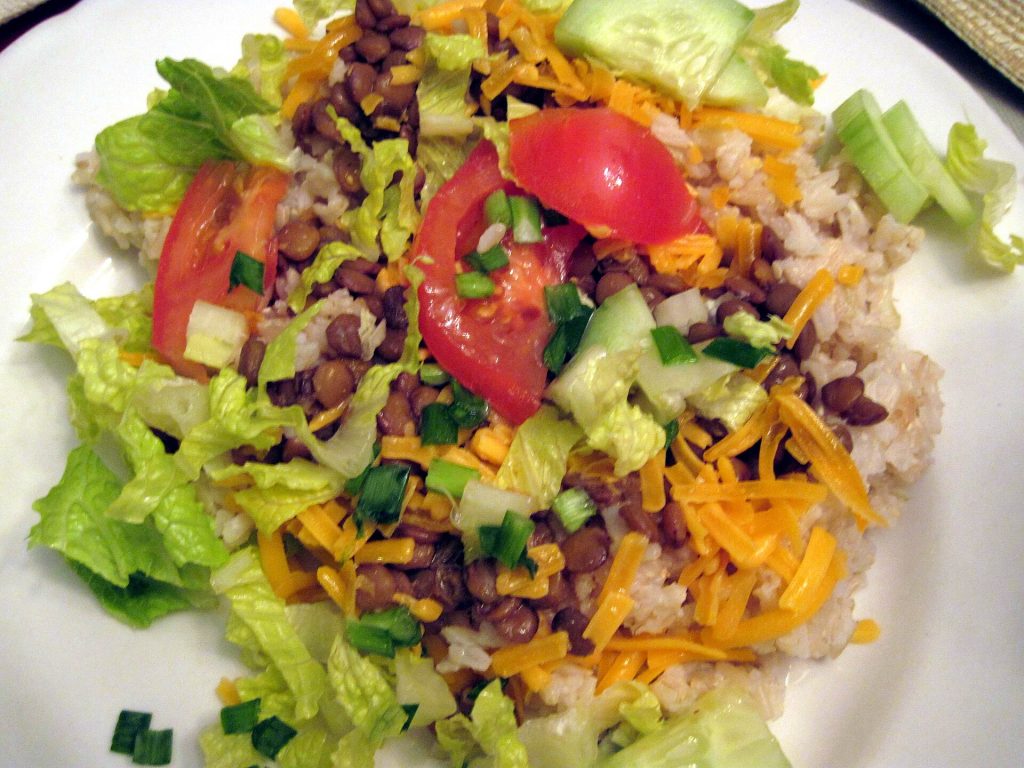
Harvard’s take on quality is worth borrowing for your shopping list: evidence continues to suggest that plant proteins and fish are associated with more favourable health outcomes than diets high in red meat. Beans, lentils, tofu, fish, eggs, yogurt and nuts all earn their place.
Older adults and active people
Older adults
Protein needs do not shrink as you age, and they may grow. UC Davis explains that research suggests older people need about 1.5 g per kilogram a day to maintain lean body mass, because with age cells become less responsive to amino acid signalling and need higher concentrations. For a 70 kg (154 lb) older adult, that is about 105 grams a day, nearly double the RDA.
Athletes and very active people
UC Davis gives separate ranges for people who train hard. Strength and power athletes are put at 1.4 to 1.8 g per kilogram per day, and endurance athletes at 1.2 to 1.4 g. If you lift, run or cycle seriously, those ranges are a better starting point than the RDA.
Pregnancy
UC Davis notes that the RDA rises to 71 grams a day during pregnancy and breastfeeding, while Harvard Health mentions a range of 75 to 100 grams during pregnancy. This is exactly the situation to talk through with your midwife or doctor.
Quick reference by body weight
Here is what those multipliers look like for a 70 kg (about 154 lb) adult. Swap in your own weight in kilograms to get your figures.
- RDA, 0.8 g/kg: about 56 g a day.
- Dietary Guidelines goal, 1.2 to 1.6 g/kg: about 84 to 112 g a day.
- Older adult, about 1.5 g/kg: about 105 g a day.
- Endurance athlete, 1.2 to 1.4 g/kg: about 84 to 98 g a day.
- Strength athlete, 1.4 to 1.8 g/kg: about 98 to 126 g a day.
How much protein is in everyday foods
Numbers only help if you can translate them into a plate. Harvard Health lists typical protein amounts for common foods, and they line up nicely with what most of us already cook.
| Food | Portion | Protein (approx.) |
|---|---|---|
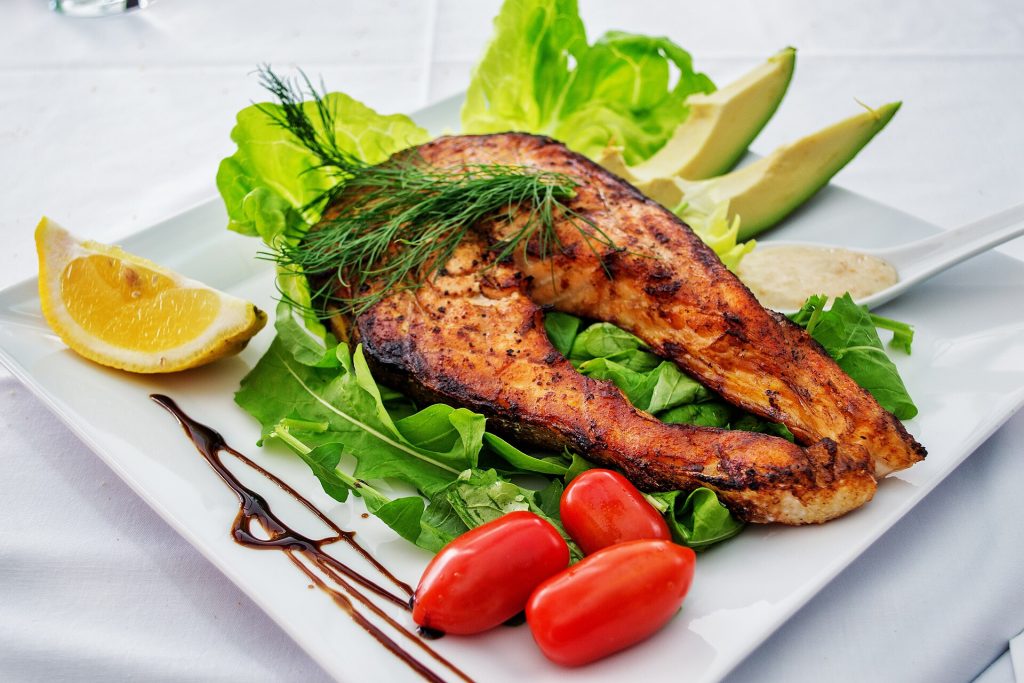
| Tuna, salmon or haddock | 3 oz | 21 g |
| Chicken or turkey | 3 oz | 19 g |
| Greek yogurt | 6 oz | 17 g |
| Cottage cheese | ½ cup | 14 g |
| Cooked beans | ½ cup | 8 g |
| Milk | 1 cup | 8 g |
| Cooked pasta | 1 cup | 8 g |
| Nuts | 1 oz | 7 g |
| Egg | 1 | 6 g |
Notice how the everyday things add up. Pasta with a half-cup of white beans and a sprinkle of cheese is already past 16 grams before you add any meat or fish. A 3-ounce portion of fish covers a third of the RDA for many adults on its own.
If you want more ideas built around these ingredients, our easy bean recipes are an inexpensive place to start, and there is plenty more in our healthy eating section.
Spreading protein across your meals
UC Davis notes that the amount of protein absorbed in one sitting may be less than the amount absorbed when it is eaten across the day, and recommends distributing intake across meals. For home cooks, that mostly means giving breakfast and lunch a bit more attention, since dinner tends to carry the load.
A sample day at about 100 grams
Here is one way a day could look, using the Harvard portions above. It is not a meal plan, just proof that a higher target is reachable with ordinary food.
- Breakfast: 6 oz Greek yogurt with 1 oz of nuts, about 24 g.
- Lunch: a salad with 3 oz of tuna and half a cup of beans, about 29 g.
- Dinner: 3 oz of roast chicken with a cup of pasta, about 27 g.
- Snack: a glass of milk and half a cup of cottage cheese, about 22 g.
That lands around 102 grams, and every meal carries a decent share. Swap the chicken for lentils or tofu on some nights and you also tilt your week towards the plant proteins the Nutrition Source favours.
Easy upgrades for each meal
- Stir an egg into fried rice or a bowl of ramen.
- Add a spoon of Greek yogurt to soups and curries instead of cream.
- Keep cooked beans or chickpeas in the fridge to throw into salads and pasta.
- Top toast with cottage cheese and tomatoes rather than just butter.
Breakfast is usually the lightest meal, so our make-ahead breakfast ideas are a good way to lift your morning number.
FAQ
How do I calculate my protein needs?
Multiply your weight in kilograms by 0.8 for the RDA, or your weight in pounds by 0.36. For the newer Dietary Guidelines goal, multiply kilograms by 1.2 and 1.6 to get a range.
Is the RDA or the new guideline right for me?
The RDA is the minimum for basic needs; the 2025–2030 guidelines set a higher goal. Many people already eat well above the RDA. If you are older, very active or have a medical condition, ask a doctor or registered dietitian.
Can I get enough protein without meat?
Yes. The Dietary Guidelines list beans and peas, soy products, nuts, seeds and eggs alongside meat, and Harvard notes that plant proteins are associated with favourable health outcomes.
Is eating too much protein a problem?
UC Davis says intakes above 35 percent of calories are generally thought of as safe, but Harvard’s Nutrition Source notes that excess protein can still be converted to fat, and the source matters for long-term health.
Work out your own number tonight
Grab your weight, do the two sums, 0.8 and 1.2 times kilograms, and you have your range. Then look at tomorrow’s meals and make sure each one has a solid protein anchor, ideally beans, fish, eggs, yogurt or poultry. Start with breakfast, since that is where most kitchens have the easiest win.
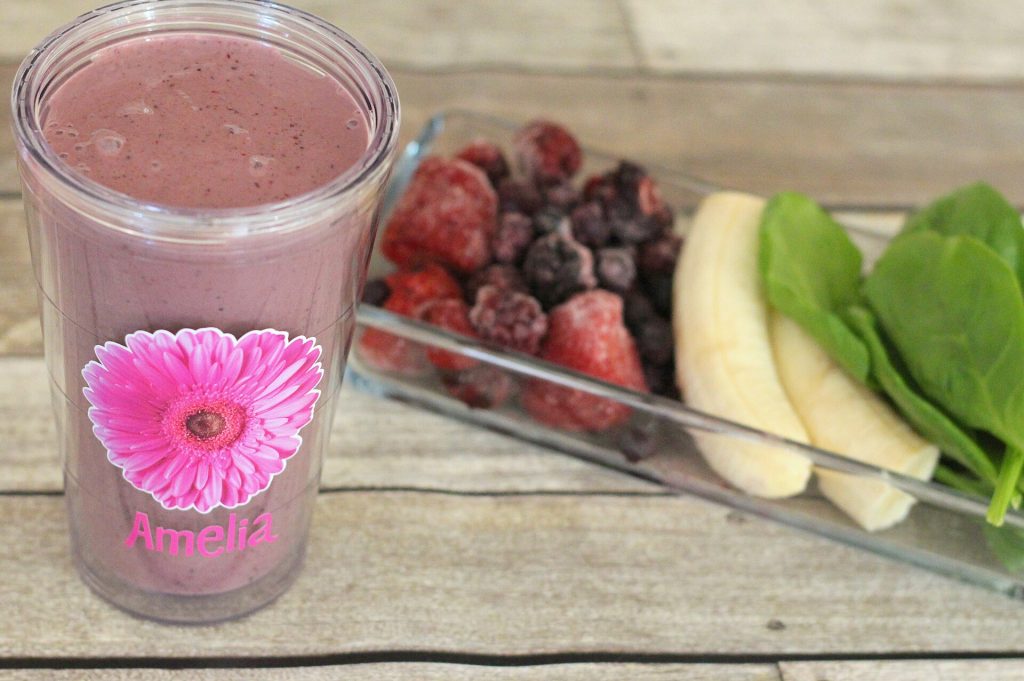
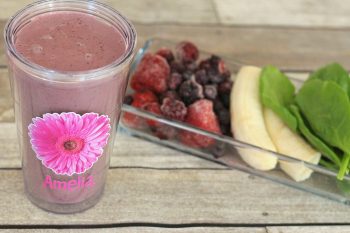
Featured photo: Kid friendly green smoothie in a personalized glass with spinach, Greek yogurt, frozen blueberries, blackberries and strawberries and berries, banana in a glass bowl on a wood table (16225943125) by Personal Creations, BY 2.0.


_(4291546125).jpg)

.jpg)