The best homemade chicken noodle soup starts with a whole chicken gently poached in water with onion, carrot and celery. That one pot gives you two things at once: a golden, full-bodied stock and tender meat to shred back into the bowl. Strain, skim, add fresh vegetables, and finish with noodles cooked just before serving.
It takes a couple of hours, but most of that is the pot ticking over on its own. There’s no browning, no fancy equipment, and nothing you can’t find at a regular grocery store.
Here’s the full method, how to keep the broth clear, why the noodles are best cooked separately if you plan to freeze, how to cool and store a big batch safely, and a few twists for when you want a change.
Key takeaways
- Poach a whole chicken at a gentle simmer, never a hard boil, for a clearer, cleaner-tasting stock.
- Poultry is safe at 165°F, according to USDA; check the thickest part of the breast and the inner thigh.
- Skim foam early, then chill the strained stock and lift off the solid fat the next day.
- Cook noodles separately and add them to each bowl, especially if any soup is going in the freezer.
- Refrigerate within 2 hours in shallow containers; soups keep 3 to 4 days in the fridge and 2 to 3 months frozen for best quality.
In this guide
- What you need
- How to make chicken noodle soup, step by step
- When to cook the noodles
- Cooling, storing and freezing safely
- Variations worth trying
- FAQ
- Your soup-day game plan
What you need
This makes about 10 generous bowls. Use your largest stockpot, ideally 8 quarts or more, so the chicken sits under the water with room to spare.
For the stock
- 1 whole chicken, about 4 pounds, giblets removed
- 1 large onion, halved, skin on for color
- 2 carrots and 2 celery ribs, cut in large chunks
- 4 garlic cloves, smashed
- A few parsley stems, 2 bay leaves and 1 teaspoon black peppercorns
- About 4 quarts cold water
For the soup
- 3 carrots, sliced into coins
- 3 celery ribs, sliced
- 1 onion, diced
- 1 tablespoon butter or skimmed chicken fat
- 8 to 12 ounces dried egg noodles
- Salt, pepper, fresh parsley and dill, and a lemon
Don’t rinse the chicken first. USDA’s chicken food safety guide says washing raw poultry isn’t recommended because it spreads bacteria from the juices to nearby foods, utensils and surfaces, and rinsing doesn’t destroy bacteria anyway. The long simmer does the work.
How to make chicken noodle soup, step by step
- Start cold. Put the chicken, breast side up, into the pot with the aromatics. Add cold water to cover by about an inch. Starting cold draws more flavor out of the bird as it heats.
- Bring it up slowly. Heat over medium until small bubbles break the surface, then turn it down so the water barely shivers. A rolling boil churns the fat into the liquid and makes the stock cloudy.
- Skim the foam. In the first 20 minutes, grey foam will rise. Lift it off with a ladle or fine spoon every few minutes.
- Poach the chicken. Simmer gently, uncovered or partly covered, for about 1 to 1 1/4 hours for a 4-pound bird. The meat should pull easily from the leg bone.
- Check the temperature. USDA says to cook all poultry to 165°F, checking the innermost part of the thigh and wing and the thickest part of the breast.
- Pull the chicken. Lift the bird onto a rimmed tray and let it cool until you can handle it. Pull the meat off in bite-size pieces and set it aside, covered.
- Return the bones. Put the skin and bones back in the pot and simmer another 45 minutes to an hour for a richer stock.
- Strain. Pour everything through a fine sieve into a large bowl or second pot. Discard the solids. You should have roughly 3 quarts of stock.
- Build the soup. Melt the butter or a spoonful of chicken fat in the clean pot. Soften the diced onion for 5 minutes, then add the carrots, celery and stock. Simmer until the carrots are just tender, about 15 minutes.
- Finish. Add the shredded chicken to heat through, then season with salt and pepper. Taste again after salting; homemade stock needs more than you think.
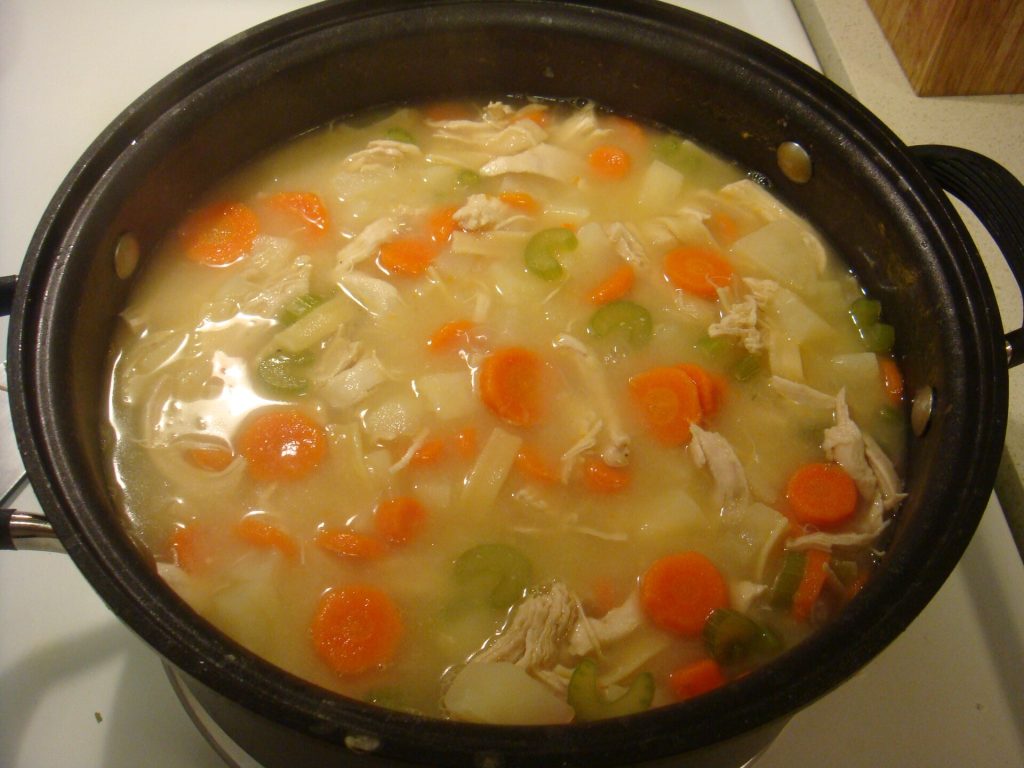
Keep the pot at a lazy shiver, not a boil. Patience is what turns chicken water into golden stock.
Keeping the broth clear
Clear stock is mostly about heat control. When the pot boils hard, fat and tiny bits of protein get whipped into the liquid and stay suspended, which gives you a cloudy, slightly greasy broth. At a gentle simmer they float up as foam, where you can remove them.
- Early foam: skim it in the first half hour, when it rises fastest. After that, a quick pass every so often is enough.
- Fat: the easiest way is to chill the strained stock. Penn State Extension notes that once the stock is cold, the fat solidifies on top and can be lifted off with a clean spoon.
Don’t throw all that fat away. A spoonful is wonderful for softening the soup vegetables, and it keeps in the fridge for a few days in a small covered jar.
No time to chill? Tilt the pot and skim the fat pooling at the edge with a wide spoon, or drag a folded paper towel lightly across the surface. It won’t be perfect, but a little fat carries flavor.
When to cook the noodles
Noodles are the part most home cooks get wrong. Dropped into the big pot, they keep drinking broth as the soup sits, so by day two you have swollen, soft noodles and not much liquid left.
The better way
- Bring a separate pot of salted water to a boil.
- Cook the egg noodles until just tender, a minute short of the package time.
- Drain and toss with a few drops of oil or a ladle of stock so they don’t clump.
- Put a handful of noodles into each bowl and ladle the hot soup over the top.
Store leftover noodles in their own container. Your broth stays clear, the noodles keep their bite, and the soup base freezes far better without pasta in it. If you’re only making enough for one meal, cooking the noodles right in the soup for the last few minutes is fine.
Which noodles
Wide egg noodles are the classic, with a rich, tender chew. Kluski-style thick noodles hold up well; small shapes like ditalini or orzo make it easier for children to eat. For gluten-free bowls, rice noodles or cooked rice work well, added at serving time.
Cooling, storing and freezing safely
A big pot of soup holds heat for a long time, and that’s the food safety challenge. USDA’s leftovers guidance says to refrigerate leftovers within 2 hours of cooking and to divide large amounts into shallow containers so they cool quickly.
Cooling fast
- Portion the stock or soup into several shallow containers rather than chilling one deep pot.
- Penn State Extension also suggests setting the pot of strained stock in a sink of ice water and stirring often to speed cooling.
- Leave lids slightly ajar until the soup is cold, then seal.
How long it keeps
| What | Refrigerator | Freezer | Tip |
|---|---|---|---|
| Soup with meat and vegetables | 3 to 4 days | 2 to 3 months | Freeze without noodles |
| Cooked chicken, shredded | 3 to 4 days | 2 to 6 months | Freeze in stock to stop it drying out |
| Homemade stock | Up to 3 days (Penn State Extension) | Leave headspace for expansion | Wide-mouth jars or freezer tubs |
| Raw whole chicken | 1 to 2 days | Up to 1 year | Keep at 40°F or below |
The soup and poultry times come from the federal cold food storage chart, which also points out that freezer times are for quality only: food kept constantly at 0°F stays safe indefinitely, but it slowly loses flavor and texture.
Thawing and reheating
Thaw frozen soup in the refrigerator overnight. USDA advises reheating soups by bringing them to a rolling boil, and says leftovers should reach 165°F. Cook fresh noodles while the soup heats and you’ll hardly know it came from the freezer.
Variations worth trying
Once you have the base down, the soup is easy to steer in new directions. Change one or two things at a time.
- Lemon and dill: finish each bowl with a squeeze of lemon and plenty of chopped dill. Bright and fresh.
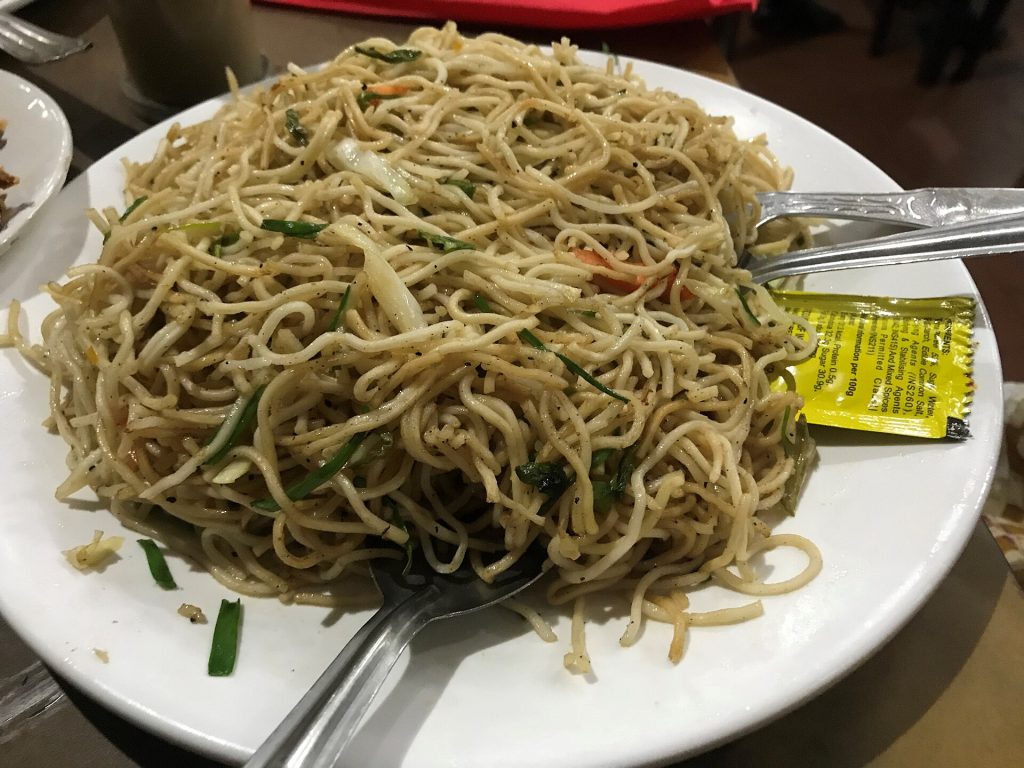
- Ginger and scallion: add a thumb of sliced ginger to the stock, swap egg noodles for rice noodles, and top with scallions and a few drops of sesame oil.
- Extra vegetables: stir in chopped spinach or kale in the last 2 minutes, or add diced parsnip with the carrots.
- Creamy: whisk a little of the hot broth into a spoonful of flour and butter, then stir it back in for a thicker, velvety soup.
- Chicken and rice: skip the noodles and add cooked rice to each bowl instead.
- Spicy: a dried chili in the stock or a spoon of chili crisp on top warms things up.
If you like making broth from scratch, you’ll get even more mileage from a batch of homemade stock in risottos, gravies and sauces.
FAQ
Can I use chicken pieces instead of a whole chicken?
Yes. Bone-in, skin-on thighs and drumsticks give the most flavor. Breasts alone make a lighter stock and can dry out, so pull them early.
Why is my chicken soup cloudy?
Usually it boiled too hard. Keep the heat low enough for a gentle simmer and skim the foam early. Cloudy soup still tastes good.
How long does homemade chicken noodle soup last in the fridge?
USDA says leftovers keep 3 to 4 days in the refrigerator. Store the noodles separately so they don’t go soft.
Can you freeze chicken noodle soup?
Yes, but freeze the soup base without noodles and cook fresh noodles when you reheat. The base keeps best quality for 2 to 3 months.
Your soup-day game plan
Pick a quiet afternoon, buy a 4-pound chicken and a bag of carrots, and make a full pot. Eat some tonight, and freeze the rest in single portions for busy weeknights or the next time someone at home feels under the weather. For more comforting, from-scratch cooking, browse our recipes and try another easy soup next.
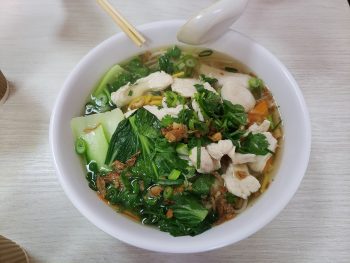
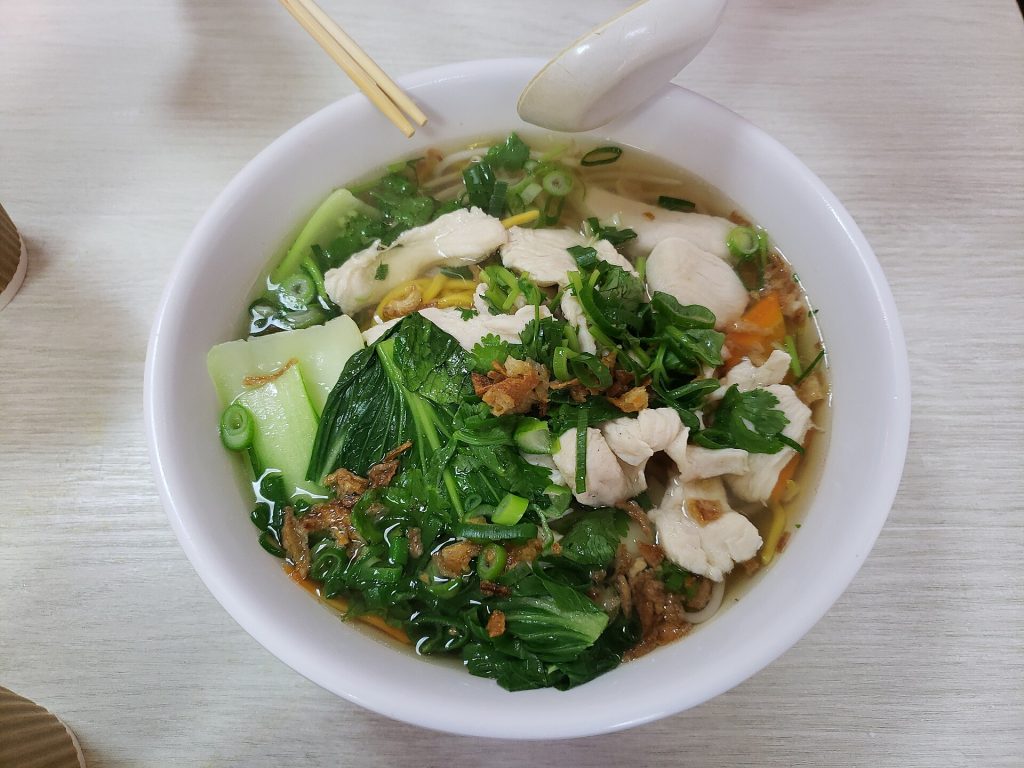
Featured photo: Chicken with Noodles Soup – Noodles Soup 2023-10-24 by Andy Li, CC0.