The best healthy pantry staples on a budget are the plain, hard-working ones: canned beans and fish, whole grains like oats and brown rice, frozen vegetables and fruit without sauces or syrups, a bag of nuts, and a shelf of spices. Buy the lowest-sodium, no-sugar-added versions you can find, and you have the base for dozens of quick dinners.
The trick is not buying more. It’s buying the right versions, reading two lines of the label, and knowing how long each item really lasts so nothing goes stale at the back of the cupboard.
Use this as a checklist. Tick off what you already have, note the gaps, and fill them a few items per shop.
Key takeaways
- Canned, frozen and dried produce with little or no added sugar counts toward a healthy diet, according to the 2025–2030 Dietary Guidelines.
- Rinsing canned beans, tuna and vegetables removes some of their sodium.
- On the label, 5% Daily Value or less is low and 20% or more is high.
- The Daily Value for sodium is less than 2,300 mg a day; for added sugars it is 50 grams.
- Whole wheat flour and shelled nuts go stale fastest, so buy small amounts or keep them cold.
In this guide
- Canned staples worth stocking
- Whole grains, pasta and dried beans
- The freezer aisle
- Nuts, seeds, oils and spices
- Reading labels for sodium and added sugar
- How long pantry staples keep
- FAQ
- Build your list this week
Canned staples worth stocking
Cans are the backbone of a cheap, healthy pantry. They need no fridge space, they cook in minutes, and the Dietary Guidelines for Americans, 2025–2030 say plainly that frozen, dried or canned vegetables and fruits with no or very limited added sugars can be good options. The same guidelines list beans, peas and lentils among the protein foods to eat in variety.
- ☐ Beans: two or three kinds, such as chickpeas, black beans and kidney beans. Look for “no salt added” or “low sodium”.
- ☐ Lentils: canned for speed, or dried if you have 30 minutes.
- ☐ Canned fish: tuna, salmon or sardines packed in water or olive oil.
- ☐ Tomatoes: whole, diced or crushed, plus a small can of paste.
- ☐ Vegetables: corn, peas or green beans with no added salt.
- ☐ Fruit: packed in water or its own juice, not syrup.
Rinse, then cook
The FDA’s guide to sodium recommends rinsing sodium-containing canned foods such as beans, tuna and vegetables before eating, because it removes some of the sodium. Tip the can into a sieve, run cold water over it for a few seconds, and shake it dry. It costs nothing and it’s the easiest habit on this list.
Whole grains, pasta and dried beans
Grains stretch every meal further. The 2025–2030 Dietary Guidelines set a goal of 2–4 servings of whole grains a day, adjusted to your calorie needs, so keep at least two on hand.
- ☐ Rolled oats: breakfast, but also a binder for meatballs and a topping for crumbles.
- ☐ Brown rice: cook a big batch and freeze it flat in bags.
- ☐ Whole wheat pasta: it cooks just like white pasta, so it’s an easy swap.
- ☐ One wildcard grain: barley, bulgur or quinoa, bought in a small bag to try.
- ☐ Dried beans or lentils: worth it if you have time to simmer them.
- ☐ Whole wheat flour: only if you bake often, as it keeps for months, not years.
Dried beans are worth learning. Soak them overnight, simmer until tender, then freeze in portions the size of a can. You get the convenience of canned beans, and you control the salt.
The freezer aisle
Frozen vegetables and fruit are picked and frozen for you, so there’s no waste and no rush to use them. Choose plain bags. Once a sauce, butter or seasoning packet is added, you’re paying more for salt and fat you could add yourself.
- ☐ Leafy greens: spinach or kale for soups, eggs and pasta.
- ☐ Mixed vegetables: peas, carrots, corn and green beans for fried rice and pot pies.
- ☐ Broccoli or cauliflower: roast straight from frozen at high heat.
- ☐ Berries: for oats, yogurt and smoothies, with no added sugar.
- ☐ Chopped onion or peppers: a real time-saver on busy nights.
For best quality, the NDSU Extension food storage guide suggests keeping plain frozen vegetables three to six months. Write the date on the bag with a marker and pull the oldest forward each time you shop.
Nuts, seeds, oils and spices
These are the flavour and healthy-fat corner of the pantry. The Dietary Guidelines name nuts and seeds among whole foods with healthy fats, but they cost more per bag, so buy them plain and store them well.
- ☐ Nuts: unsalted peanuts, almonds or walnuts.
- ☐ Seeds: sunflower or pumpkin seeds for salads and oats.
- ☐ Nut butter: check the ingredient list for added sugar and oil.
- ☐ Cooking oil: one everyday oil, such as olive or canola.
- ☐ Vinegar: red wine or cider, for quick dressings.
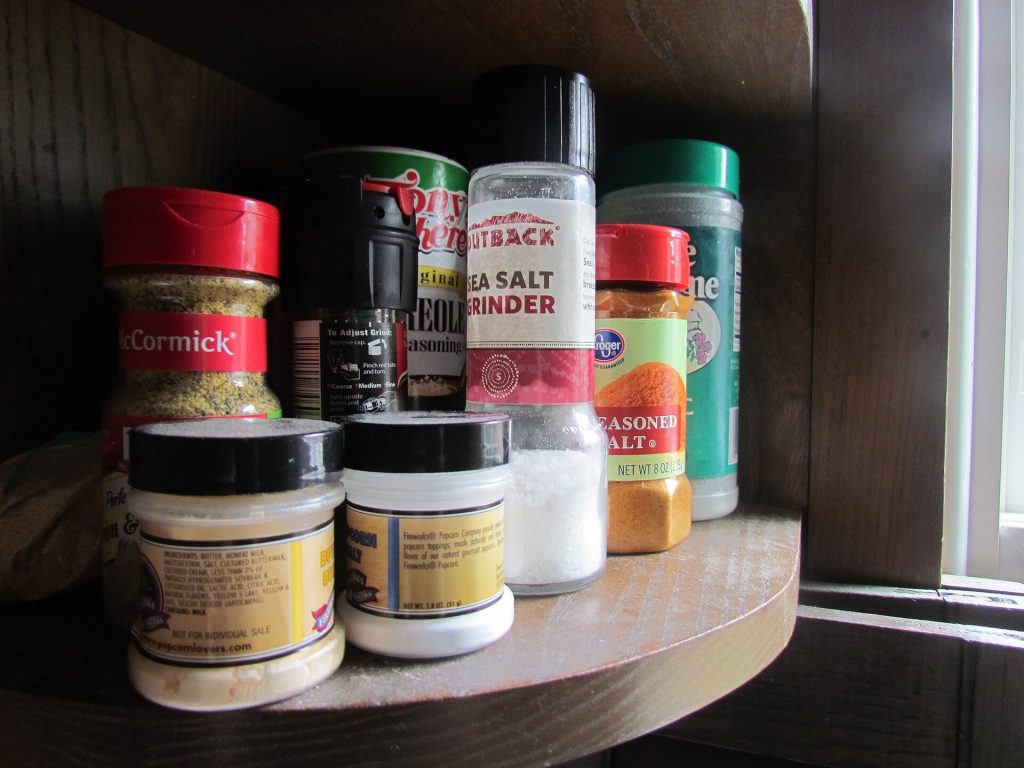
- ☐ Spices: cumin, paprika, chili flakes, oregano, cinnamon and black pepper cover most recipes.
- ☐ Garlic and onion powder: flavour without adding salt.
Spices are where a budget pantry gets its personality. A spoon of smoked paprika and cumin turns a can of chickpeas into dinner, and you’ll lean less on salty sauces and seasoning mixes.
The cheapest healthy dinner is the one you can make from what’s already in the cupboard.
Reading labels for sodium and added sugar
You don’t need to read every line of the Nutrition Facts panel. For pantry shopping, two numbers do most of the work: sodium and added sugars. The FDA’s rule of thumb is that 5% Daily Value or less per serving is low, and 20% or more is high.
Sodium
The Daily Value for sodium is less than 2,300 mg a day, and the FDA notes that over 70% of the sodium people eat comes from packaged and prepared foods, not the salt shaker. That makes canned goods, broths and sauces the place to be choosy. The front-of-can words have set meanings:
| Label claim | What it means |
|---|---|
| Sodium-free | Less than 5 mg per serving |
| Very low sodium | 35 mg or less per serving |
| Low sodium | 140 mg or less per serving |
| Reduced sodium | At least 25% less than the regular product |
| Light in sodium | At least 50% less than the regular product |
| No salt added | No salt added during processing, but the food may still contain some sodium |
Added sugars
Added sugars now have their own line on the label. The FDA explains that the Daily Value is 50 grams a day on a 2,000-calorie diet, and that added sugars include syrups, honey and concentrated fruit juice as well as table sugar. Check them on canned fruit, nut butter, flavoured oats, pasta sauce and breakfast cereal, where they tend to hide.
- ☐ Compare sodium in milligrams per serving between two cans, and take the lower one.
- ☐ Check that the serving size matches how much you’ll actually eat.
- ☐ Look for 5% Daily Value or less of added sugars on everyday staples.
- ☐ Scan the ingredient list: a whole grain should come first on bread, pasta and crackers.
How long pantry staples keep
A cheap pantry only stays cheap if nothing gets thrown out. These times, from the NDSU Extension food storage guide and University of Missouri Extension, are for quality. Food past them isn’t necessarily unsafe, but it won’t taste its best.
| Staple | How long it keeps |
|---|---|
| Canned low-acid foods (beans, vegetables, fish) | 2 to 5 years unopened |
| Canned high-acid foods (tomatoes, fruit) | 12 to 18 months unopened |
| Dried beans and peas | 12 months in the pantry |
| Dry pasta | 2 years unopened, 1 year opened |
| Whole wheat flour | 3 to 6 months in the pantry, 6 to 8 months opened in the fridge |
| Shelled nuts, opened | 4 to 6 months in the fridge |
| Plain frozen vegetables | 3 to 6 months in the freezer |
| Ground spices | 2 to 3 years |
| Whole spices | 3 to 4 years |
University of Missouri Extension advises storing cans in a cool, dark, dry place away from furnaces and pipes, and off the floor. Throw out any can or jar with a broken seal, rust, bulging or dents, and don’t buy damaged ones in the first place.
FAQ
Are canned vegetables as healthy as fresh?
The 2025–2030 Dietary Guidelines say canned, frozen and dried vegetables and fruits with no or very limited added sugars can be good options. Pick low-sodium or no-salt-added cans and rinse them.
How much does rinsing canned beans help?
The FDA says rinsing removes some of the sodium from canned beans, tuna and vegetables. It won’t make a salty can low-sodium, so start with a lower-sodium product.
What’s the most useful single staple?
For most home cooks, canned chickpeas or black beans. They go into soups, salads, tacos, curries and pasta, and they count as a protein food.
Should nuts go in the fridge?
Once opened, yes. NDSU Extension gives opened packaged nuts 4 to 6 months in the refrigerator, much longer than they last on a warm shelf.
Build your list this week
Print or screenshot the checklists above, stand in front of your cupboard, and tick what you have. Then add three missing items to this week’s shopping list, not thirty. For dinner ideas that use these staples, see easy bean recipes and a simple weekly meal prep plan, or browse more healthy eating guides.
Featured photo: Dry Goods and Snacks Alley inside the Market by PAULIX04, BY-SA 4.0.