
Here is the short version of the eggs and cholesterol debate. For most healthy people, an egg a day fits comfortably into a heart-healthy diet, because the cholesterol you eat has a smaller effect on the cholesterol in your blood than the overall mix of fats on your plate. The picture changes if you already have high LDL cholesterol or diabetes, and it changes a lot depending on whether that egg arrives with toast and salsa or with sausage and cheese.
Eggs spent decades as the villain of the breakfast table, and plenty of home cooks still separate yolks out of habit. The advice has moved on, but the myths have stuck around. Below we take them one at a time, using what the American Heart Association, Harvard’s nutrition researchers and the current federal Dietary Guidelines actually say.
One note before we start: this is a cook’s guide to the public guidance, not personal medical advice. If you have a cholesterol diagnosis or take medication for it, your own doctor’s advice comes first.
Key takeaways
- The American Heart Association says healthy people can include up to one whole egg, or the equivalent, a day.
- One large egg holds roughly 186 to 200 mg of cholesterol, all of it in the yolk.
- The old 300 mg daily cap is gone; the 2025–2030 Dietary Guidelines list eggs as a protein food and keep saturated fat under 10% of daily calories.
- What you cook eggs in and serve them with often matters more than the egg itself.
- People with high LDL cholesterol or diabetes are advised to be more cautious with yolks.
In this guide
- Myth 1: The cholesterol in eggs goes straight into your blood
- Myth 2: There is still a 300 mg daily cholesterol limit
- Myth 3: The yolk is nothing but cholesterol
- Myth 4: Anyone can eat as many eggs as they like now
- Myth 5: The egg matters more than what you cook it with
- The myths and the facts at a glance
- FAQ
- Your next carton
Myth 1: The cholesterol in eggs goes straight into your blood
This is the big one, and it’s mostly wrong. Your body makes all the cholesterol it needs on its own, and dietary cholesterol is a separate thing from the LDL and HDL numbers on a blood test. According to Harvard’s Nutrition Source, the cholesterol in food has a smaller effect on blood levels of total and LDL cholesterol than the mix of fats in your diet does.
The American Heart Association says the same in its latest look at dietary cholesterol. A 2019 AHA science advisory found that studies have not generally supported an association between dietary cholesterol and cardiovascular risk. That doesn’t mean cholesterol in food is irrelevant. It means you can’t judge an egg by its cholesterol number alone.
The fact
Dietary cholesterol and blood cholesterol are related but not the same. For most healthy people, the fats you eat move the needle more than the cholesterol in a boiled egg.
Myth 2: There is still a 300 mg daily cholesterol limit
If you learned to count milligrams, you learned the 300 mg rule. Earlier federal guidelines did recommend limiting dietary cholesterol to 300 mg a day. Later guidance dropped the number and asked people to keep cholesterol as low as possible without compromising the nutritional quality of their diet, the AHA notes.
The current Dietary Guidelines for Americans, 2025–2030, released in January 2026, don’t set a numeric cap on dietary cholesterol. They list eggs alongside poultry, seafood and red meat as protein foods, point to eggs as a choline-rich food during pregnancy, and state that saturated fat should not exceed 10% of total daily calories.
The fact
There is no 300 mg line to stay under anymore. The guardrail that remains is on saturated fat, which is where your attention pays off.
Myth 3: The yolk is nothing but cholesterol
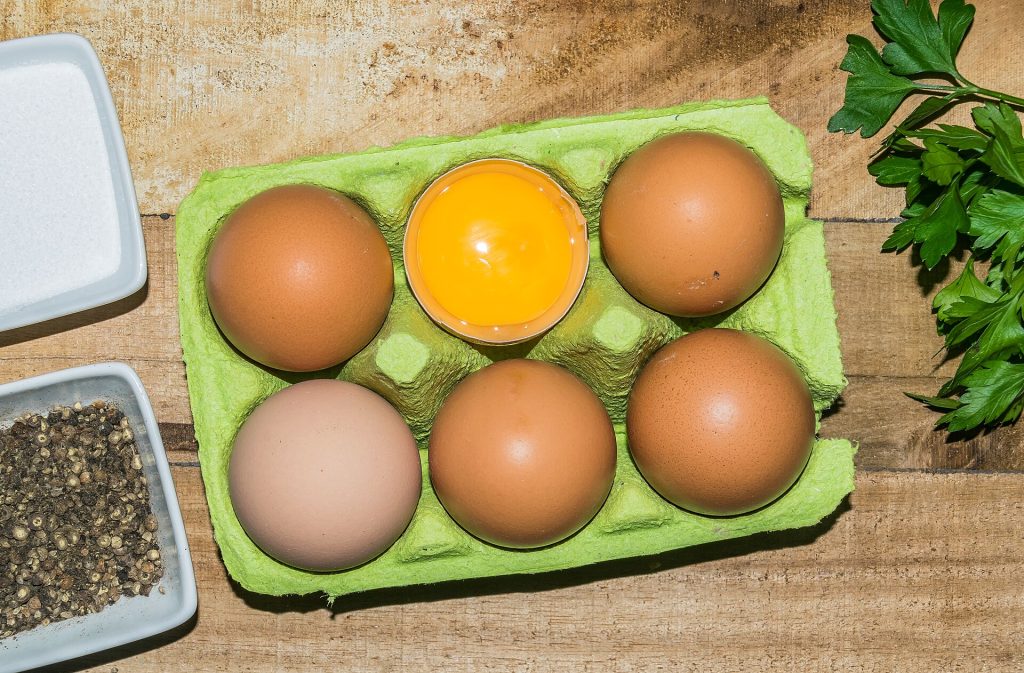
The yolk does carry all of the egg’s cholesterol. The AHA puts a typical large egg at 186 mg in its guide to whether eggs are good for you, and its 2023 update and Harvard both round that to about 200 mg. But the yolk also carries a lot of what makes an egg worth eating.
- About 78 calories and 6 grams of protein in a large egg, per the AHA.
- Vitamin D and choline, which support bone health, metabolism and liver function.
- Lutein and zeaxanthin, found in the yolk and linked to a lower risk of cataracts and macular degeneration.
Egg whites give you protein without the yolk’s cholesterol, which is why the AHA has long framed its advice as one egg or two egg whites a day. They’re a useful tool, not the only acceptable part of the egg.
The fact
Whole eggs are a compact, affordable source of protein and nutrients. Whites are a handy way to stretch a scramble, not a moral upgrade.
Judge the breakfast, not the egg. The pan, the sides and the portion tell you more than the yolk does.
Myth 4: Anyone can eat as many eggs as they like now
The pendulum can swing too far the other way. The AHA’s guidance for healthy people is up to one whole egg or the equivalent a day. Older adults with healthy cholesterol levels can have up to two a day, the AHA adds, because eggs are an easy source of protein.
Harvard’s summary is similar. In large studies of nearly 40,000 men and more than 80,000 women, up to one egg a day was not associated with higher heart disease risk in healthy people. Eating more than one a day, it notes, could increase the risk of heart failure later in life.
Where the advice gets stricter
- High LDL cholesterol: the AHA advises cutting back on saturated fat and dietary cholesterol together, since both are more likely to contribute to plaque in the arteries.
- Diabetes: Harvard notes that heart disease risk rose among people with diabetes who ate an egg or more a day, and suggests no more than three yolks a week.
- Higher heart disease risk or a past heart attack: the AHA says these groups should keep an eye on dietary cholesterol.
High cholesterol usually has no symptoms, according to the National Library of Medicine’s MedlinePlus, and only a blood test shows your numbers. If you don’t know yours, that is the first step before changing your egg habit in either direction.
The fact
About one egg a day is the benchmark for healthy adults. More is not automatically better, and some people need to eat fewer.

Myth 5: The egg matters more than what you cook it with
Here is the myth that matters most in the kitchen. The AHA points out that foods high in dietary cholesterol also tend to be high in saturated fat, with eggs and shellfish as the two exceptions. So when eggs cause trouble, it is often because of the company they keep.
Harvard draws the contrast neatly: scrambled eggs with salsa and a whole-wheat English muffin are a very different breakfast from scrambled eggs with cheese, sausages, home fries and white toast. Same eggs, very different plate.
Easy swaps at the stove
- Fry or scramble in a spoon of olive, canola or corn oil instead of butter or bacon fat, as the AHA suggests.
- Boil or poach a batch and skip added fat entirely.
- Bulk up omelets with spinach, peppers, mushrooms or leftover roasted vegetables instead of extra cheese.
- Serve eggs with beans, whole-grain toast, avocado or fruit rather than processed breakfast meats.
- For a bigger scramble, try two whole eggs plus two whites.
If you’re looking for more weeknight ideas, our easy egg recipes put these swaps into practice, and there’s plenty more in our healthy eating guides.
The myths and the facts at a glance
| Myth | Fact |
|---|---|
| Egg cholesterol goes straight into your blood. | Dietary cholesterol has a smaller effect on blood cholesterol than the mix of fats you eat. |
| You must stay under 300 mg a day. | The 300 mg cap was dropped. Current guidelines focus on keeping saturated fat under 10% of calories. |
| The yolk is just cholesterol. | The yolk also supplies vitamin D, choline, lutein and zeaxanthin. |
| Eat as many eggs as you like. | Up to one whole egg a day for healthy adults; up to two for older adults with healthy cholesterol. |
| The egg is the main problem. | Butter, bacon fat, cheese and processed meats served alongside often matter more. |
FAQ
How much cholesterol is in one egg?
About 186 to 200 mg in a large egg, depending on the source. All of it sits in the yolk.
Are egg whites healthier than whole eggs?
Whites have protein and no yolk cholesterol, but they also miss the yolk’s vitamin D, choline and other nutrients. For most healthy people, a whole egg is fine.
Can I eat two eggs a day?
The AHA says older adults with healthy cholesterol can have up to two a day. For other healthy adults its benchmark is up to one, so two every day is worth discussing with your doctor.
Is it better to eat eggs boiled or fried?
Boiling and poaching add no fat. If you fry, the AHA suggests a heart-healthy oil instead of butter or bacon grease.
Your next carton
Next time you buy a dozen, plan them as the protein in a vegetable-heavy meal rather than the side act to bacon. A veggie frittata, shakshuka or a poached egg on beans and greens all fit the guidance neatly. For more ideas, see our guide to healthy breakfast ideas, and if you’re working through high cholesterol, take this list to your next check-up and ask what fits your numbers.
Featured photo: 2016-10-15 Naengmyeon with boiled eggs in stainless steel bowl in Pyongyang by Jan Bockaert, BY-SA 2.0.