Want to make your food look mouthwateringly good?
If there’s one thing every restaurateur dreams of it’s to have customers obsessed with the way their food looks.
Beautifully presented dishes lead to:
- Better customer satisfaction
- Increased social media attention
The only problem?
Your delicious food might not look very appetizing if your lighting is off.
The right atmosphere, perfectly lit, is the magic ingredient that makes your restaurant space feel inviting and your dishes look divine.
But here’s the thing.
Creating a memorable, Instagram-worthy dining environment takes a special skill – restaurant lighting design.
Without it, you’re robbing your food of its potential glory.
What you’ll learn:
- Why Restaurant Lighting Matters for Food Appeal
- The Psychology Behind Lighting and Dining
- Essential Lighting Types Every Restaurant Needs
- How to Design Lighting for Different Restaurant Styles
Why Restaurant Lighting Matters for Food Appeal
Restaurant lighting serves a much bigger purpose than just illuminating your space.
If you’ve never considered a well-designed lighting plan for your restaurant before, you might want to know why now.
Here are three good reasons.
1. Makes Food Look More Appetizing
Lighting can either make or break the visual appeal of your food.
Why?
Simple.
The human brain is a visual creature. When customers look at food that’s gorgeously lit, their brains register it as more delicious than food in a dull restaurant environment.
And get this…
Better-looking food = higher perceived value.
The same principle applies to your restaurant. Dishes will look more vibrant, fresh, and appetizing when lit by modern lighting fixtures with high color rendering ratings.
Your customers will notice the difference the moment they see your food.
2. Influences Customer Behavior
This might shock you…
Restaurant lighting directly impacts customer orders, how much they eat, and how long they linger.
Research shows that diners in well-lit spaces are 16-24% more likely to order healthy meals than those seated in poorly-lit areas.
But here’s another surprise…
Researchers found that dim lighting environments led to customers ordering 39% more calories.
That’s because lighting has a psychological effect on our mental alertness and decision-making processes.
Mind. Blown.
3. Creates the Right Atmosphere
Restaurant lighting sets the tone for the entire dining experience.
You want people to feel at ease in your space, but you also want them to be able to see the food clearly.
Striking the right balance between the two is the difference between a great restaurant and a so-so one.
Picture how you feel in these scenarios:
- Bright, cool lighting: energizing, fast-paced
- Warm, dim lighting: cozy, intimate
- Natural lighting: fresh, welcoming
Each works great for different restaurant atmospheres and times of the day.
The Psychology Behind Lighting and Dining
Lighting design is as much science as it is art.
Understanding the effect that lighting has on your customers’ psychology is key to crafting the perfect dining environment.
How Color Temperature Impacts Appetite
Color temperature has a direct effect on your customers’ appetites.
Warm lighting (2700K-3000K) makes food look more appealing by bringing out reds and oranges in food.
Which is why successful restaurants usually use warm light during dinner service.
Cool lighting (3500K-4000K) is better for breakfast and lunch services because it mimics natural daylight.
What most restaurateurs don’t know though is…
Wrong color temperatures make your food less appetizing to the human eye.
The Impact on Dining Speed
Did you know that restaurant lighting directly affects the speed at which your customers eat?
Bright lighting makes people eat faster because it keeps their mind more alert and energized. This works great for:
- Fast-casual restaurant environments
- Breakfast places
- Lunch cafes
Dim lighting conditions make people relax and savor their food longer. Ideal for:
- Fine dining spaces
- Romantic dinner spots
- Wine bars
But here’s the catch…
Aligning lighting with your business model is critical. Fast-casual diners with romantic lighting will turn off customers and affect your profits.
Essential Lighting Types Every Restaurant Needs
Before we dig into lighting design tips for various restaurant types, here’s a brief overview of the three main types of lighting every restaurateur should know.
Ambient Lighting
This is your overall source of light that creates the general brightness level of your space.
Ambient lighting is the base for all other lighting you’ll install in your restaurant.
It should provide general, even illumination to the entire dining area and not be too bright or dim.
Typical ambient lighting options include:
- Recessed ceiling lights
- Track lighting systems
- Pendant lights over the dining area
You can create a balanced level of consistent ambient lighting that fits the theme of your restaurant.
Task Lighting
Task lighting is focused on specific areas where both customers and staff need to see things clearly.
This includes:
- Reading the menu
- Viewing food presentations
- Staff work areas
- Checkout counters
Without adequate task lighting, customers will struggle to see your menus and food presentations.
Accent Lighting
Accent lighting is where you get creative and start adding personality to your space.
Accent lighting is used to emphasize specific areas such as:
- Artwork or paintings on walls
- Architectural features or designs
- Bars or bar areas
- Food display counters
Use accent lighting to create focal points and draw attention to key features or areas of your restaurant.
How to Design Lighting for Different Restaurant Styles
Not all restaurants are the same. Neither is their lighting.
Here’s how you can customize your lighting approach for different restaurant types:
Fine Dining Restaurants
Fine dining is all about creating a private, refined, and elegant atmosphere.
Your lighting plan should include the following:
- Warm ambient lighting (2700K) for a cozy, inviting feel
- Table-level task lighting like candles or small lamps
- Accent lighting to highlight artwork or features
- Dimmable lighting systems to adjust throughout the evening
Fast-Casual Restaurants
Fast-casual restaurants need to create bright, welcoming, and energetic lighting that keeps your customers alert.
Focus your efforts on the following:
- Brighter ambient lighting (3000K-3500K)
- Even light distribution to avoid dark corners
- Task lighting over ordering counters
Cafes and Coffee Shops
Coffee shops benefit greatly from maximizing natural lighting.
Key elements of your lighting design should include the following:
- Large windows or ample natural light for daytime
- Warm light for evening service
- Task lighting over seating areas
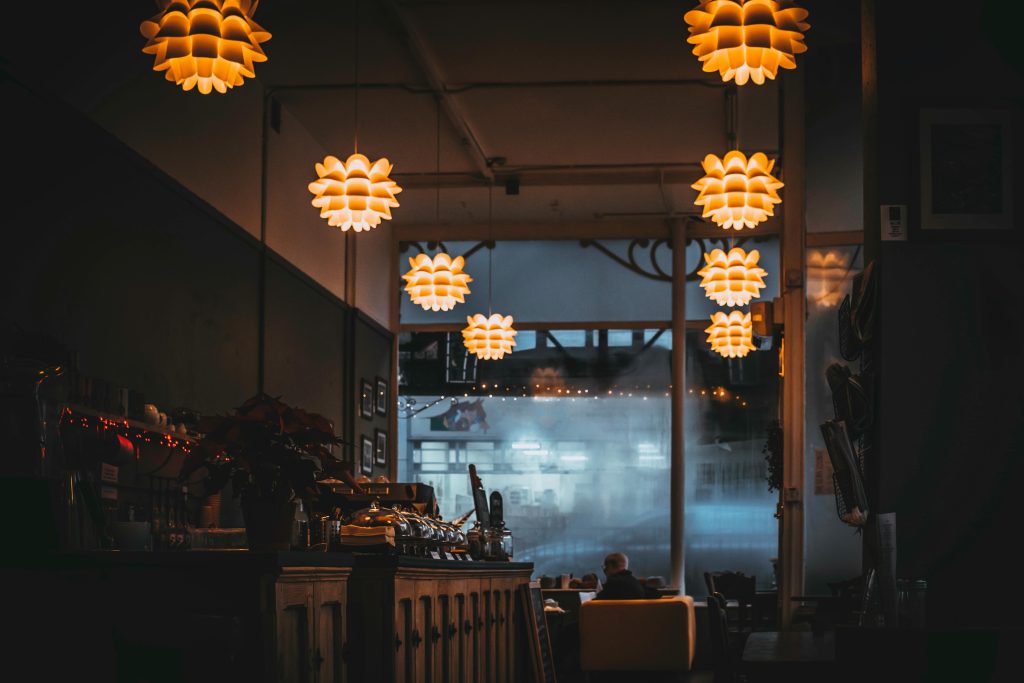
- Pendant lights over counters
Bar and Grill Establishments
Sports bars and grill places need dynamic lighting that works for both dining and entertainment.
Lighting considerations to keep in mind:
- Adjustable lighting levels for different times of the day
- Bright and focused lighting over bar areas for safety
- Accent lighting to highlight TVs and entertainment areas
Wrapping It All Together
Restaurant lighting design isn’t just about making your restaurant space look good – it’s about enhancing your food presentation and creating an experience that draws people back.
Food looks better in the right lighting. Lighting also directly influences customer behavior and, ultimately, your profits.
From the psychology of color temperature to the type of lighting fixtures you should use, every lighting decision counts.
Here’s the bottom line:
- Warm light makes food look more appetizing.
- Match lighting intensity to service style.
- Layer ambient, task, and accent lighting for best results.
- Dimmable systems are your best bet for flexibility.
Great restaurant lighting takes work, but the results are well worth the effort.
Start with these fundamentals and take your food presentation, and your customers’ experience, to the next level!