A corkage fee is what a restaurant charges to open and serve a bottle of wine you brought from home. It covers the glasses, the service and the space your bottle takes up on their floor. Whether you can bring wine at all, and what you’ll pay, depends on the restaurant’s policy and on your state’s alcohol laws.
Handled well, bringing your own bottle is a lovely way to share something special: an anniversary wine, a gift, a bottle from a trip. Handled badly, it can feel like you’re bargaining with your server.
Here’s how corkage works, why it exists, how to be the guest restaurants are happy to see, and why the rules change when you cross a state line.
Key takeaways
- Corkage is a charge for opening and serving a bottle of wine bought elsewhere.
- Always call ahead: policies, fees and limits vary from one restaurant to the next.
- Don’t bring a wine the restaurant already lists, and consider offering the staff a taste.
- In Pennsylvania, restaurants may, but don’t have to, charge corkage for BYOB.
- In New York, a licensee can charge corkage, and you must take any unfinished bottle with you when you leave.
What a corkage fee is
Merriam-Webster defines corkage as a charge, as by a restaurant, for opening a bottle of wine bought elsewhere, and dates the word to 1838. So this isn’t a modern upsell. It’s an old custom with a plain-sounding name.
In practice, the fee usually applies per bottle. It may cover wine only or extend to other drinks, and some restaurants waive it in certain situations. Because there’s no single standard, the only reliable number is the one the restaurant gives you. Some places also cap how many bottles a table can bring, or only accept wines that aren’t on their own list, so ask about both when you call.
Corkage vs BYOB
The terms overlap but aren’t identical. “BYOB” often describes a restaurant without a liquor licence where bringing your own is the norm. Corkage can apply there, or at a fully licensed restaurant with a wine list that also lets you bring a bottle.
Why restaurants charge it
It’s tempting to see corkage as a penalty. Think of it as the cost of a service instead. When you bring a bottle, the restaurant still does most of the work it would do for wine it sold you.
- Glassware and washing. Good stemware breaks, and someone has to polish it.
- Service. Opening, pouring, sometimes decanting or chilling.
- The table. A seat for two hours is part of what the restaurant sells.
- The wine list. Drinks often help a restaurant cover its costs, so a bottle from home replaces a sale it would otherwise make.
Seen that way, a fee doesn’t mean the restaurant is against you bringing wine. Many restaurants that charge corkage are glad to host a special bottle.
Corkage isn’t a penalty for bringing wine. It’s the price of someone else doing the washing up.
Corkage etiquette, step by step
Good corkage manners mostly come down to making things easy for the restaurant. Follow these steps and you’ll rarely have an awkward moment.
- Call ahead. Ask whether you can bring wine, what the fee is, and whether there’s a bottle limit. Don’t rely on an old review or a friend’s memory.
- Check the wine list online. If they sell the bottle you planned to bring, pick something else. Bringing a wine they already stock is widely seen as poor form.
- Bring something worth the fee. Corkage makes most sense for a wine that means something: an older vintage, a gift, a bottle from a trip.
- Arrive with it ready. Chill whites and sparkling wines at home. If an older red needs to stand upright to settle its sediment, do that the day before.
- Hand it over on arrival. Give the bottle to your host or server, rather than opening it yourself.
- Offer a taste. If it’s something special, offering the sommelier or server a small pour is a generous gesture that’s often appreciated.
- Tip on the service. Your server still opened, poured and cleared. Factor that into the tip.
Quick etiquette reference
| Do | Don’t |
|---|---|
| Call ahead to confirm the policy and fee | Assume BYO is allowed because it was last year |
| Bring a wine that isn’t on their list | Bring the same bottle they sell |
| Offer staff a taste of something special | Argue about the fee at the table |
| Consider ordering a bottle from their list too | Arrive with a case for a table of four |
Some diners also buy a bottle from the list alongside the one they brought. It’s a kind gesture, not a rule, but it tends to be remembered.
For more restaurant know-how, browse our eating out guides, or read our guide to restaurant etiquette.
The law varies by state
Here’s where corkage stops being purely about manners. In the US, alcohol is regulated largely at state level, and local rules can add another layer. What’s routine in one city can be off-limits in the next, so it’s worth looking at how two state agencies describe it.
Pennsylvania
The Pennsylvania Liquor Control Board says that nothing in the state’s Liquor Code or its regulations stops an individual from bringing their own alcohol into any establishment. Establishments are free to allow or disallow it, and those that allow it may, but are not required to, charge a corkage fee. The alcohol must be legally bought in Pennsylvania, and licensed venues can’t let people drink during hours when they couldn’t legally sell.
The PLCB also points out that local ordinances may restrict BYOB, so a town can be stricter than the state.
New York
New York’s State Liquor Authority says customers can bring their own alcoholic beverages as long as the drink is covered by the establishment’s licence, and the licensee can charge a corkage or other fee. It adds one rule worth remembering: the customer must take any unfinished portion with them when they leave.
What this means for you
These are just two examples, and other states handle it differently. Some restrict BYO far more tightly. Before you plan a BYO dinner away from home, check the restaurant’s policy first; it will reflect whatever local law allows.
FAQ
Is it rude to bring your own wine to a restaurant?
Not if the restaurant allows it and you’ve checked first. It becomes awkward when you turn up unannounced or bring a bottle the restaurant already sells.
How much is a corkage fee?
There’s no standard amount. It’s set by each restaurant, so ask when you call ahead.
Can a restaurant refuse to open my wine?
Yes. In Pennsylvania, for example, the PLCB says establishments are free to allow or disallow patrons bringing their own alcohol.
Can I take an unfinished bottle home?
In New York, the State Liquor Authority says you must take any unfinished portion with you when you leave. Rules elsewhere vary, so ask your server.
Do BYOB restaurants charge corkage?
Some do and some don’t. In Pennsylvania, the state says a fee is allowed but not required.
Before your next BYO dinner
Pick the restaurant, then make one phone call: can you bring wine, what’s the fee, and is there a bottle limit? Choose a bottle that isn’t on their list, chill it if needed, and plan to offer a taste. Looking for a place to try it? Start with our restaurant directory, then brush up on pairing wine with food so the bottle fits the menu.
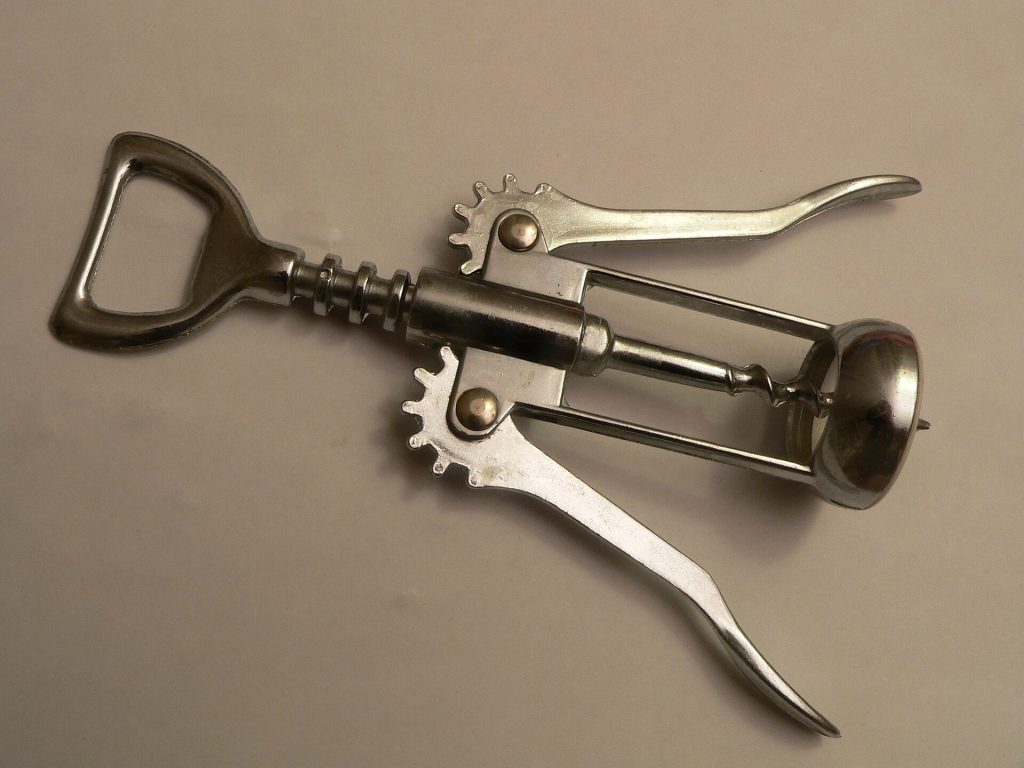
Featured photo: Corkscrew P1150886 by David Monniaux, BY-SA 3.0.