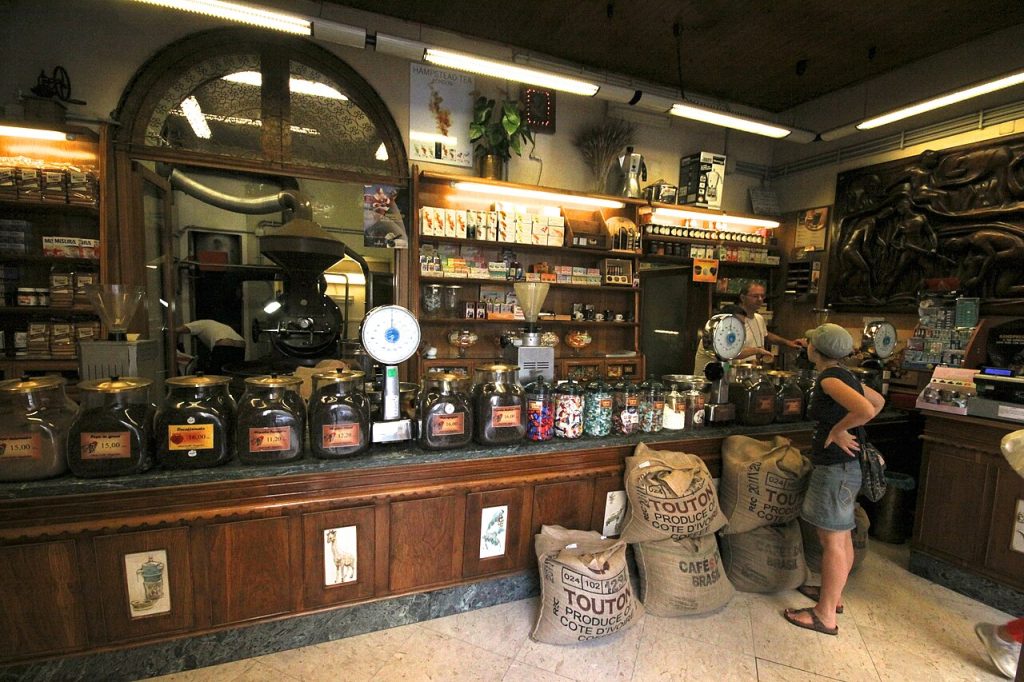
Ask a specialty roaster which grinder they run, and the answer usually isn't the machine behind the espresso bar at the cafe down the street. A cafe grinds one dose at a time, seconds before a shot. A roaster grinds pound after pound for bags that a customer will open and brew days later, somewhere the roaster can't see.
That difference in the job changes what matters in the machine, which is why grinders for specialty roasters look so different from the ones cafes buy.
This guide covers:
- • How a roaster's grinding job differs from a cafe's
- • Why grind uniformity matters so much for coffee that's bagged and brewed later
- • How the Mahlkonig EK43 became a fixture in roasteries
- • Why plenty of roasters keep a second grinder for cupping and QC
At a Glance
|
Takeaway |
Detail |
|
Roasters and cafes grind for different jobs |
A cafe needs one precise dose at a time, while a roaster needs volume and an even grind for bags. |
|
Uniformity matters more when nobody can adjust |
A barista can tweak the next shot, but a customer brewing at home is stuck with what's in the bag. |
|
The EK43 was always an allround grinder |
Mahlkonig launched it in 1990 for coffee as well as spices and grains, and specialty coffee adopted it for its consistency. |
|
Motor and burrs set the throughput ceiling |
Grinding pound after pound all day takes a motor and burr set built for sustained load. |
|
Hopper size affects real throughput |
A larger hopper means fewer stops to refill during a long bagging run. |
|
A bag clamp matters more than it looks |
Holding the bag under the chute frees the operator's hands across dozens of bags. |
|
Many roasters run two grinders |
A dedicated cupping or QC grinder keeps sample work from interrupting bagging runs. |
|
Match the grinder to the job, not the trend |
The grinder that suits a cafe bar is often the wrong buy for a bagging station. |
Why Roaster Grinders Solve a Different Problem
A cafe's espresso grinder is built around a narrow task. It grinds a precise single dose right before a shot, hundreds of times a day, so speed and accuracy come first. A roaster's retail grinder has a different job, because it turns whole bags of beans into ground coffee that won't be brewed until it reaches a customer's kitchen or a wholesale account's brewer.
Dose speed barely matters here, since nobody is waiting at a counter. What counts is how long the grinder can keep going without heating up, and how evenly it grinds from the first bag of a run to the last.
Why Grind Uniformity Matters More for Bagged Coffee
Every grinder produces a spread of particle sizes, from larger chunks down to fines (the dust-like particles at the small end). When that spread is wide, the coffee extracts unevenly. The fines give up their flavor quickly while the bigger pieces lag behind, and in a filter brewer the fines can also settle and slow the flow.
At a cafe, a barista who tastes that problem can adjust the grinder before the next shot. A roaster doesn't get a second chance. Once coffee is ground and bagged, the customer brews whatever is inside. A grinder that turns out a tight, even particle size protects the roaster's reputation, because nobody at the roastery can fix the grind after the bag ships.
Freshness plays a part as well. Ground coffee loses aroma much faster than whole beans because far more of its surface is exposed, and fines have the most surface area relative to their size. That's one more reason roasters care about keeping them under control.
How the Mahlkonig EK43 Became a Roastery Staple
The EK43 has a slightly unusual background for a grinder so closely tied to specialty coffee. Mahlkonig launched it in 1990 as a multi-purpose shop grinder, meant for coffee but also for spices and grains. Its grind uniformity is what won over specialty coffee, and interest grew further after barista Matt Perger used one on the World Barista Championship stage. Mahlkonig now describes its particle size distribution as narrower than virtually any comparable commercial grinder.
For roasters, the appeal goes beyond consistency. The EK43 pairs 98mm cast steel flat burrs with a 1,300W motor, and Mahlkonig rates it at about 3.5 pounds per minute at a medium setting. It also has an integrated bag clamp for grinding straight into retail bags and a standard hopper that holds roughly 1.2 kg, so it's built for long bagging runs rather than short bursts.
You can compare the EK43 with the rest of the Mahlkonig grinders at Crawford Espresso, including the brand's espresso models, which makes it easy to see how a bagging grinder differs from one built for the bar.
Hopper Capacity, Bag Clamps, and Throughput
Hopper capacity is easy to skim past on a spec sheet, but it shows up fast in a real shift. A small hopper means stopping every few pounds to refill, and those pauses add up across a day of wholesale orders. With a larger hopper, a bagging run just keeps moving.
A bag clamp looks like a minor extra. It holds a retail bag in place under the chute, so the operator has both hands free and the bag doesn't shift mid-grind. Across dozens of bags, that saves far more time than it ever would for a single dose.
|
Factor |
Espresso Dose Grinder |
Roaster Bagging Grinder |
|
Typical hopper size |
Small to medium |
Large, built for extended runs |
|
Primary metric |
Dose speed and accuracy |
Throughput and grind uniformity |
|
Room to correct the grind |
Barista can adjust the next shot |
None once the bag ships |
|
Bag clamp |
Not needed |
Valuable for bagging runs |
Why Many Roasters Run Two Grinders
Plenty of roasteries keep more than one grinder rather than asking a single machine to cover every job. One handles cupping and QC, where each fresh batch gets ground and tasted at a set cupping grind. The other handles bagging for retail and wholesale orders, where the setting changes to suit how each customer brews.
Splitting the work keeps the two jobs out of each other's way. QC samples don't have to wait for a bagging run to finish, and nobody has to reset the cupping grind after the grinder was dialed coarser for a French press order. It's usually a growing roastery that feels this first, once both jobs get busy enough to collide.
Choosing the Right Grinder for a Roastery
Of all the coffee roasting equipment a roastery buys, the grinder is one of the easiest to underthink. The right choice comes down to the job in front of you (bagging volume, QC sampling, or both). The grinder that's popular in cafes down the street was built for a different problem, so it's rarely the right place to start.
If you're weighing a first bagging grinder, or a QC grinder to sit alongside one you already own, you can shop commercial coffee grinders at Crawford Espresso and compare options side by side.
Key Takeaways
- • Put grind uniformity and sustained throughput ahead of dose speed when you choose a bagging grinder.
- • Consider separate cupping and bagging grinders, since the two jobs need different settings and often happen at the same time.
- • Check hopper capacity and whether the grinder has a bag clamp, because both affect how quickly a bagging run moves.
Frequently Asked Questions
Why don't roasters just use the same grinders cafes use?
Because the jobs are different. A cafe grinder is built for fast, accurate single doses right before a shot. A roaster's grinder has to keep going through pound after pound while holding a consistent grind, since bagged coffee gets brewed later with no chance to adjust.
Why does grind uniformity matter more for bagged coffee?
A barista can taste a shot and fix the grind for the next one, but a customer brewing at home can't change what's in the bag. An even particle size with few fines extracts more evenly, which gives that customer a better cup.
Was the EK43 originally a spice grinder?
Not only. Mahlkonig launched the EK43 in 1990 as a multi-purpose shop grinder for coffee as well as spices and grains. Specialty coffee adopted it for its grind uniformity, and roasters also value its large burrs, strong motor, and built-in bag clamp.
Do roasters really need two separate grinders?
It depends on scale. A small roaster can often get by with one, but many keep a dedicated grinder for cupping and QC so sample work doesn't interrupt bagging runs or disturb the cupping setting.
What does a bag clamp actually do on a roaster's grinder?
It holds a retail bag steady under the grind chute, so the operator's hands are free and the bag doesn't shift mid-grind. It's a small feature, but it saves real time across dozens of bags.
Is hopper size really that important for a roasting grinder?
It matters more than it looks on a spec sheet. A small hopper means frequent refills during a bagging run, while a larger one, like the EK43's standard hopper of roughly 1.2 kg, keeps the run moving.
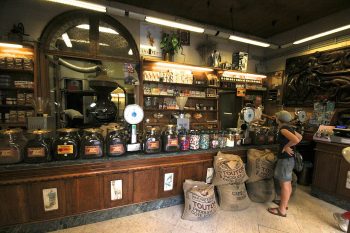
Featured photo: Coffee roastery Palermo by Matthias Süßen, CC BY 3.0