Eating out with kids goes well when you plan the easy parts in advance: choose a relaxed, family-friendly place, go early before the rush, book and ask for a high chair or booster, order the kids’ food first, pack a few quiet activities, and leave while everyone is still smiling. Then tip generously for the extra work you created.
None of this is about making children behave like tiny adults. It’s about setting the evening up so that the normal wiggles, spills and short attention spans don’t turn into a meltdown, for them or for you.
Use the checklist below before, during and after your next family meal out. Tick off what applies, skip what doesn’t, and adjust as your kids grow.
Key takeaways
- Go early: a 5 p.m. table means a quieter room, faster food and kids who aren’t overtired.
- Tell your server about any food allergy up front. Restaurant meals made to order aren’t covered by FDA packaged-food allergen labeling.
- Always use high chair straps, and never use the tray to hold a child in, as the CPSC advises.
- Order the kids’ food first and pack a small bag of quiet activities.
- Tip at least the standard 15–20% of the pre-tax bill, and more if you left a mess behind.
Choosing the place and the time
Half the success of a family meal out is decided before you leave the house. The right room, at the right hour, does a lot of the work for you.
- ☐ Pick a relaxed spot. Casual restaurants with some background noise are more forgiving than quiet dining rooms.
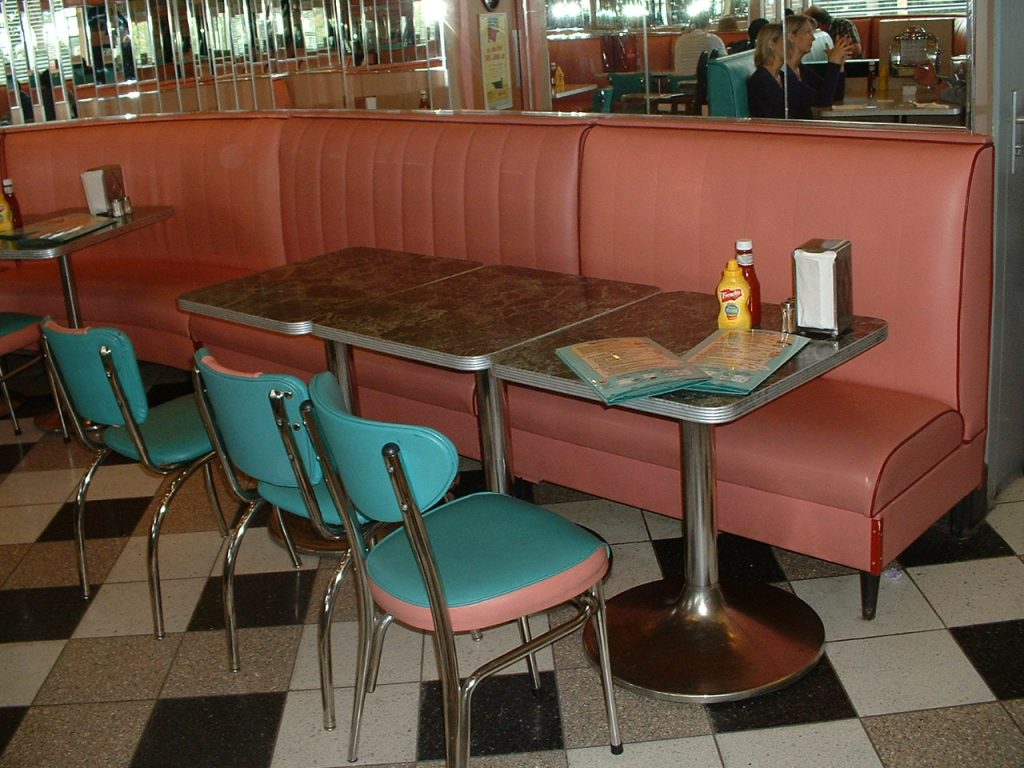
- ☐ Look for space. Booths, wide aisles and room for a stroller make life easier.
- ☐ Check the menu online. Make sure there’s at least one thing each child will reliably eat.
- ☐ Go early. An early dinner, around 5 p.m., usually means a calmer room and quicker food.
- ☐ Work around naps. A rested child is the best predictor of a good meal.
- ☐ Start small. Try breakfast or lunch out before a special-occasion dinner.
A few types of restaurants tend to suit families: places where food comes quickly, like pizzerias, noodle shops and diners, and places with something to watch, like an open kitchen or a counter where cooks work. If you’re looking for somewhere new, our restaurant directory is a good place to start.
Booking and arriving
Even at casual places, a quick call or online booking takes the guesswork out of arriving with small children.
- ☐ Book ahead and give the right number of adults and children.
- ☐ Request a high chair or booster when you book, so it’s ready when you arrive.
- ☐ Ask for a good table: a booth or a corner away from the kitchen doors and busy walkways.
- ☐ Mention a stroller if you’re bringing one, so staff can find space for it.
- ☐ Arrive on time, fed with a small snack if the kids are very hungry, so the wait for food isn’t a crisis.
- ☐ Bring wipes, bibs and a change of clothes for younger kids.
Menus, ordering and allergies
Ordering smart keeps the pace moving. Kids’ menus are handy, but they aren’t the only option.
- ☐ Order the kids’ food first, or ask if it can come out as soon as it’s ready.
- ☐ Consider sharing. A plain side or a portion of pasta can be split between two small children.
- ☐ Ask for simple swaps, such as sauce on the side or plain vegetables, politely and early.
- ☐ Skip sugary drinks at the start of the meal; water keeps everyone calmer.
- ☐ Order dessert with the mains if you know you’ll need to leave quickly.
If your child has a food allergy
Tell your server about any allergy before you order, and ask them to pass it to the kitchen. This matters because the FDA’s allergen labeling rules don’t cover food that’s wrapped or put in a container after a customer orders at the point of purchase, so a restaurant meal made to order won’t come with an allergen label the way packaged food does.
The FDA lists nine major food allergens: milk, eggs, fish, crustacean shellfish, tree nuts, peanuts, wheat, soybeans and sesame. Sesame became the ninth when the FASTER Act took effect on January 1, 2023. Ask specifically about cross-contact, shared fryers and sauces, and bring any medication your child’s doctor has prescribed.
High chairs and booster seats
Restaurant high chairs see a lot of use, so check them before you sit your child down. The U.S. Consumer Product Safety Commission reports about 18,500 high chair-related injuries treated in U.S. hospital emergency departments over a two-year period, most often from children climbing in or out, or chairs tipping when a child pushes back or rocks.
- ☐ Always use the safety straps and adjust them to fit snugly, as the CPSC advises.
- ☐ Don’t rely on the tray to hold a child in; use the restraints.
- ☐ Check the straps work. UT Southwestern Medical Center advises making sure restaurant high chairs and boosters have straps in working order.
- ☐ Keep the chair away from the table edge and walls, which UT Southwestern notes helps prevent tipping.
- ☐ Don’t let children stand in or climb onto the chair.
- ☐ Stay close and keep an eye on your child throughout the meal.
A great family meal out isn’t a perfect one. It’s one where everybody leaves wanting to come back.
Keeping everyone happy at the table
Once you’re seated, the aim is to keep attention spans topped up until the food arrives, and then keep things moving.
- ☐ Pack a quiet bag: crayons, a small notebook, stickers, a picture book or a couple of small toys.
- ☐ Bring things out one at a time rather than emptying the bag at once.
- ☐ Play table games like I Spy, counting colors in the room, or guessing what’s in the next dish.
- ☐ Involve kids in ordering. Older children can order for themselves and say thank you to the server.
- ☐ Take a short walk outside with a restless toddler rather than letting them roam the dining room.
- ☐ Keep screens as a backup, on mute or with headphones, if you use them at all.
Pace matters too. Families usually do best when the meal is on the shorter side: two courses rather than three, and the bill requested while the last plates are still on the table. For more on dining-room manners, see simple restaurant etiquette.
Leaving on a good note
How you leave is what the staff remember. A few minutes of tidying makes a real difference to the people who’ll clear your table.
- ☐ Ask for the bill early so you’re not stuck waiting with tired kids.
- ☐ Gather the big mess: stack plates, pick up large pieces of food from the floor, and collect wrappers and crayons.
- ☐ Tell staff about any spills so they can be cleaned properly.
- ☐ Thank your server, and let the kids say it too.
- ☐ Tip properly. The Emily Post Institute suggests 15–20% of the pre-tax bill for sit-down service. If your table needed extra cleanup, tipping above that is a kind way to say thanks.
- ☐ Leave before the meltdown. If it’s coming, pack up. There’s no prize for staying.
FAQ
What’s the best time to eat out with kids?
Early, before the main rush. A 5 p.m. dinner or a weekend lunch usually means a quieter room and faster service.
Should I tell the restaurant about my child’s food allergy?
Yes, before you order. Restaurant meals made to order aren’t covered by the FDA’s packaged-food allergen labeling, so ask the server to check with the kitchen.
How much should I tip if my kids made a mess?
Start from Emily Post’s 15–20% of the pre-tax bill for table service, then add extra for a big cleanup.
Are restaurant high chairs safe?
Check the straps work and always use them. The CPSC advises never using the tray to hold a child in.
Plan your next family meal out
Choose one easy, casual place for a meal this week, book an early table, and ask for a high chair or booster when you do. Pack a small bag of quiet activities, order the kids’ food first, and leave on a high. For more ideas, browse our eating out guides or read easy family dinner ideas for the nights you stay in.
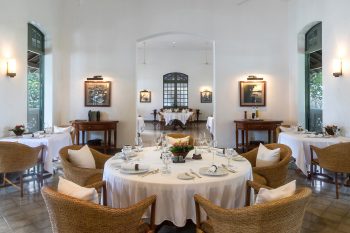
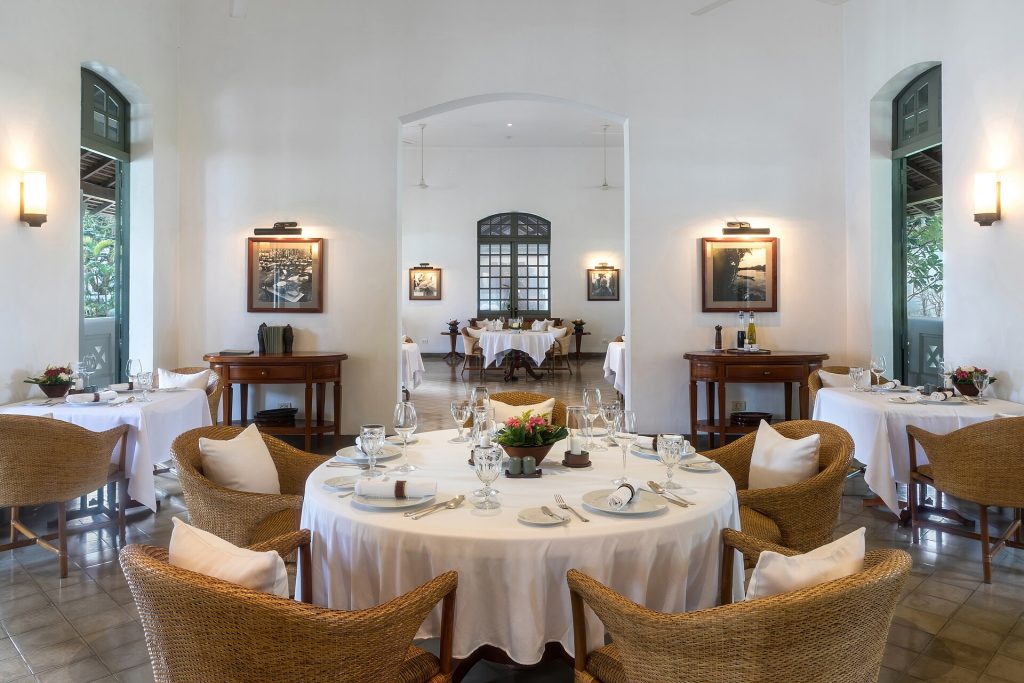
Featured photo: Restaurant room of Amantaka luxury Resort & Hotel in Luang Prabang Laos by Basile Morin, BY-SA 4.0.