In the butter vs shortening question, butter wins on flavor and shortening wins on structure. Butter is about 80% fat with the rest mostly water, so it tastes rich, browns well and spreads more. Shortening is pure fat with a higher melting point, so it gives taller cookies, stable frosting and a very tender crust. Oil, a liquid, makes moist, tender cakes but can’t create flaky layers.
Most recipes are written around one of the three for a reason. Once you know what each fat does in the oven, you can pick the right one, or blend two, and swap with confidence when the cupboard runs short.
The comparison below goes trait by trait, with the ratios to use when you substitute.
Key takeaways
- Butter is roughly 80% fat and 18% water; shortening is 100% fat; oil is liquid fat.
- Solid, cold fat makes flaky pastry; liquid oil makes tender but not flaky results.
- Butter’s lower melting point makes cookies spread flatter and crisper; shortening keeps them taller.
- Butter brings the best flavor; many bakers blend butter and shortening in pie crust for flavor plus flakiness.
- Swap oil for butter at about 3 parts oil to 4 parts butter, and skip oil where the recipe relies on creaming.
In this guide
- What’s actually in each fat
- Flakiness: pie crust and biscuits
- Tenderness, crumb and cakes
- Flavor
- Spread in cookies
- Substitutions and ratios
- FAQ
- Run your own bake-off
What’s actually in each fat
The biggest difference between these fats is what else comes along with the fat. King Arthur Baking puts butter at about 80% butterfat, plus 18% water and 1% to 2% milk solids, while shortening, a hydrogenated vegetable oil, is 100% fat. Oil is also essentially all fat, but it’s liquid at room temperature.
| Butter | Shortening | Oil | |
|---|---|---|---|
| Composition | About 80% fat, 18% water, 1–2% milk solids | 100% fat | 100% fat, liquid |
| Melting behavior | Melts relatively low, softens quickly in warm hands | Higher melting point, stays solid longer | Already liquid |
| Flakiness | Good, from cold pieces and steam | Very good; holds its shape in the dough | Poor; coats flour instead of forming layers |
| Tenderness | Good | Very good | Very good, moist crumb |
| Flavor | Rich, creamy, browns well | Neutral | Neutral, or fruity if olive oil |
| Cookie spread | More spread, flatter and crisper | Less spread, taller and softer | Dense, often chewy |
| Best uses | Shortbread, butter cakes, croissants, flavor-first pastry | Pie crust, stable frosting, tall cookies | Quick breads, muffins, chiffon and oil cakes |
That water in butter is the thread that runs through every other row. It turns to steam in the oven, it makes butter melt and flow sooner, and it’s the reason a straight swap between fats changes how a recipe behaves.
Flakiness: pie crust and biscuits
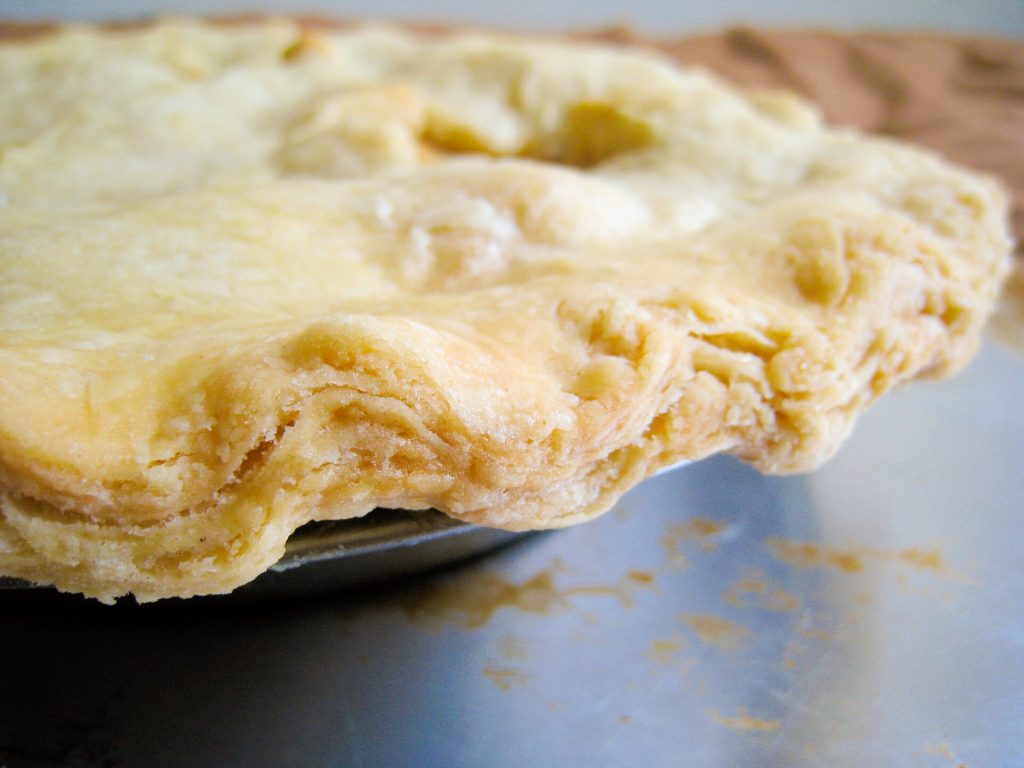
Flaky layers come from pieces of solid fat that stay separate from the flour until the oven. Utah State University Extension says plainly that solid fats give a flakier crust than melted or liquid fats, and it recommends chilling the fat, and even the flour, before mixing pastry dough.
How butter makes flakes
The Culinary Institute of America explains that fats produce flakiness by creating steam during baking, forcing apart the layers of pastry. Butter’s water content helps here, but only if the butter is still cold and in visible pieces when the pastry goes in the oven. Warm, smeared butter just coats the flour.
Why shortening is so forgiving
The CIA also notes that shortening’s higher melting point lets it withstand heat without melting easily, which gives crusts that are flaky and crisp yet tender. In a warm kitchen, that’s a real advantage: shortening pastry is harder to overwork and less likely to slump in the oven.
- All butter: best flavor, crisp flakes, needs cold hands and a chilled dough.
- All shortening: easiest to handle, very tender, but plain tasting.
- Half and half: the common compromise, with most of butter’s flavor and much of shortening’s ease.
Tenderness, crumb and cakes
Tenderness is about limiting gluten. Utah State Extension explains that fats waterproof the flour so water has a harder time mixing in, which inhibits gluten and keeps pastry tender. It gives a working ratio of 1/4 to 1/3 cup of fat for each cup of flour, and warns that too much fat makes a crumbly, greasy pastry while too little leads to overmixing and toughness.
Because oil is liquid, it coats flour quickly and thoroughly, which is why oil cakes and muffins stay so soft and moist. The trade-off is structure: there are no solid pieces to create layers, and no way to trap air by creaming.
In cakes
King Arthur’s side-by-side test found little visual difference between butter and shortening cakes. The shortening cake was tender, lofty and light, while the butter cake had the flavor edge. Its verdict on that front is hard to argue with: the rich creaminess of a classic butter cake is hard to replace.
Pick the fat for the job it does, not out of habit. Butter for flavor, shortening for structure, oil for moisture.
Flavor
Flavor is where butter pulls clearly ahead. The CIA describes butter as prized for its sweet, rich flavor, and names it the preferred fat for its own pie crust recipes. The milk solids in butter also brown, adding a toasty note to cookie edges and crusts that shortening can’t give you.
Shortening tastes of very little, which is useful when you want spices or fruit to lead. Lard, if you use it, sits in between: the CIA calls it relatively neutral but with a subtle savoriness not found in butter or shortening, which is why it’s popular for savory pies.
- Neutral oils such as canola or vegetable disappear into the background.
- Olive oil adds its own fruity or peppery character, lovely in citrus cakes and some quick breads.
- Browned butter takes butter’s flavor further; let it cool and firm before using it in doughs that need solid fat.
Spread in cookies
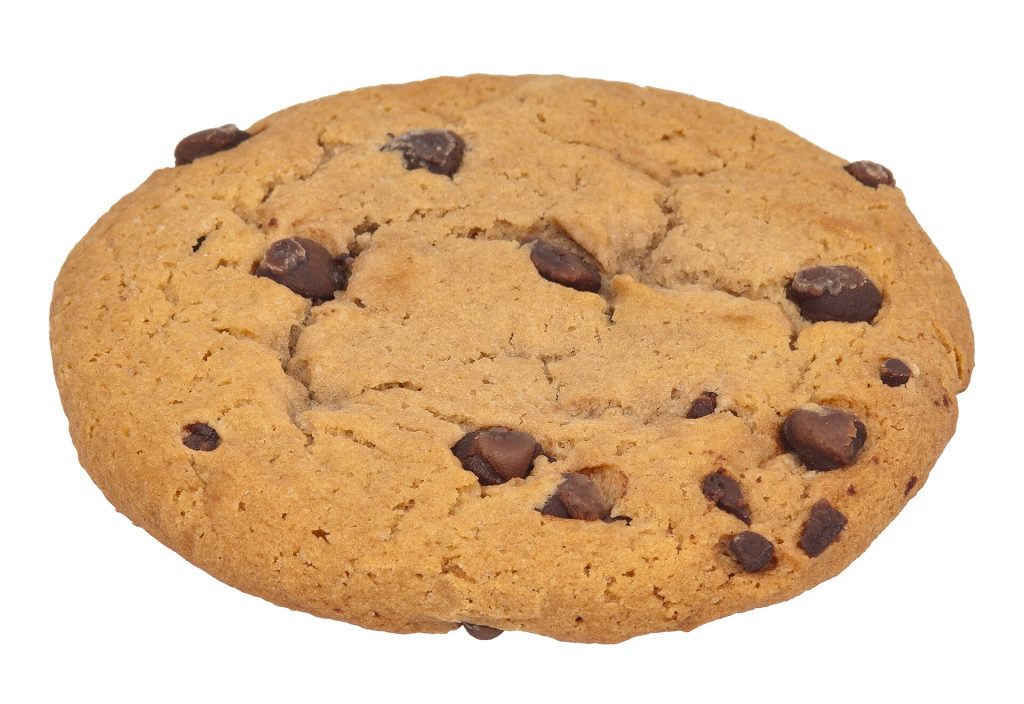
If you’ve ever had a batch of cookies melt into one thin sheet, you’ve seen melting points at work. King Arthur found that butter cookies tend to be flatter and crispier, because butter’s lower melting point lets the dough spread before its structure sets. Shortening cookies spread less and stay slightly rounded, thanks to its higher melting point.
Controlling spread with butter
- Chill scooped dough for 30 minutes to an hour before baking.
- Always put dough onto a cool baking sheet, never a hot one straight from the oven.
- Weigh your flour; too little flour makes butter doughs spread even more.
- Try replacing a quarter to half of the butter with shortening for a taller cookie that still tastes buttery.
Shortening also helps frosting. King Arthur found shortening buttercream more stable than all-butter buttercream, which can begin to separate at warm temperatures, though again at the cost of flavor. That’s worth remembering for a cake that has to sit out at a party.
Substitutions and ratios
Butter for shortening, or shortening for butter
Most bakers swap these one for one by volume. The catch is the water. Using King Arthur’s figure of about 18% water, a cup of butter (about 227 grams) carries roughly 40 grams of water, a little under 3 tablespoons. When you replace butter with shortening in a dough that needs that moisture, such as cookies, adding 2 to 3 tablespoons of milk or water per cup brings it closer. Going the other way, from shortening to butter, expect a bit more spread and a richer taste.
Oil for butter
Iowa State University Extension recommends 3 parts olive oil to 4 parts butter, so 3/4 cup of oil for every cup of butter. It also warns that oil may not suit recipes that rely on creaming butter and sugar to create a light, airy cake. The same ratio is a sensible starting point for neutral oils.
| If the recipe calls for | You can use | Expect |
|---|---|---|
| 1 cup butter | 1 cup shortening plus 2–3 tbsp milk | Taller, softer cookies; milder flavor |
| 1 cup shortening | 1 cup butter | More spread, more browning, richer flavor |
| 1 cup butter (melted-butter recipes) | 3/4 cup oil | Moist, tender crumb; less butter flavor |
| 1 cup oil | About 1 1/3 cups melted butter, cooled | Richer flavor, slightly firmer texture |
Where it won’t work: laminated pastry like croissants and puff pastry depends on solid butter, and oil can’t be creamed. For those, stick with the recipe. Our flaky pie crust guide goes deeper on pastry technique.
FAQ
Which fat makes the flakiest pie crust?
Solid fats beat liquid ones. Shortening is the most forgiving; cold butter gives excellent flakes with better flavor; a blend gives you some of both.
Where does lard fit in?
Lard is a solid fat that makes flaky, tender pastry, alone or blended with butter. It has a subtle savory note, which suits meat pies and savory tarts especially well.
Why did my butter cookies spread so much?
Warm dough, a hot sheet pan or too little flour. Chill the dough, cool the pan and weigh the flour.
Is oil ever better than butter?
In moist cakes, muffins and quick breads, yes. Oil keeps them soft for days because it stays liquid at room temperature.
Run your own bake-off
Make one small batch of your favorite drop cookie and divide the dough: half with butter, half with shortening. Bake them on the same sheet and taste them side by side. You’ll see and taste every row of the table above, and you’ll know exactly which fat you want next time. For more baking science, browse our cooking tips or read how to measure flour.
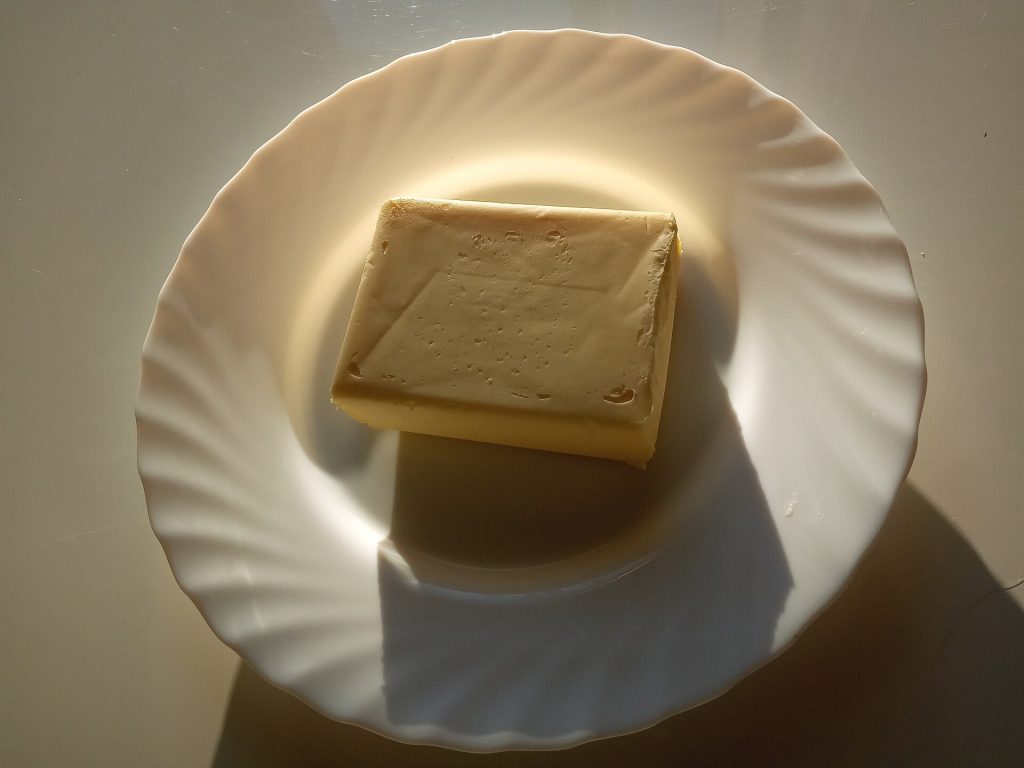
Featured photo: Block of butter 20200928 080201 by Salicyna, BY-SA 4.0.