How to choose a slow cooker comes down to four decisions: the right capacity for your household, an oval or round shape to suit what you cook, manual or programmable controls, and a removable insert that’s easy to clean. Get those right and even a basic model will serve you for years.
Extra features are nice, but they’re not what makes a slow cooker useful. The pot you’ll reach for every week is the one that fits your recipes, fits your counter, and doesn’t leave you scrubbing a crock that won’t come out of its base.
This buyer’s guide walks through each decision, compares slow cookers with multicookers, and covers the food safety guidance from the USDA and university extension services that should shape how you use whichever one you pick.
Key takeaways
- Buy for the batch you actually cook: the USDA says a slow cooker should be half to two-thirds full to cook food thoroughly.
- Oval pots fit roasts and whole chickens; round pots suit soups, stews and chili.
- A programmable timer with automatic keep-warm is the most useful upgrade for busy days.
- A removable stoneware or ceramic insert is easier to clean and serve from.
- Always thaw meat and poultry before it goes in, and don’t reheat leftovers in a slow cooker.
Capacity: match the pot to your household
Capacity is the most important choice, and it’s tied to food safety. The USDA says a slow cooker should be half to two-thirds full to ensure foods cook thoroughly. So the right size is the one your usual recipes fill to that level.
Here’s a practical starting point. These are rules of thumb rather than official figures, so check them against the recipes you cook most often.
| Household | Suggested capacity | Good for |
|---|---|---|
| 1–2 people | 2–3 quarts | Dips, oatmeal, small stews, side dishes |
| 3–4 people | 4–5 quarts | Everyday stews, chili, pulled meat |
| 5 or more, or batch cooks | 6–7 quarts | Whole chickens, large roasts, freezer batches |
| Large gatherings | 8 quarts or more | Party chili, holiday sides, feeding a crowd |
If you’re between sizes, think about how you cook. A couple who batch cook for the freezer may get more from a 6-quart pot than a family of four who only makes one dinner at a time. But don’t buy the biggest pot “just in case”: a half-empty large cooker is the one situation the USDA’s fill guidance warns against.
Oval or round
Shape matters more than most people expect.
- Oval: the long shape fits a whole chicken, a pork shoulder, a brisket or ribs. If you cook large cuts, oval is the safer pick.
- Round: better for soups, stews, chili and beans. Round pots tend to heat evenly and take up less counter depth.
- Rectangular or casserole-style: useful for lasagna-style layered dishes and for carrying food to potlucks, though less common.
If you only own one slow cooker, a 6-quart oval covers the widest range of recipes. If you mostly make soups and stews, a round pot is all you need. For ideas on what to make first, see our slow cooker recipes.
Manual or programmable
Controls are where slow cookers split into budget tiers. We won’t quote prices, since they change constantly, but the pattern is consistent.
Basic tier: manual dial
A simple dial with low, high and sometimes warm. It’s reliable and easy to use, with fewer parts to fail. The catch is that it never switches itself off. If your recipe needs eight hours and you’re out for ten, the food keeps cooking.
Mid tier: programmable
A digital timer lets you set a cooking time, after which the cooker switches automatically to keep-warm. For anyone out of the house all day, this is the most useful upgrade. Look for a clear display, a timer long enough for your longest recipes, and buttons that are easy to clean.
Upper tier: extra features
Some models add a temperature probe that cooks to a set internal temperature, a stovetop-safe insert for browning meat in the same pot, or a locking lid for travel. They’re genuinely useful if you’ll use them, and just extra cost if you won’t.
Buy the slow cooker for the recipes you actually cook, not the ones on the box.
A note on keep-warm
Keep-warm is for holding cooked food, not for heating it. Clemson University’s Home and Garden Information Center advises that if you use a slow cooker to keep cooked food warm, heat the food to steaming, 165°F or above, before it goes into the preheated cooker.
The insert and lid
Almost every slow cooker has the same three parts: a stoneware or ceramic crock, a removable lid, and a heating base, as Penn State Extension describes. The details of those parts make a big difference day to day.
- Removable insert: essential. It lifts out for washing and serving, and can go in the fridge with leftovers once they’re portioned into shallow containers.
- Stoneware or ceramic: the classic choice. It holds heat evenly but is heavy and can crack with sudden temperature changes.
- Metal inserts: found on some models, often non-stick and stovetop-safe for browning. Check the manual for which heat sources it can use.
- Dishwasher-safe parts: worth checking in the specifications if you cook with your slow cooker often.
- Glass lid: lets you check progress without lifting it. Penn State notes each lid lift can drop the internal temperature 10 to 15 degrees and add about 30 minutes to the cooking time.
Slow cooker or multicooker
Multicookers combine slow cooking with pressure cooking, sautéing, steaming and more in one appliance. Whether one suits you depends on what you want it to do.
- Main strength: a slow cooker does long, gentle, hands-off cooking; a multicooker trades on speed and versatility.
- Browning: most multicookers have a sauté function; a slow cooker can only brown if it has a stovetop-safe or searing insert.
- Insert: slow cookers usually use stoneware or ceramic; multicookers usually use metal.
- Lid: slow cookers often have a glass lid you can see through; multicookers have a locking pressure lid, with a glass lid on some models.
- Counter space: a slow cooker is simpler and often lighter; a multicooker is bulkier, with more parts to store.
If slow cooking is the main thing you’ll do, a dedicated slow cooker is simpler, and a glass lid is a real advantage. If counter space is tight and you want pressure cooking too, a multicooker can replace several appliances. Either way, read the manual carefully: slow-cook settings vary between models, so a recipe written for one may run faster or slower in another.
Safety features and safe habits
A well-chosen slow cooker still needs safe habits. The USDA explains that slow cookers cook food slowly at a low temperature, between 170°F and 280°F, which is why a few rules matter.
- Thaw meat first. The USDA says to always defrost meat or poultry before putting it in the slow cooker. Frozen pieces can spend too long at unsafe temperatures.
- Start on high if you can. Clemson suggests the highest setting for the first hour, then switching to low.
- Put vegetables at the bottom. Clemson notes they cook more slowly than meat, so they go in first and around the sides.
- Keep the lid on except to stir or check for doneness.
- Check the temperature with a food thermometer: 145°F for beef and pork, 160°F for ground meat and 165°F for poultry, per Penn State Extension.
- Don’t reheat leftovers in it. Clemson advises against it; reheat on the stove or in the microwave, then transfer to a preheated slow cooker if you want to keep them warm.
- Test an older cooker. Clemson describes a water test: 2 quarts of water on low for 8 hours should reach 185°F.
FAQ
What size slow cooker do I need for a family of four?
A 4- to 6-quart model suits most families of four. Choose one your usual recipes fill half to two-thirds full, as the USDA advises.
Can I put frozen meat in a slow cooker?
No. The USDA says to always defrost meat or poultry before it goes into a slow cooker.
Is a programmable slow cooker worth it?
If you’re out all day, yes. A timer that switches to keep-warm stops food from overcooking while you’re away.
Should I buy a slow cooker or a multicooker?
Choose a slow cooker for simple, hands-off cooking; a multicooker if you also want pressure cooking and browning in one appliance.
Before you buy
Before you shop, look at the three or four slow-cooker recipes you’d make most often and note how much they make. Pick the capacity those recipes fill half to two-thirds full, choose oval for roasts or round for soups, and decide whether a timer is worth it for your schedule. For more kitchen buying advice, browse our lifestyle guides or read our kitchen gear guides.
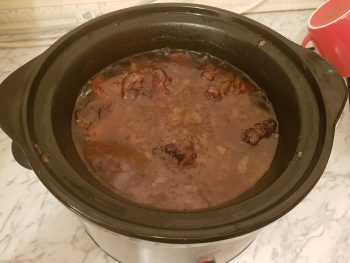
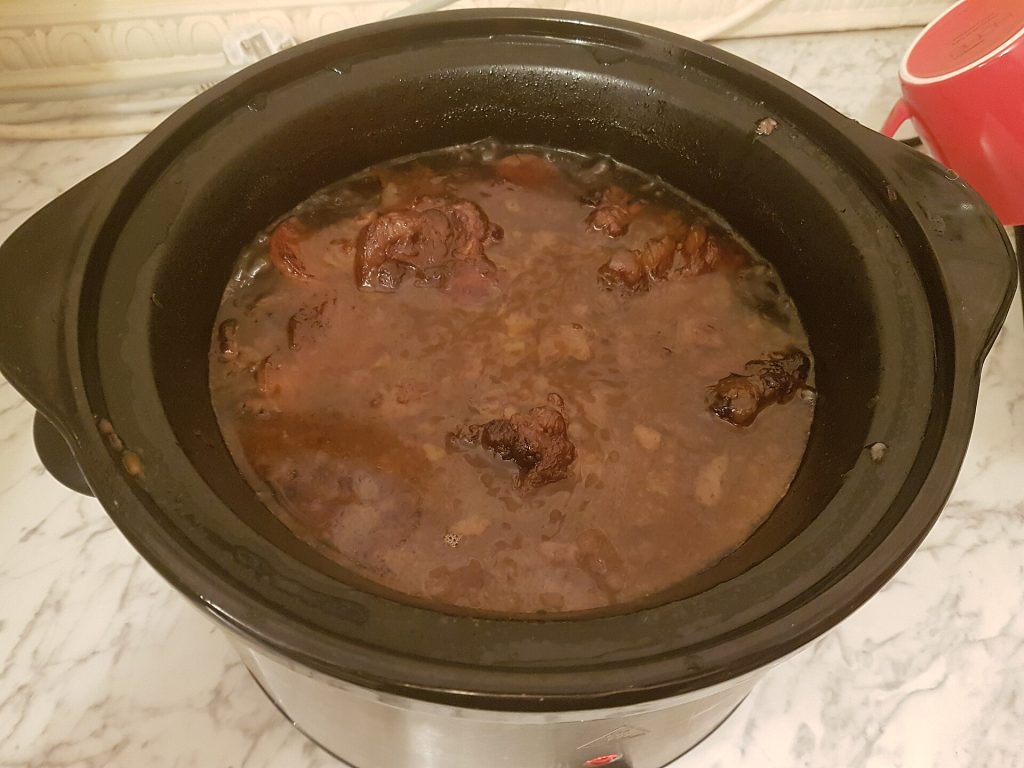
Featured photo: Slow Cooker Oxtail Stew (43369501180) by CharmaineZoe’s Marvelous Melange from England, BY 2.0.