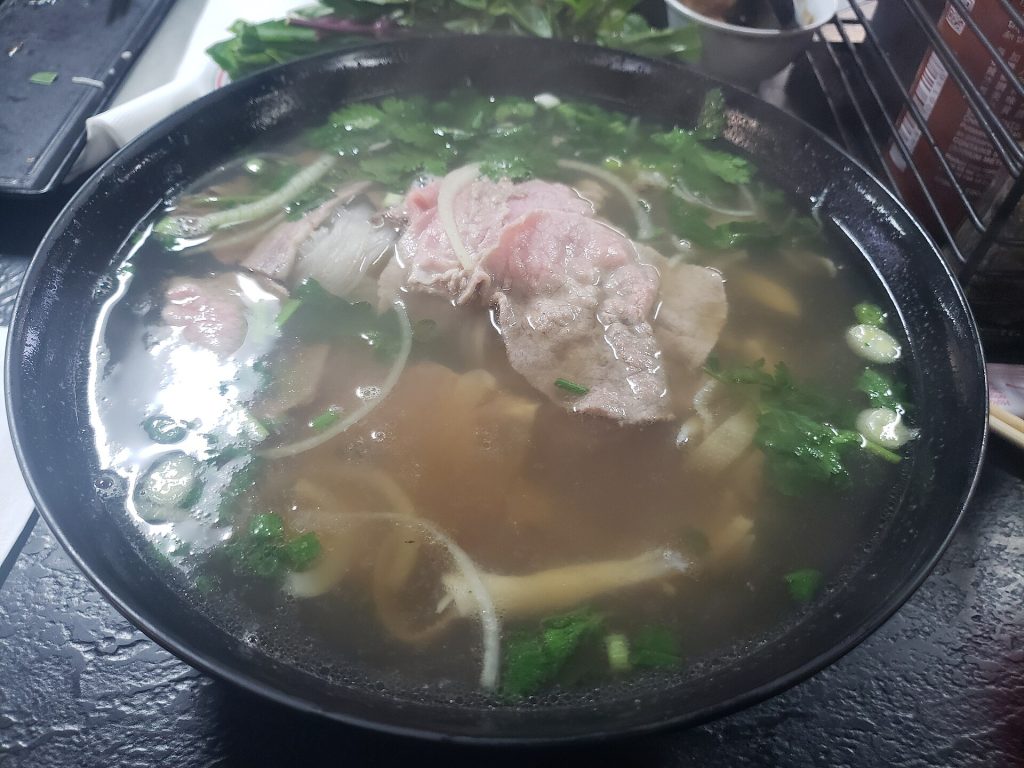
If you’re working out what to eat in Hanoi, start with five things: a clear-brothed bowl of northern phở for breakfast, bún chả for lunch, silky steamed bánh cuốn, turmeric-yellow chả cá with a mountain of dill, and a cup of egg coffee in the Old Quarter. Each is a Hanoi specialty, and each is best eaten where it’s been made for decades.
Hanoi’s cooking is quieter than the south’s. Vietnam’s national tourism body describes northern food as mild, built to let fresh ingredients speak, and that shows in every bowl.
This guide explains each dish, how locals eat it, and where to try it, with every place checked against the 2026 MICHELIN Guide listings or its own website. Then we’ll bring a couple of the flavors back to your kitchen.
Key takeaways
- Northern phở has a clear broth and few garnishes: chili, lime and a few herbs.
- Bún chả is a lunchtime dish of grilled pork in a tangy dipping sauce with rice vermicelli and herbs.
- Bánh cuốn are rice sheets steamed to order and rolled around minced pork and mushroom.
- Chả cá is turmeric-marinated fish finished at the table with dill and spring onions.
- Café Giảng has served egg coffee since 1946 and is still run by the founder’s family.
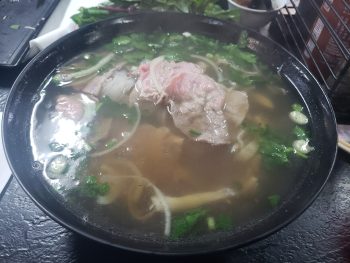
Phở, the northern way
Phở was born in the north. According to Vietnam Tourism, Nam Dinh province in the Red River Delta is believed to be its cradle, while Hanoi became its spiritual home. By the 1930s, roaming vendors carrying gánh phở, shoulder poles with a pot at one end, were a common sight in the Old Quarter.
Hanoi-style phở is simpler than the southern version. Vietnam Tourism says northern garnishes are limited to fresh chili, lime and a few herbs, while the south sweetened its broth after 1954 and added more herbs and sauces. In Hanoi, it’s a breakfast dish served from early morning.
Phở Gia Truyền, 49 Bát Đàn
This Hoan Kiem institution holds a Bib Gourmand in the 2026 MICHELIN Guide. Each bowl of beef phở is made to order at the counter, with a choice of rare flank, medium-rare round or well-done brisket, and you can add crisp quẩy (fried dough sticks) or an egg yolk. Michelin notes it’s cash only and opens for breakfast and again in the evening.
Phở Gà Nguyệt, 5B Phủ Doãn
For chicken phở, the MICHELIN Guide’s 2026 noodle round-up points to this Bib Gourmand shop in Hoan Kiem. The broth, made from chicken and pork bones, starts simmering at 4 a.m. each day, and you can order it as soup or dry.
Bún chả for lunch
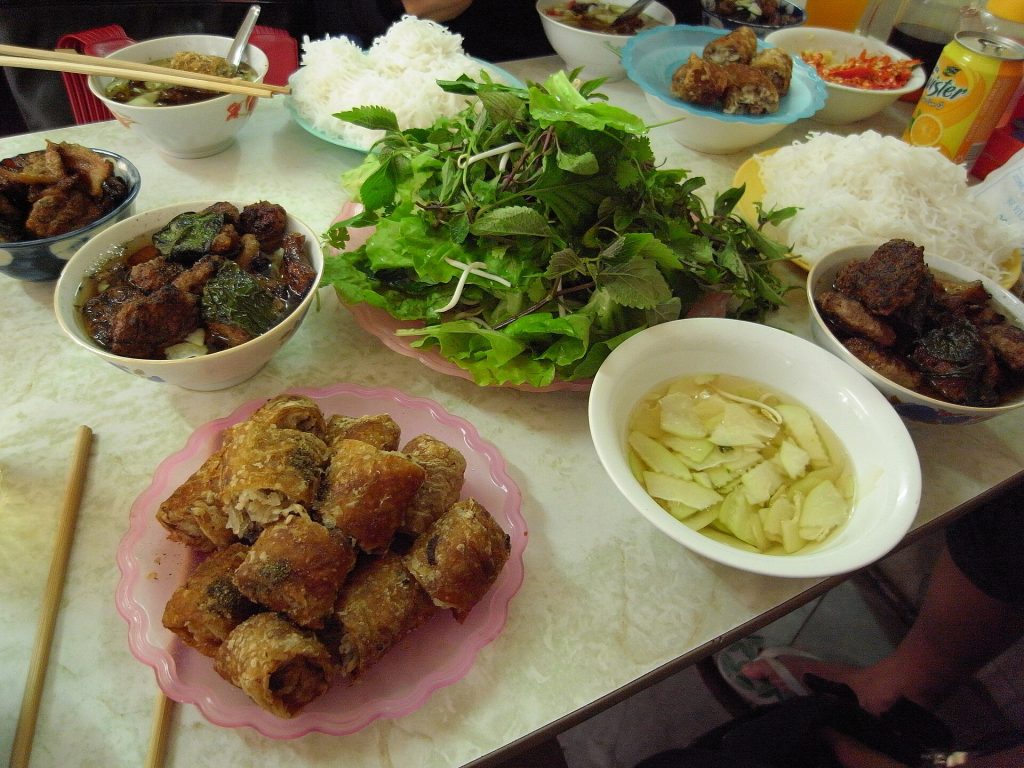
Where phở is breakfast, bún chả is lunch. The MICHELIN Guide describes the classic serving as three parts: smoky grilled pork belly and pork patties sitting in a light, tangy sauce; a plate of soft rice vermicelli; and a basket of herbs such as lettuce, perilla and coriander. You dip the noodles and herbs into the sauce and add garlic and chili to taste.
- Bún Chả Hương Liên, 24 Lê Văn Hưu, Hai Ba Trung. Vietnam Tourism notes bún chả became an overnight sensation after President Obama was photographed eating it here. It’s in the 2026 MICHELIN Guide, and many visitors order the “Obama Combo” of bún chả, a fried seafood roll and a Hanoi beer.
- Bún Chả Đắc Kim, 1 Hàng Mành, Old Quarter. A 2026 MICHELIN selection known for smoky pork belly and patties, with pickled green mango in the dipping sauce.
- Bun Cha Ta, 21 Nguyễn Hữu Huân, Old Quarter. A Bib Gourmand spread over six floors, serving bún chả with crisp fried spring rolls.
Bánh cuốn for breakfast
Vietnam Tourism’s guide to must-try dishes describes bánh cuốn as large, round sheets of steamed rice flour gathered around minced pork and wood-ear mushroom, served with fried shallots and a fish sauce dip with pork sausage. It’s made fresh to order and eaten for breakfast.
Because the sheets are steamed to order, bánh cuốn is a dish to eat the moment it lands. At a good shop you’ll see each one steamed, filled and rolled in front of you, and the thinner and softer the sheet, the better.
Bánh Cuốn Bà Hoành, 66 Tô Hiến Thành
Listed in the 2026 MICHELIN Guide’s street food selection, this busy shop in Bui Thi Xuan ward steams its rice sheets to order and wraps them around minced pork and shiitake. It also serves bún chả, so it’s a good stop if you want to try both in one sitting. Michelin notes it’s cash only.
In Hanoi, the clock tells you what to eat: phở at dawn, bún chả at noon, egg coffee whenever you need a pause.
Chả cá, Hanoi’s dill-scented fish
Vietnam Tourism calls chả cá a uniquely northern delicacy from the capital. White fish is marinated in turmeric, sautéed in butter, and topped with fresh dill and green onion. The dill is the signature: Vietnam Tourism describes the dish as perfumed with it.
Chả Cá Thăng Long, 6B Đường Thành
Vietnam Tourism recommends this restaurant for the dish, and the MICHELIN Guide gives it a Bib Gourmand and calls it an Old Quarter icon of more than 30 years. Deboned catfish is grilled in banana leaves, then finished at your table in a sizzling pan with dill and spring onions. Stir the herbs in as soon as they hit the pan, and eat quickly while everything is hot.
Chả Cá Anh Vũ, 120-K1 Giảng Võ
If you’re staying west of the Old Quarter, this family-run restaurant in O Cho Dua ward is also in the 2026 MICHELIN Guide. It has served turmeric catfish for over 20 years, alongside fish spring rolls and fish soup.
Egg coffee at Café Giảng
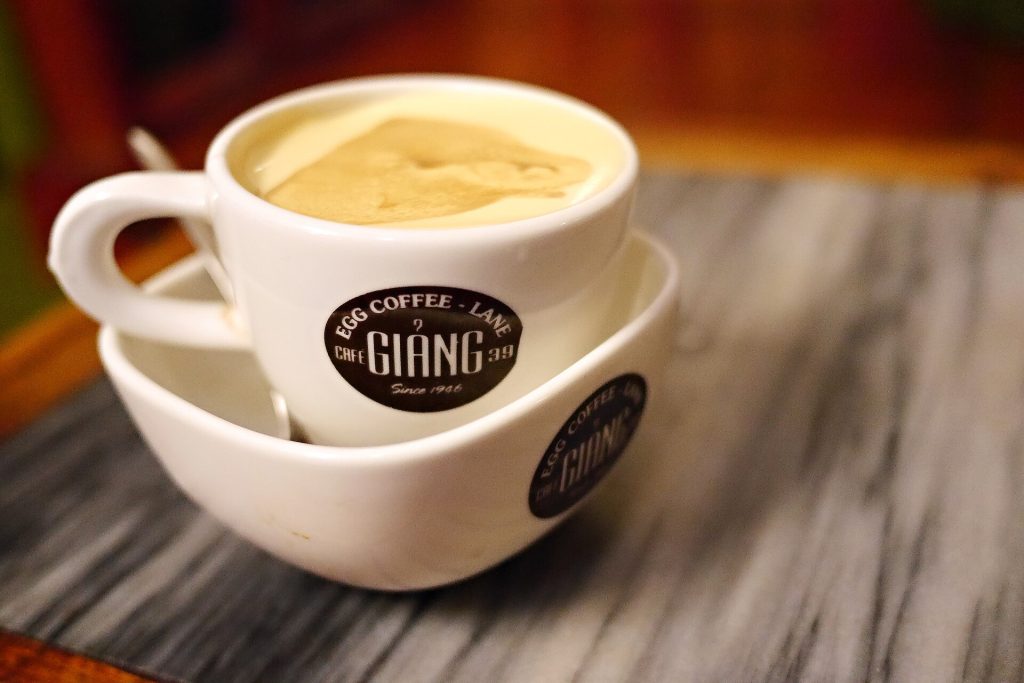
Cà phê trứng, egg coffee, tastes like a warm, coffee-flavored custard. Egg yolk is whisked into a thick, sweet foam and spooned over strong Vietnamese coffee.
According to Café Giảng, it was created by Nguyễn Văn Giảng, a bartender at Hanoi’s Metropole hotel, who opened his café in 1946. During hard economic times he replaced milk with egg, and the recipe has changed little in more than 70 years. The café, at 39 Nguyễn Hữu Huân in the Old Quarter, is now run by his family’s second generation.
- Eat some of the foam with a spoon first, then stir the rest into the coffee.
- Treat it as a dessert. It’s rich, so one cup is plenty.
- Pair it with a stroll: Nguyễn Hữu Huân runs through the Old Quarter, a short walk from Bun Cha Ta at number 21.
Street food etiquette
Hanoi’s street food runs on a few unwritten rules. None are strict, but they’ll make things smoother.
- Go when the dish is served. Breakfast places may sell out by mid-morning, and bún chả is a lunch trade.
- Bring small notes. Several of the places above are cash only.
- Sit where there’s space. Low stools and shared tables are normal, and a nod to your neighbors goes a long way.
- Season your own bowl. Lime, chili, garlic and vinegar are on the table for you to adjust.
- Point if you need to. Many shops sell one dish, so ordering is often just a number of bowls.
Planning more stops? Read our guide to Vietnamese dishes, or use the restaurant directory to find Vietnamese restaurants closer to home.
FAQ
What’s the difference between Hanoi and Saigon phở?
Hanoi phở has a clear broth and few garnishes. Southern phở is sweeter and comes with more herbs and sauces, according to Vietnam Tourism.
When should I eat bún chả?
At lunch. The MICHELIN Guide notes bún chả restaurants are busiest at midday.
Where was egg coffee invented?
At Café Giảng in Hanoi, which says its founder, Nguyễn Văn Giảng, created it after opening the café in 1946.
Is Hanoi street food cash only?
Many small shops are. Several places in this guide, including Phở Gia Truyền and Bánh Cuốn Bà Hoành, take cash only.
Cook a taste of Hanoi at home
You can taste Hanoi before you book a flight. Try bún chả at home by grilling pork patties and belly slices, then serving them in a dipping sauce of fish sauce, sugar, vinegar and water with rice vermicelli and plenty of herbs. Or whisk an egg yolk with sweetened condensed milk until pale and thick, and spoon it over strong coffee. For more trip inspiration, browse our food travel guides or read how to make phở at home.
Featured photo: 79 super bowl at Pho 79 by RightCowLeftCoast, BY 4.0.