The right restaurant for large groups is one that can seat everyone together, feed them without a two-hour wait between courses, and handle the bill without a scene at the end. In practice that means asking about set menus, private or semi-private space, deposits and minimum spends, noise, step-free access, allergies and how service charges work, before you book.
A place you love for dinner for two can be the wrong choice for fourteen. Kitchens are set up for a steady flow of small tables, and a big party landing all at once tests them.
This buyer’s guide goes criterion by criterion, then sorts the options into three budget tiers so you can match the venue to the occasion.
Key takeaways
- Call rather than book online once your group is bigger than the restaurant’s largest regular table.
- Set menus keep big groups moving and make costs predictable. À la carte suits smaller, flexible groups.
- Private rooms usually come with a deposit, a minimum spend or both. Get the terms in writing.
- Ask for step-free access and table heights that work for wheelchair users if anyone in your party needs them.
- An automatic gratuity for a large party is a service charge, not a tip, in the IRS’s view. Check the bill before adding more.
Start with the headcount
Every restaurant has a point where a booking stops being a normal reservation and becomes a group. It depends on the size of the tables, the kitchen and the staff, and it’s usually printed somewhere on the menu, the booking page or the bill. Find out where that line is for any place you’re considering.
As a rough guide to what to ask:
- Up to the largest regular table: book online as normal, but mention the occasion.
- Just above it: call. The restaurant may join tables, and you’ll want to know whether everyone can sit together.
- Large parties: expect a set menu, a deposit, a minimum spend or a private area, and book further ahead.
Confirm your final numbers a day or two before, and ask what happens if a few people drop out. Ask whether you’ll be charged for no-shows on a set menu.
Set menu or à la carte
This choice shapes the whole evening. A set menu is a fixed list of courses, sometimes with two or three choices each, priced per person. À la carte means everyone orders from the full menu.
| Set menu | À la carte | |
|---|---|---|
| Speed | Faster; the kitchen can prep ahead | Slower for big groups; many dishes at once |
| Cost control | Predictable price per head | Varies widely between guests |
| Choice | Limited, often with pre-orders | Full menu |
| Dietary needs | Arranged in advance | Handled dish by dish on the night |
| Best for | Celebrations, work dinners, big parties | Smaller groups, casual meals |
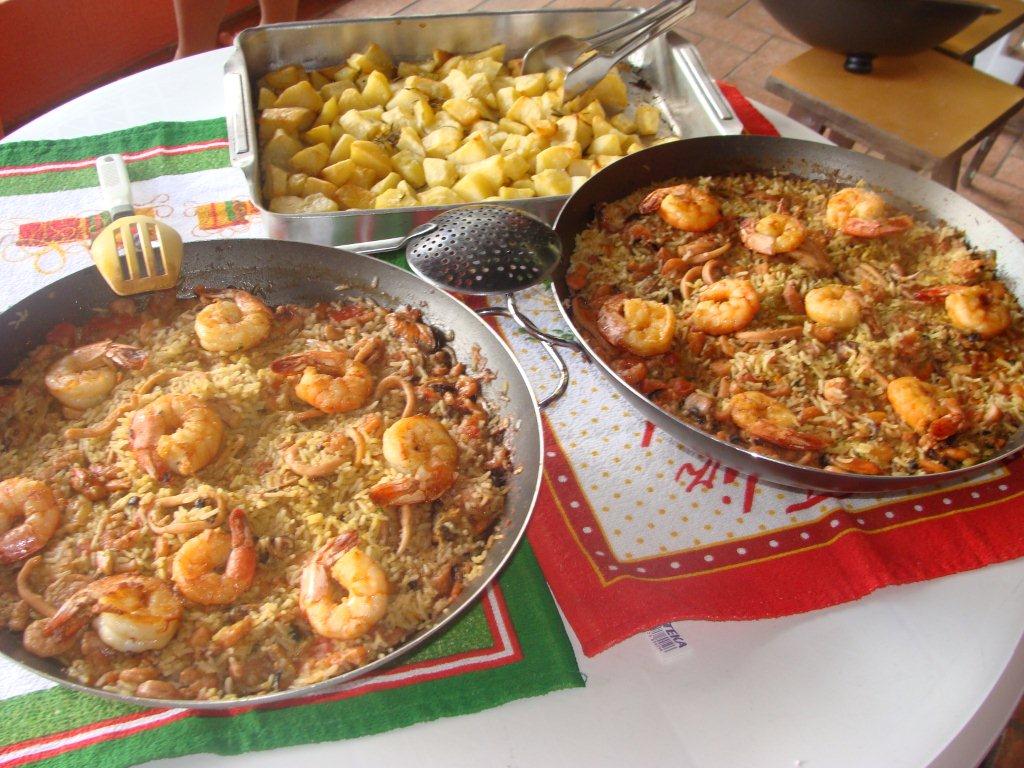
Sharing-style menus, where platters go down the middle of the table, are a good middle ground. They feel generous, they’re easy to scale, and nobody waits for one plate to arrive while the others go cold.
Private rooms, deposits and minimum spends
A private or semi-private room gives you a door to close, your own server and freedom to make a toast. It also usually comes with conditions. Ask exactly what each one means, and get it in writing by email.
- Deposit: how much, when it’s due, whether it comes off the final bill, and when it becomes non-refundable.
- Minimum spend: the amount your group must spend on food and drink to use the room. Ask what happens if you fall short.
- Room hire fee: a separate charge for the space, which some venues use instead of a minimum.
- Time limit: how long the room or table is yours.
- Cancellation policy: the notice period and what you forfeit.
Semi-private areas, such as a corner of the dining room or a mezzanine, often have lower minimums. You trade some privacy for a livelier room.
For a big group, the best restaurant isn’t the one with the best food. It’s the one that can serve everyone well at the same time.
Noise, layout and accessibility
Noise
Big groups spread out, and people at one end can’t hear the other. According to the National Institute on Deafness and Other Communication Disorders, normal conversation sits around 60 to 70 decibels. A room with hard floors, bare walls and loud music pushes everyone to shout over it.
- Ask for a table away from the bar, kitchen pass or speakers.
- Choose a long table over several small ones if you want one conversation.
- Visit at the same day and hour beforehand to hear the room at its busiest.
Accessibility
If anyone uses a wheelchair or has trouble with stairs, ask specific questions. Under the US ADA Accessibility Standards, at least 5% of seating and standing spaces at dining surfaces must be accessible, with surfaces 28 to 34 inches high and room underneath for knees and toes. Routes to raised, sunken and outdoor dining areas generally must be accessible too, but older buildings that have been altered may offer the same service in another accessible space instead.
So a restaurant can meet the rules and still seat your group upstairs while one guest sits elsewhere. Ask where your table will be, whether the route is step-free, and where the accessible restroom is.
Dietary needs and allergies
The more people you bring, the more likely someone has an allergy or a diet to work around. Collect this information when you send the invitation, then pass it to the restaurant in one list.
The FDA’s list of major food allergens covers milk, eggs, fish, crustacean shellfish, tree nuts, peanuts, wheat, soybeans and sesame. Allergen labelling rules for packaged food don’t apply to food made to order in a restaurant, so the conversation with staff matters. Tell them when you book, remind them on arrival, and make sure the server knows which seat each request belongs to.
- Ask whether the set menu can be adapted, or whether there’s a separate menu.
- Ask how the kitchen handles cross-contact for serious allergies.
- Include vegetarian, vegan and religious dietary needs in the same list.
For more on this, read eating out with food allergies.
The bill, service charges and splitting
The bill is where group dinners go wrong. Sort it out before anyone sits down.
Automatic gratuity and service charges
Many restaurants add a charge to large parties’ bills automatically. Rates vary, so check the menu or ask when you book. In the US, the IRS explains that a tip must be voluntary, with the customer free to decide the amount, and it lists a large dining party’s automatic gratuity as an example of a service charge, not a tip. For you, the practical point is simple: read the bill before adding a tip on top, and ask the server if you’re unsure what’s included.
Splitting the bill
- Ask first whether the restaurant will split the bill, and into how many payments.
- Set menus make splitting easy: one price per head, plus drinks.
- Choose one payer and settle up with a payment app afterwards for the fastest exit.
- Agree in advance whether drinks are shared or paid individually.
Budget tiers
| Tier | Typical setup | What to check |
|---|---|---|
| Casual | Long table, sharing platters or pizzas, no room hire | Whether they’ll hold the table, and the service charge |
| Mid-range | Set menu with choices, semi-private area | Deposit, pre-orders, dietary swaps |
| Special occasion | Private room with a minimum spend | Minimum spend terms, time limit, cancellation |
FAQ
How far ahead should I book for a large group?
As early as you can, especially for private rooms and busy seasons. Ask the restaurant how much notice it needs for your party size.
Can a restaurant refuse to split the bill?
Policies vary. Ask when you book, and plan for one person to pay if the answer is no.
Is an automatic gratuity the same as a tip?
Not in the IRS’s view. A charge set by the restaurant is a service charge. Check whether it’s already on your bill before tipping.
What should I ask about accessibility?
Where the table is, whether the route is step-free, how high the table is, and where the accessible restroom is.
Before you book
Shortlist three places, then call each one with the same questions: largest table, set menu options, deposit and minimum spend, noise, access, allergies and the service charge. The answers will make the choice for you. For more ideas, see group dining tips, browse our eating out guides, or search the restaurant directory for places near you.
Featured photo: Dinner table arrangement with food of a middle class Bangladeshi family 01 by Afifa Afrin, BY-SA 4.0.