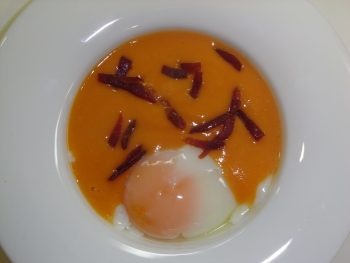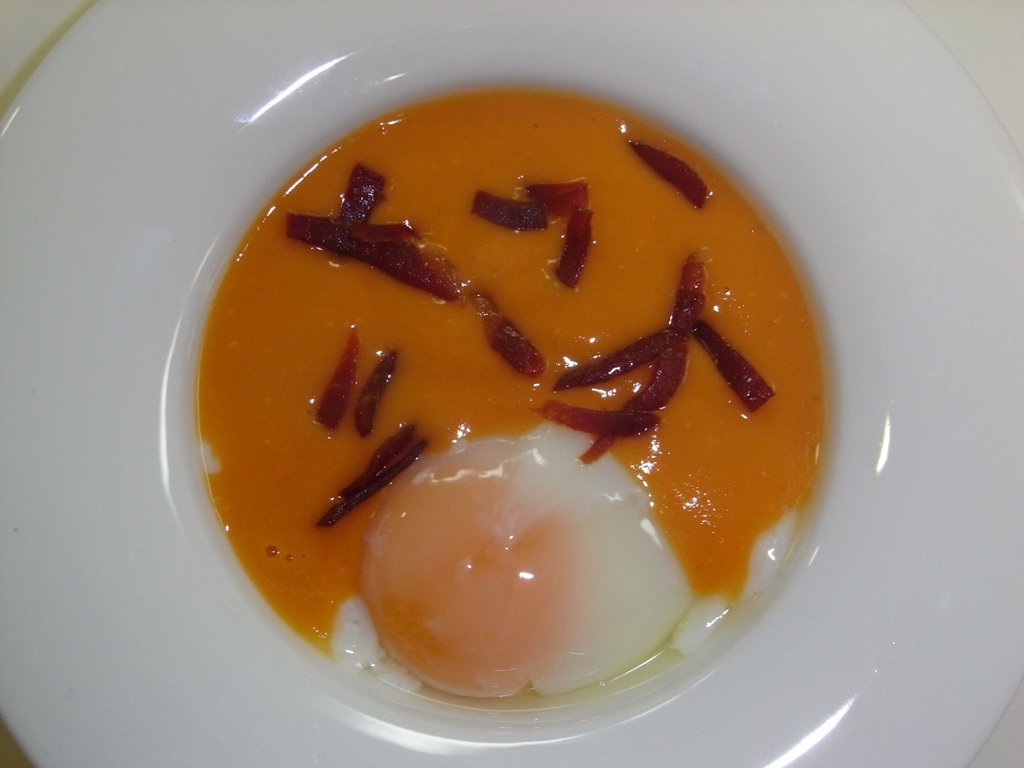
If you’re wondering what to eat in Seville, start with the tapas bar. Order cold salmorejo topped with egg and ham, a small plate of espinacas con garbanzos, and a paper cone of pescaíto frito. Add a slice of jamón, then cross the river to browse the Mercado de Triana.
Seville’s food is not fussy. It’s built on bread, olive oil, chickpeas, fish from the coast and pork from the hills, and most of it is eaten standing up at a busy counter.
This guide walks through the dishes worth knowing, what’s in them, and a handful of long-running places to try them, each checked as open for 2026. Then we’ll show you how to cook two of them at home.
Key takeaways
- Tapas in Seville are small, affordable plates eaten at the bar, and moving between bars is part of the ritual.
- Salmorejo is a thick cold purée of tomato, day-old bread, garlic and olive oil, finished with egg and ham.
- Espinacas con garbanzos is a spinach and chickpea stew seasoned with cumin and paprika and thickened with fried bread.
- El Rinconcillo has been pouring drinks on Calle Gerona since 1670.
- Mercado de Triana sits on the ruins of San Jorge Castle and houses around 100 stalls plus tapas bars.
How tapas work in Seville
Going for tapas in Seville is less a meal than a way of spending an evening. Visit Sevilla, the city’s tourism office, describes bars where “orders are sung” across the room, small portions at modest prices, and a ritual centred on the bar itself. Traditionally some tapas arrive in a long white dish called a concha.
A few habits help you fit in:
- Stand at the bar. Tables are for longer meals. The counter is where tapas happen.
- Order a little, then move. Two or three plates per bar is normal, and hopping between neighbourhood bars is the point.
- Share everything. Tapas are made for passing around.
- Ask what’s good today. Many bars have daily dishes that aren’t on the printed list.
| Dish | What it is | Where to try it |
|---|---|---|
| Salmorejo | Cold, thick tomato and bread purée with egg and ham | Most traditional tapas bars, especially in warm months |
| Espinacas con garbanzos | Spinach and chickpea stew with cumin and fried bread | Old-school bars such as El Rinconcillo |
| Pescaíto frito | Mixed fried fish, often including marinated adobo | Freiduría Puerta de la Carne |
| Montadito | A small filled roll | La Flor de Toranzo on Calle Jimios |
| Jamón | Thin-sliced cured ham | Almost any bar counter |
Salmorejo
Salmorejo is Andalusia’s thicker, richer cousin of gazpacho. The recipe published by Spain’s official tourism site uses just five ingredients: ripe tomatoes, a clove of garlic, day-old bread, extra virgin olive oil and salt. It’s blended until smooth and served in bowls with chopped hard-boiled egg and bits of ham sprinkled on top.
Visit Sevilla notes that cold tapas like salmorejo and ensaladilla, a potato salad, become even more popular in the warmer months. In Seville you’ll see it served as a tapa in a small dish or as a larger starter, and it’s often thick enough to hold a spoon upright.
Making it at home
The ratio from spain.info is 1 kg of tomatoes to 200 g of bread and 100 g of olive oil. Use the ripest tomatoes you can find, tear the bread into the blender with them, and drizzle in the oil with the motor running so it emulsifies. Chill it well before serving.
Espinacas con garbanzos
If one dish tastes like old Seville, it’s this. Espinacas con garbanzos is a stew of spinach and chickpeas, traditionally eaten during Lent, and it’s a staple on the menus of the city’s older bars.
The flavour comes from a few pantry ingredients. Recipes collected by the Seville food guide Cosas de Comé use cumin, sweet paprika, a splash of vinegar and day-old bread fried in olive oil, which helps thicken the sauce. The result is earthy, a little smoky and very filling.
Visit Sevilla points to spinach and chickpea stews as a pillar of the city’s vegetarian tapas, so it’s a safe order if anyone at the table doesn’t eat meat. Mop the sauce up with bread.
Pescaíto frito and adobo
Visit Sevilla calls fried fish one of the most famous tapas in the city, and says the smell of adobo is one of the things you notice walking through the centre. Adobo is fish marinated before frying. At a freiduría, a fried-fish shop, it’s sold alongside anchovies, squid and other small fish by weight.
Freiduría Puerta de la Carne
Freiduría Puerta de la Carne has been frying since 1928 at Calle Puerta de la Carne 2, near the Jardines de Murillo on the edge of the Santa Cruz quarter. Its menu includes adobo made with marinated shark, anchovies, squid, small cuttlefish, hake, prawns and fish roe, sold by weight and wrapped in paper cones. It’s the original takeaway, and a good snack before or after a walk through Santa Cruz.
In Seville, the best meals are often eaten standing up, from a paper cone or a small plate, with the bar staff calling out the next order.
Jamón, montaditos and the bar counter
Cured ham is part of the furniture in Seville. You’ll see legs of jamón hanging above counters all over the city, and a plate of thinly sliced ham with bread is the easiest first order at any bar.
El Rinconcillo
Founded in 1670, El Rinconcillo calls itself the oldest bar in Seville. It stands at Calle Gerona 40, near the Encarnación area, and the family that runs it still follows an old custom: waiters chalk your order onto the wooden bar and wipe it off when you pay. Its kitchen keeps to traditional Andalusian cooking, and a small plate of espinacas con garbanzos at the counter is a classic way to start an evening here.
La Flor de Toranzo
For something odder, head to La Flor de Toranzo on Calle Jimios, in the old centre near El Arenal. Open since 1942, it’s known for a montadito, a small roll, of anchovies with sweetened condensed milk. It sounds like a dare, but the salty and sweet combination has kept regulars coming back for decades. Visit Sevilla lists it among the classic bars of El Arenal.
Mercado de Triana
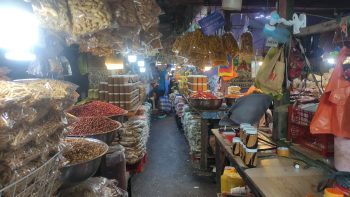
Cross the river to the Triana neighbourhood and you’ll reach the Mercado de Triana on Plaza del Altozano. Visit Sevilla says the market dates back to 1823 and was built on the remains of San Jorge Castle, a former Almohad fortress. It was fully renovated and reopened in 2001, and archaeological remains of the castle were found during the works.
Inside are roughly 100 stalls selling fruit, vegetables, fish, meat and bread, plus a herbalist, a florist, a cooking school, a flamenco school, and tapas bars and cafés. Go in the morning to see the fish and produce at their best, then stay for a drink and a plate at one of the bars.
- Look at the fish counters to see what’s in season, then order it cooked at a market bar.
- Buy olives, olive oil or spices as edible souvenirs.
- Walk down to the river afterwards for a view back across to the old city.
Planning more stops on your trip? Our guide to regional Spanish food covers other cities, and the restaurant directory can help you find places closer to home.
FAQ
What is the most typical food in Seville?
Tapas as a whole, but especially salmorejo, espinacas con garbanzos, fried fish and jamón. Visit Sevilla singles out fried fish as one of the city’s most famous tapas.
Is salmorejo the same as gazpacho?
No. Both are cold tomato dishes, but salmorejo uses bread to make a thick purée and is topped with egg and ham. Gazpacho is thinner and usually drunk or eaten as a soup.
Is Seville good for vegetarians?
Better than you might expect. Espinacas con garbanzos, salmorejo without the ham, and many vegetable tapas are easy to find.
How old is El Rinconcillo?
It dates from 1670. In 1897 it expanded into the neighbouring building at Calle Alhóndiga 2.
Bring Seville home
You don’t need a plane ticket to start. This week, make a batch of salmorejo with the ripest tomatoes you can find, and try espinacas con garbanzos with a can of chickpeas and a bag of frozen spinach. For more trip ideas, browse our food travel guides or read how to host a tapas night at home.
Featured photo: Ponemos elcrujiente de Jamón y un poco de Sal Maldom sobre la yema by jlastras, BY 2.0.