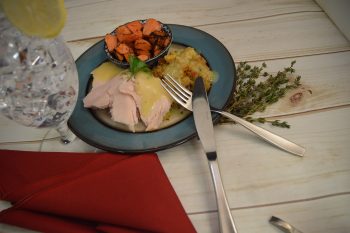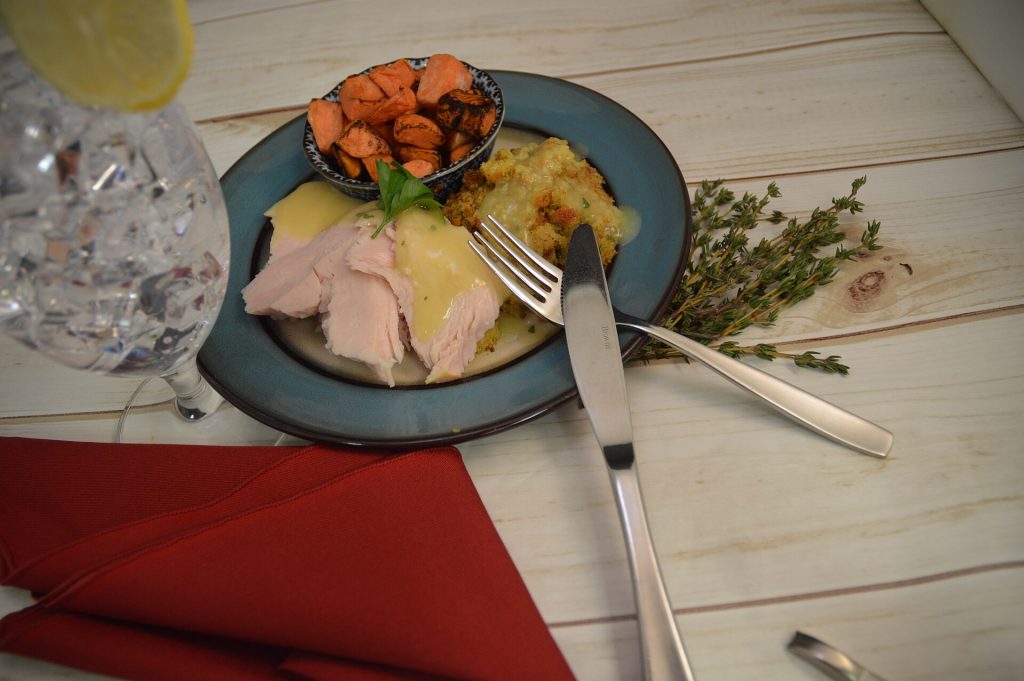
The key to Thanksgiving leftovers is a plan that starts before dessert: get everything into the fridge within two hours, carve the turkey off the bone, eat or freeze it all within three to four days, and reheat each portion to 165°F. The USDA’s food safety experts set those limits, and the Monday after Thanksgiving is a handy last day.
The trouble is that leftovers rarely get a plan. The turkey sits on the counter while everyone naps, the fridge fills with foil-covered platters, and by Tuesday nobody’s sure what’s safe.
So let’s walk through it with a hypothetical family of four: two adults, two kids, a 14-pound turkey, and more stuffing and potatoes than anyone could reasonably eat. Here’s how they handle the next four days.
Key takeaways
- Refrigerate leftovers within 2 hours of serving, or within 1 hour if it’s above 90°F.
- Take stuffing out of the bird, slice the breast, and store everything in shallow containers.
- Cooked turkey, side dishes and gravy keep 3 to 4 days in the fridge.
- Reheat leftovers to 165°F and bring gravy to a rolling boil.
- Frozen leftovers stay safe indefinitely; quality is best within a few months.
Thursday night: the first two hours
Our family sits down at 3 p.m. By 4:15, plates are pushed back and the pie is coming out. This is the moment that matters most for leftovers, because the clock started when the food came out of the oven.
USDA’s Food Safety and Inspection Service says to refrigerate leftovers within 2 hours of cooking, and to throw away perishable food that’s been at room temperature for longer than that. The window drops to 1 hour if the temperature is over 90°F. So before anyone reaches for the pie, one adult puts the food away.
Hot food can go straight in
There’s no need to let dishes cool on the counter first. FSIS says hot food can go directly into the refrigerator, or be chilled quickly in an ice or cold-water bath first. What slows cooling is volume, which is why the next step is splitting things up.
Carving down and packing up
A whole turkey carcass takes up half a fridge shelf and cools slowly. FSIS’s guidance on cooked turkey dinners is specific about what to do instead.
- Empty the cavity. Remove any stuffing from the turkey right away and refrigerate it separately.
- Slice the breast. Carve the breast meat off the bone in slices.
- Leave legs and wings whole if that’s easier; FSIS says they can stay as they are.
- Pack sides shallow. Put potatoes, gravy and vegetables into shallow containers rather than one deep bowl.
- Label the lids. Masking tape and a marker: what it is and “Thurs”.
Our family ends up with one container of sliced breast, a bag of dark meat, the carcass for stock, and five shallow tubs of sides. Everything’s in the fridge by 5 p.m.
Leftovers are safest when you treat them as tomorrow’s ingredients, not tonight’s clutter.
The four-day plan
FSIS gives cooked turkey, cooked side dishes and gravy 3 to 4 days in the refrigerator. FoodSafety.gov turns that into an easy reminder: use the Monday after Thanksgiving as your last day to eat leftovers or freeze them. Here’s how our family spreads the food across that window.
| Day | Breakfast or lunch | Dinner | Freezer job |
|---|---|---|---|
| Friday | Turkey and cranberry sandwiches | Classic plate: turkey, stuffing, potatoes and gravy reheated | Simmer the carcass into stock |
| Saturday | Turkey soup with the new stock | Turkey pot pie with leftover vegetables | Freeze two portions of sliced turkey |
| Sunday | Mashed potato cakes with a fried egg | Turkey enchiladas or fried rice | Freeze remaining stock and gravy |
| Monday | Clear out the last of the sides | Final turkey dish | Freeze or discard anything left |
Friday: the classic replay
Nobody gets tired of the Thanksgiving plate on day two. Lunch is sandwiches with cold sliced breast, and dinner is a full reheated plate. Before anything else, someone picks the last bits of meat off the carcass and adds them to the dark-meat bag, because they are perfect for soup and enchiladas later. In the afternoon, the carcass goes into a stockpot with onion, carrot and celery for a gentle simmer.
Saturday: soup and pie
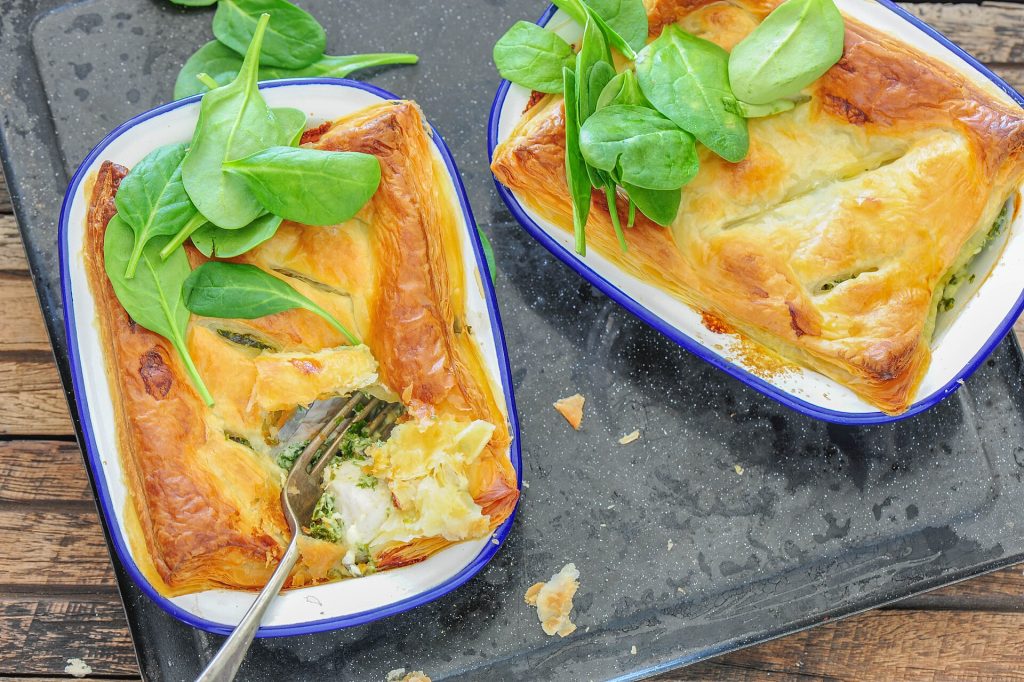
The fresh stock becomes a quick turkey noodle soup at lunch. For dinner, dark meat and leftover vegetables go under a pastry lid for pot pie. After dinner, two portions of sliced turkey go into freezer bags, labelled and dated.
Sunday: change the flavours
By now the family wants something different. Leftover mashed potato gets pan-fried into cakes for brunch. Dinner swaps Thanksgiving flavours for spice: shredded turkey rolled into enchiladas, or tossed into fried rice with frozen peas.
Want more ideas for this stage? Our leftover turkey recipes are built for exactly this.
Reheating to 165°F
Every reheated portion in the plan gets the same treatment. FSIS says to reheat leftovers thoroughly to 165°F, or until hot and steaming, and to bring gravy to a rolling boil. An instant-read thermometer takes the guesswork out, especially with thick portions of stuffing or dense pot pie.
- Microwave: cover the dish and rotate it so it heats evenly, then check the temperature in several spots, as FoodSafety.gov suggests.
- Oven: add a splash of stock to sliced turkey and cover with foil so it doesn’t dry out.
- Stovetop: the easiest way to get soups, stock and gravy to a rolling boil.
- Only reheat what you’ll eat. Take out one meal’s worth instead of reheating the whole container.
Monday: freeze it or finish it
Monday is decision day. Anything still in the fridge from Thursday has reached the end of its 3-to-4-day window, so our family clears the shelves: the last sides for lunch, a final turkey dish for dinner, and everything else goes into the freezer or the bin.
How long frozen leftovers last
According to FSIS, frozen leftovers stay safe indefinitely, though quality declines with time. Its turkey guidance gives these best-quality targets:
- Plain cooked turkey or slices: 4 months
- Turkey covered in broth or gravy: 6 months
- Cooked poultry dishes, stuffing and gravy: 4 to 6 months
Frozen leftovers can be reheated without thawing first; FSIS gives soup or stew in a saucepan or microwave as examples. And if you reheat previously frozen leftovers to 165°F, FSIS says it’s safe to refreeze what remains.
For more ways to run a calmer kitchen, browse our lifestyle guides.
FAQ
How long are Thanksgiving leftovers good for?
Three to four days in the refrigerator, according to USDA’s Food Safety and Inspection Service. FoodSafety.gov suggests using the Monday after Thanksgiving as your deadline.
Can I leave the turkey out while we eat dessert?
Only if you’re still within 2 hours of it coming out of the oven. After that, perishable food should be thrown away, or after 1 hour if it’s above 90°F.
Do I have to let food cool before refrigerating it?
No. FSIS says hot food can go straight into the fridge. Splitting it into shallow containers helps it cool faster.
What temperature should leftovers be reheated to?
165°F, checked with a food thermometer. Gravy should come to a rolling boil.
Make your plan before the big day
A week before Thanksgiving, clear one fridge shelf and make room in the freezer. Stock up on shallow containers, freezer bags, masking tape and a marker, and check that your food thermometer works. Then pin this four-day plan to the fridge. If you’re still planning the main event, our guide to roasting a turkey covers the cooking side.
Featured photo: Sliced Turkey (8) (26497545079) by John Freeman, BY 2.0.