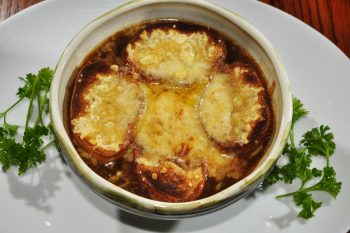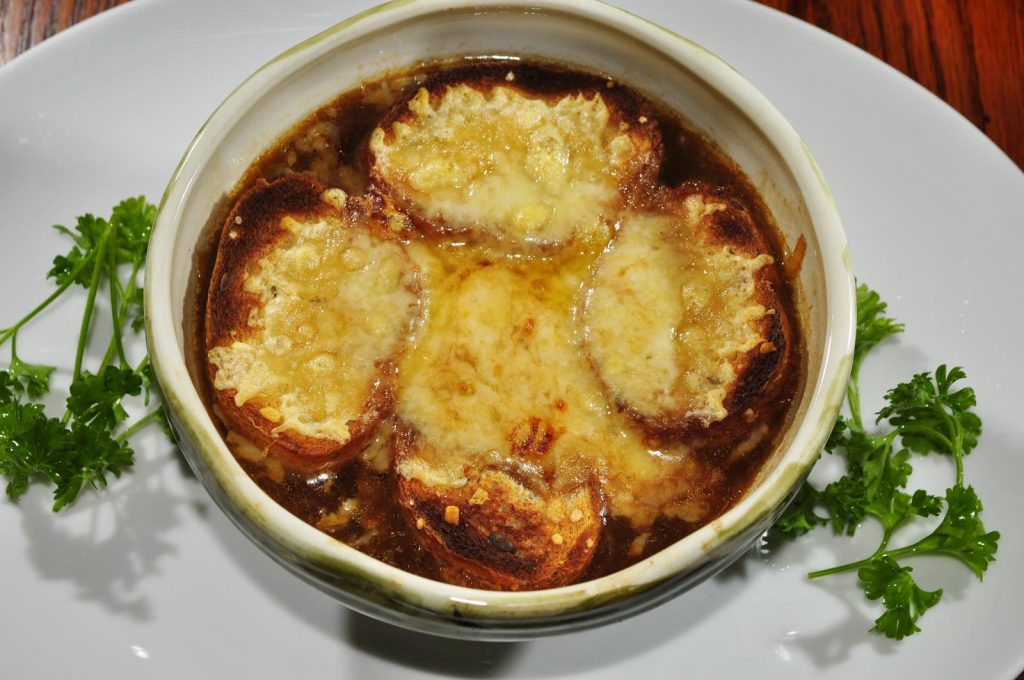
Great French onion soup is mostly patience. You cook a big pile of sliced yellow onions slowly in butter until they are deep brown and jammy, deglaze the pot with a splash of wine, simmer them in good beef stock with thyme, then top each bowl with toasted bread and Gruyère and slide it under the broiler until the cheese bubbles and browns.
The ingredient list is short, which is exactly why each step matters. Rush the onions and the soup tastes thin and sharp. Skimp on the stock and no amount of cheese will save it. Get those two right and you have a bowl that feels like a Paris bistro on a cold night.
Below you’ll find the shopping list, how to pick onions, a numbered method with real timings, the broiler finish, and how to make the base days ahead or freeze it safely.
Key takeaways
- Use about 3 pounds of yellow onions for four to six bowls; they cook down to a fraction of their raw volume.
- Real caramelizing takes around 45 minutes or longer, according to the National Onion Association. Low heat and patience beat high heat every time.
- Deglaze the brown bits with dry white wine or sherry, then simmer in a rich beef stock with thyme and bay.
- Toast the bread before it goes on the soup, then broil with Gruyère until bubbling and spotted brown.
- Freeze the soup base without bread or cheese, and reheat soups to a rolling boil, as USDA advises.
In this guide
- What you need
- Choosing the onions
- How to make French onion soup, step by step
- The crouton and Gruyère finish
- Making it ahead and freezing it
- FAQ
- Pick your soup night
What you need
This makes four generous bowls or six smaller ones. You’ll need a heavy pot, ideally an enameled Dutch oven, and oven-safe soup bowls or crocks for the finish.
- 3 pounds yellow onions (about 5 or 6 large), halved and thinly sliced
- 4 tablespoons unsalted butter, plus a little oil to keep it from scorching
- 1 teaspoon kosher salt, plus more to taste
- 1/2 cup dry white wine or dry sherry
- 2 quarts beef stock, homemade or a good low-sodium carton
- 4 sprigs fresh thyme and 1 bay leaf
- Freshly ground black pepper
- 1 baguette, sliced about 3/4 inch thick
- 6 to 8 ounces Gruyère, coarsely grated
A splash of brandy or cognac at the end is a classic bistro move. It’s optional, but it adds a warm, rounded note that works beautifully with the sweet onions.
Choosing the onions
Yellow onions are the workhorse here. They have enough sugar to brown deeply and enough bite to keep the finished soup from tasting like dessert. Once you’ve made the soup with them, you’ll rarely want to experiment.
- Yellow onions: the best all-round choice. Balanced, savory, and they hold their shape through the long cook.
- Sweet onions: they brown fast but can make the soup cloying. Use them for up to a third of the pile if you like a softer, sweeter bowl.
- Red onions: they work, but the soup turns a murky purple-brown. Save them for salads.
- Shallots: lovely in small amounts for depth, too fiddly to peel in bulk.
Pick onions that are firm and heavy with dry, papery skins and no soft spots or sprouting. Slice them pole to pole, from root to stem, rather than across. The slices keep a little more structure and are less likely to turn to mush over the long cook.
How to make French onion soup, step by step
Set aside an hour and a half, most of it hands-off apart from stirring. The National Onion Association puts it plainly: truly caramelized onions that are dark brown and soft take around 45 minutes, sometimes longer, and need watching closely. That matches what you’ll see at the stove.
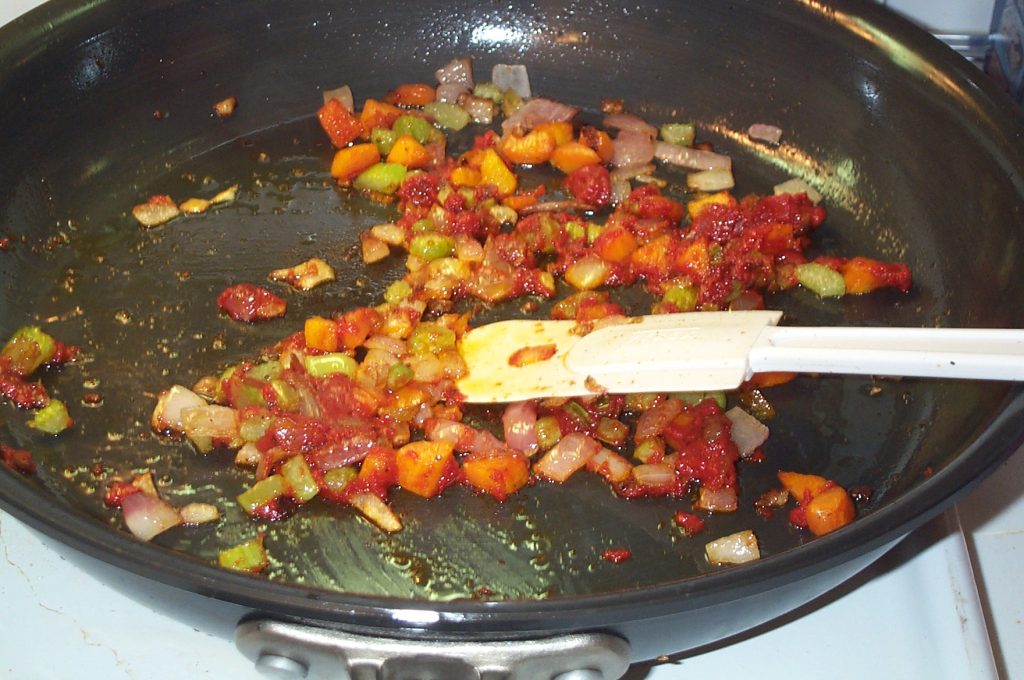
- Start the onions. Melt the butter with a little oil in the pot over medium heat. Add all the onions and the salt. The pot will look absurdly full. Cover for about 10 minutes, stirring once or twice, so the onions soften and release their liquid.
- Brown them low and slow. Uncover and turn the heat to medium-low. Stir every 5 minutes or so, scraping the bottom. As the pot dries, a brown film forms on the base; scrape it up into the onions each time. That film is flavor.
- Fix sticking with water, not heat. If the fond starts to look black rather than brown, add 2 tablespoons of water, scrape, and let it cook off. Repeat as needed. Turning the heat up is the fastest way to bitter onions.
- Know when they’re done. After 45 minutes to an hour, the onions should be soft, sticky and the color of a dark caramel or milky tea, with no pale strands left.
- Deglaze. Pour in the wine or sherry and scrape the pot hard. Let it bubble until almost gone, about 2 minutes.
- Add the stock and herbs. Pour in the stock, add the thyme and bay, and bring to a simmer. Cook gently, partly covered, for 30 minutes.
- Season. Fish out the herbs, add pepper, then taste. Adjust the salt and add the brandy now if you’re using it.
The onions are the soup. Everything else is just support for forty-five patient minutes.
About stock
The National Onion Association’s own take on the dish builds it on rich beef broth or vegetable stock, and suggests homemade or a quality store-bought broth. Beef gives the classic dark, savory bowl. If you use a carton, pick low-sodium so you control the salt, since the onions and cheese both add plenty. For a vegetarian version, use a well-flavored vegetable stock and add a teaspoon of soy sauce for depth.
A note on shortcuts
The same National Onion Association guide mentions that a little baking soda helps onions caramelize more quickly. It works, but go sparingly. A tiny pinch is enough, and too much can soften the onions to a paste. For your first pot, the slow method teaches you what properly browned onions look and taste like.
The crouton and Gruyère finish
The gratinée is where the soup becomes a meal. Two things matter: toasted bread and a hot broiler.
- Toast the bread first. Lay the baguette slices on a sheet pan and bake them in a moderate oven until dry and crisp all the way through, about 10 minutes. Toasted bread floats and soaks up soup slowly instead of dissolving.
- Heat the broiler. Set a rack so the tops of your bowls sit a few inches below the element.
- Fill the bowls. Set oven-safe bowls on a foil-lined sheet pan and ladle in hot soup, leaving a little headspace.
- Top and cover. Float one or two toasts on each bowl, then pile on the Gruyère so it covers the bread and touches the rim.
- Broil and watch. Broil for a few minutes until the cheese is bubbling and browned in spots. Broilers vary, so don’t walk away.
Serve on a plate or board, and warn everyone that the bowls are extremely hot. If you don’t own oven-safe bowls, melt the cheese on the toasts on a sheet pan under the broiler, then float them on the soup.
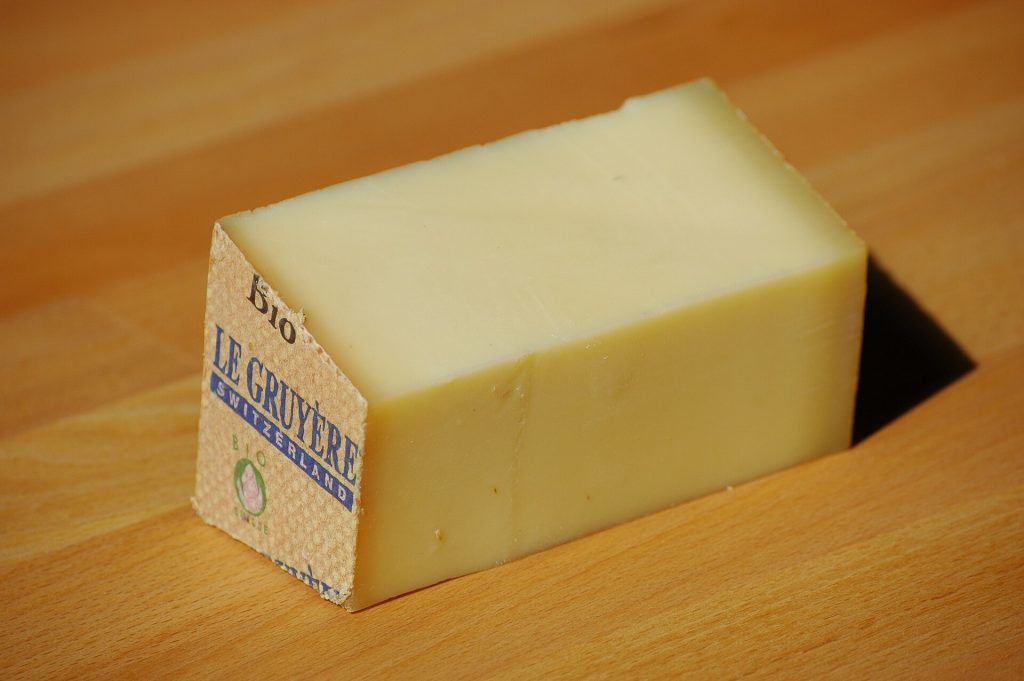
Gruyère is the classic for its nutty flavor and good melt. Swiss or Emmental will do, and a little Parmesan on top browns nicely. For more on picking the right cheese, see our guide to cooking with cheese.
Making it ahead and freezing it
French onion soup is one of the best make-ahead soups there is. The base often tastes better the next day, and it freezes well. Just keep the bread and cheese separate until serving.
Cooling and refrigerating
USDA’s leftovers guidance says to divide large amounts of food into shallow containers so they cool quickly, and to refrigerate leftovers within 2 hours of cooking. Refrigerated, they keep 3 to 4 days.
Freezing
The federal cold food storage chart lists soups and stews at 2 to 3 months in the freezer. Those times are for quality only: food kept continuously at 0°F or below stays safe indefinitely, but the flavor and texture fade over time. Freeze the soup in portions with some headspace, and label each container with the date.
Reheating
Thaw frozen soup overnight in the refrigerator. USDA advises reheating soups by bringing them to a rolling boil, then you can finish with fresh toast and cheese under the broiler as usual.
| Stage | How long | Tip |
|---|---|---|
| Caramelized onions only, refrigerated | 3 to 4 days | Cook a double batch and freeze half for next time |
| Finished soup base, refrigerated | 3 to 4 days | Cool in shallow containers within 2 hours |
| Soup base, frozen | 2 to 3 months for best quality | No bread or cheese; leave headspace |
| Reheating | Until it reaches a rolling boil | Add toast and Gruyère only at serving |
FAQ
What are the best onions for French onion soup?
Yellow onions. They brown deeply and keep a savory edge. You can mix in a few sweet onions, but on their own they tend to make the soup too sweet.
How long does it take to caramelize onions for soup?
Plan on at least 45 minutes, and often closer to an hour for 3 pounds. The National Onion Association says truly caramelized onions take around 45 minutes, sometimes longer.
Can I make French onion soup without wine?
Yes. Deglaze with a splash of stock and add a teaspoon of sherry vinegar or cider vinegar at the end for the brightness wine would bring.
Can you freeze French onion soup with the cheese on top?
It’s better not to. Bread turns soggy and the cheese goes rubbery. Freeze the base alone and add fresh toast and Gruyère when you reheat.
Pick your soup night
Pick a slow weekend afternoon, slice the onions, and make a double batch of the base: one for tonight, one for the freezer. If you’re in a soup mood, browse more of our recipes and try another cold-weather soup for the week ahead.
Featured photo: Mmm…onion soup (5344349906) by jeffreyw, BY 2.0.