To find a true whole grain bread, ignore the front of the bag and turn it over. The first ingredient should be a whole grain, such as whole wheat flour or whole rye, and the Nutrition Facts panel should show at least 3 grams of fiber per serving. A Whole Grain Stamp helps, but only the 100% version promises that every bit of grain in the loaf is whole.
Words like multigrain, wheat and stone-ground sound wholesome, yet none of them guarantees much whole grain. Neither does a brown crust.
This guide walks through the label the way you’d read it standing in the bread aisle: the claims on the front, the ingredient list, the stamp, and the numbers per slice. Then we sort breads into budget tiers so you can pick a good loaf at any price.
Key takeaways
- “Whole wheat bread” is a defined name in US federal rules, and the dough may not contain regular white flour.
- Multigrain, 7-grain, stone-ground, cracked wheat and “made with whole grains” can all describe mostly refined bread.
- Look for a whole grain as the first ingredient and at least 3 grams of fiber per serving.
- The 100% Whole Grain Stamp means all the grain is whole, with at least 16 grams of whole grain per serving.
- The 2025–2030 Dietary Guidelines suggest 2–4 servings of whole grains a day and far less refined bread.
In this guide
- The label at a glance
- Front-of-bag words that mislead
- The ingredient list and the Whole Grain Stamp
- Fiber, sodium and sugar per slice
- Are sprouted breads worth it
- Buying by budget
- How much whole grain you actually need
- FAQ
- Try it on your next shop
The label at a glance
Before the details, here’s a cheat sheet. Each line pairs a phrase you’ll see on a bread bag with what it actually tells you.
| What the bag says | What it really means |
|---|---|
| 100% whole wheat / whole wheat bread | Made from whole wheat flour; regular white flour is not allowed in the dough |
| Whole grain | Can mean as little as 51% whole grain flour |
| Made with whole grains | May contain a little or a lot of whole grain |
| Multigrain / 7-grain | Several grains, possibly all or mostly refined |
| Wheat bread / wheat flour | Usually refined flour; wheat is simply the plant |
| Enriched flour | Refined flour with some nutrients added back, but not the fiber |
| Sprouted whole grain | Counts as whole grain if the sprouts stay shorter than the kernel |
Front-of-bag words that mislead
The front of the bag is advertising. A Harvard Health Publishing review of whole grain labels flags multigrain, wheat, cracked wheat, 7 grain, stone ground, enriched, fortified and “made with whole grains” as terms that can mislead, and warns that a photo of a wheat field says nothing about the flour inside. It also cites research in which 29% to 47% of shoppers picked the less healthy product as the better one.
“Whole wheat” is the one name with rules behind it
In the US, whole wheat bread has a federal standard of identity. Under 21 CFR 136.180, a loaf sold as whole wheat bread, graham bread or entire wheat bread must be made from whole wheat flour, and no regular white flour may go into the dough. Just make sure the word “whole” is actually there: “wheat bread” and “honey wheat” carry no such guarantee.
Multigrain and friends
Multigrain only means more than one grain was used. Those grains can be refined, with a sprinkle of oats on top for show. The Academy of Nutrition and Dietetics makes the same point about stone-ground, 100% wheat, cracked wheat, seven-grain and bran: none of these words necessarily means the bread is whole grain.
Don’t judge a loaf by its colour
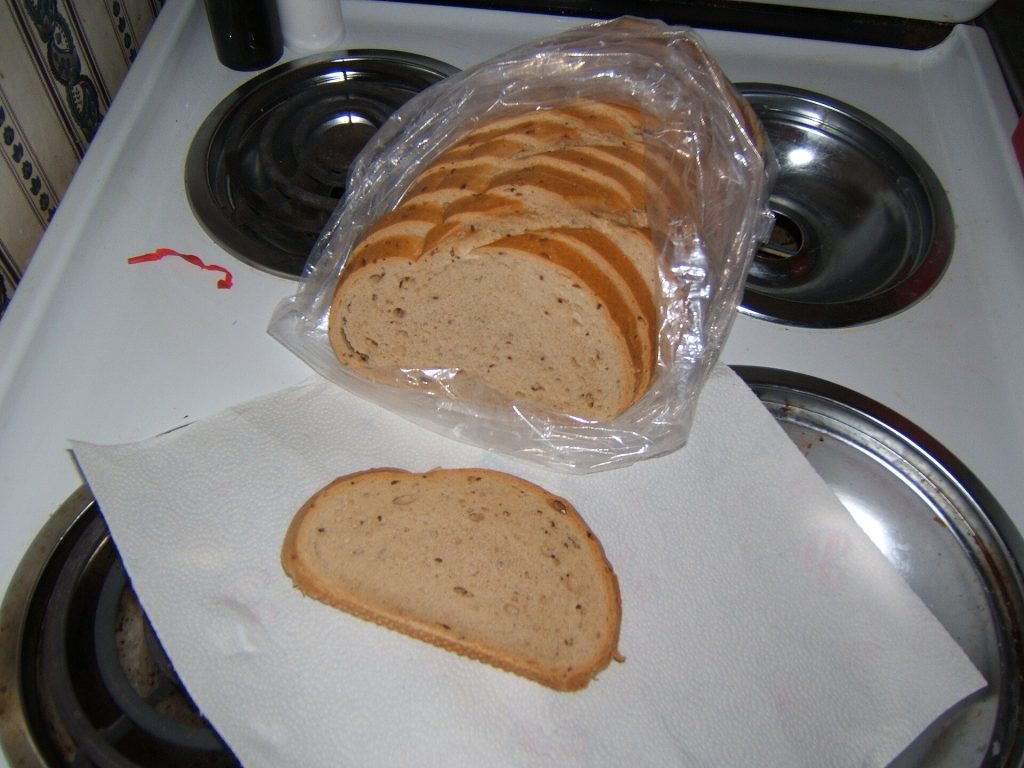
Brown bread is not the same as whole grain bread. The Academy of Nutrition and Dietetics points out that molasses or other added ingredients can give food a brown colour, so a dark loaf may be mostly white flour. Colour tells you very little, so read the words instead.
The ingredient list and the Whole Grain Stamp
Ingredients are listed by weight, heaviest first, which makes the list the most honest part of the bag. Harvard’s advice is to look for a whole grain as the first or second ingredient. For a bread you want to count as whole grain, first place is the better test.
- Good signs: whole wheat flour, whole grain rye, whole oats, brown rice, whole spelt, sprouted whole wheat.
- Refined signs: enriched wheat flour, wheat flour, unbleached enriched flour.
- Watch the order: if enriched flour comes first and whole wheat flour comes third, most of the grain is refined.
USDA MyPlate adds a useful detail: enriched flour has some nutrients put back after milling, but fiber is not added back to enriched grains. That missing fiber is a big part of why the whole grain version is worth seeking out.
What the Whole Grain Stamp tells you
The yellow-and-black Whole Grain Stamp from the Whole Grains Council, part of the nonprofit Oldways, appears on more than 12,400 products in 66 countries. It comes in three versions, and they are not equal:
- 100% Stamp: all grain ingredients are whole grain, with at least 16 grams of whole grain per serving.
- 50%+ Stamp: at least half the grain is whole, with at least 8 grams per serving.
- Basic Stamp: at least 8 grams of whole grain per serving, but the product may contain more refined grain than whole.
The council’s own maths is handy: three servings of foods with the 100% Stamp, or six with any stamp, reaches its suggested 48 grams of whole grain a day. No stamp doesn’t mean a bad loaf, though. Plenty of good breads, especially from small bakeries, don’t carry it, so fall back on the ingredient list.
The front of the bag is advertising. The back of the bag is the truth.
Fiber, sodium and sugar per slice
The Nutrition Facts panel lets you compare two whole grain loaves that both pass the ingredient test. The FDA guide to the Nutrition Facts label gives a simple rule: 5% Daily Value or less of a nutrient per serving is low, and 20% or more is high. It also reminds you that everything on the panel refers to the stated serving size, which for bread may be one slice or two.
Fiber
Harvard suggests choosing breads with at least 3 grams of fiber per serving. The Daily Value for fiber is 28 grams, so a two-slice sandwich of good whole grain bread can make a real dent in it.
Sodium
Bread rarely looks salty, which is exactly the problem. When the CDC listed the top sources of sodium in American diets, breads and rolls were on it, because foods eaten several times a day add up even when each serving is modest. Compare the sodium figure between loaves; the Daily Value is 2,300 milligrams, and differences of a hundred milligrams a slice add up quickly over a week of toast and sandwiches.
Added sugars
A little sweetener is normal in whole grain dough; the added sugars line tells you how much. Between two loaves with similar fiber, the one with fewer added sugars is the better everyday pick.
Are sprouted breads worth it
Sprouted grain breads have become a freezer-aisle staple. The Whole Grains Council explains that sprouted grains are simply grains that have started to germinate, and they still count as whole grains as long as the sprout hasn’t grown longer than the kernel and the grain’s nutrients haven’t diminished.
Sprouting starts to break down starch and storage proteins, and it lowers phytate, a compound that can interfere with mineral absorption. Bakers also like that sprouted dough takes on more water, which gives a more open crumb, and that the bread tends to keep longer. A good ordinary whole wheat loaf is still an excellent choice.
Buying by budget
Good whole grain bread is available at every price point. What changes as you spend more is mostly flavour, texture and convenience, not whether the bread is whole grain.
Everyday supermarket loaf
Look for a sliced sandwich bread named “100% whole wheat” with whole wheat flour listed first. The name carries the same federal meaning whether it’s a store brand or a big-name loaf. Compare sodium and added sugars between two or three options and buy the lowest.
Step-up loaf
This is where you find breads carrying the 100% Whole Grain Stamp, whole rye loaves and sprouted breads. Keep them in the freezer so none goes stale.
Bakery splurge
“Rustic” and “country” are not whole grain claims. Ask the baker what share of the flour is whole grain; many will happily tell you.
How much whole grain you actually need
For years the advice was to make at least half your grains whole, and MyPlate still frames it that way. The new Dietary Guidelines for Americans, 2025–2030, released in January 2026, word it differently: prioritise fiber-rich whole grains, aim for 2–4 servings a day adjusted to your calorie needs, and significantly cut highly processed refined carbohydrates such as white bread.
In practice, that makes your daily bread one of the easiest swaps you can make. A whole grain sandwich at lunch and a slice of whole grain toast at breakfast already cover much of the target. For more ideas that fit the same way of eating, browse our whole grain cooking ideas or the wider healthy eating guides.
FAQ
Is whole wheat bread the same as whole grain bread?
Whole wheat is one kind of whole grain. A “whole grain” loaf might use wheat, rye, oats or a mix, and the phrase alone can cover bread with as little as 51% whole grain flour.
How much fiber should a slice of whole grain bread have?
Harvard Health suggests at least 3 grams of fiber per serving. Check whether the serving is one slice or two before comparing loaves.
Does the Whole Grain Stamp mean the bread is 100% whole grain?
Only the 100% Stamp does. The 50%+ Stamp means at least half the grain is whole, and the Basic Stamp allows more refined grain than whole.
Try it on your next shop
Next time you buy bread, pick up your usual loaf and one alternative, and spend thirty seconds on the back of each. Check the first ingredient, the fiber and the sodium, and keep whichever wins. Once you’ve found a loaf you like, put it to work in a better sandwich or a batch of easy breakfasts.
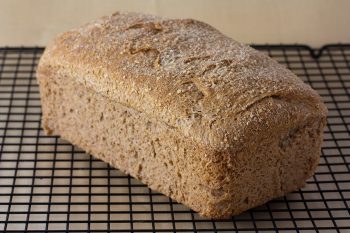
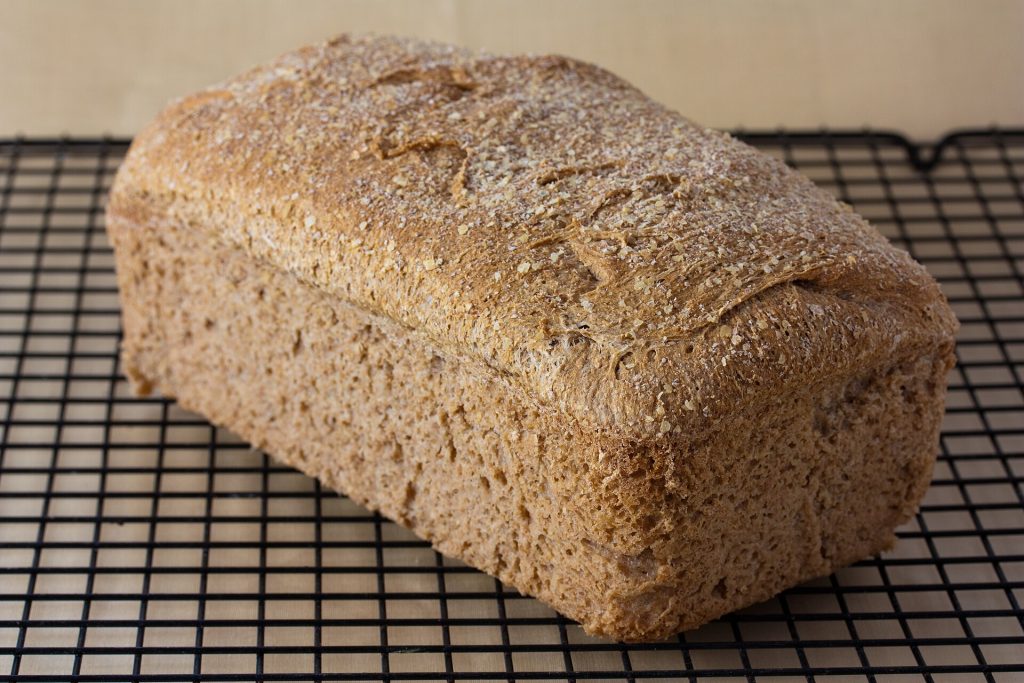
Featured photo: Vegan no-knead whole wheat bread loaf, September 2010 by Veganbaking.net, BY-SA 2.0.