A good turkey pot pie takes about an hour and uses up the bird while it’s still at its best: shred cooked turkey that’s no more than three or four days old, fold it into a thick, savory sauce built on a butter-and-flour roux with softened vegetables, cover it with pie crust, puff pastry or biscuits, and bake until the filling bubbles and reads 165°F in the center.
It’s one of the most forgiving dishes you can make. The sauce hides dry breast meat, the vegetables can be whatever is left in the crisper, and the topping is your choice.
The steps below are in the order you’ll actually cook them, with the food-safety timing up front, because leftover turkey has a clock on it.
Key takeaways
- Use cooked turkey within 3 to 4 days of the meal, or freeze it; the pot pie doesn’t reset that clock.
- A roux of equal parts butter and flour, whisked into hot stock and milk, gives a filling that holds together when you cut it.
- Cook the vegetables before they go into the pie; raw ones release water and stay firm.
- Pie crust, puff pastry and biscuits all work, and each wants a slightly different bake.
- Bake until the center reaches 165°F, and freeze unbaked pies if you want the crispest crust later.
In this guide
- Step 1: Check the turkey before you start
- Step 2: Make the roux-based filling
- Step 3: Choose and prep the vegetables
- Step 4: Pick a topping
- Step 5: Assemble and bake to 165°F
- Freezing: unbaked or baked
- FAQ
- Your leftover-day game plan
Step 1: Check the turkey before you start
Pot pie is a leftovers dish, so the turkey’s age matters more than anything in the recipe. The USDA’s leftovers guidance says cooked leftovers keep in the refrigerator for 3 to 4 days, or 3 to 4 months in the freezer, and that they should be refrigerated within 2 hours of cooking.
FoodSafety.gov adds two practical points for a holiday bird: portion the turkey so it cools quickly, and store leftovers in covered, shallow containers. It also says not to wait for food to cool on the counter before refrigerating it; steam coming off is fine.
- Count from the day the turkey was cooked, not the day you make the pie. Turkey from Thursday should be in a pie, or in the freezer, by Monday.
- Trust your nose, but don’t rely on it. Turkey that smells fine can still be past its safe window.
- Frozen leftover turkey works well here. Thaw it in the fridge overnight before shredding.
You’ll need about 3 cups of cooked turkey for a deep 9-inch pie or an 8-inch square dish. Mix white and dark meat if you have both; the dark meat keeps the filling juicy. Pull it into bite-size pieces rather than dicing it neatly, so the sauce clings.
Step 2: Make the roux-based filling
The filling is a thick velouté, which sounds grand but is just stock thickened with a cooked butter-and-flour paste. Equal weights of butter and flour make the roux. The ratio of roux to liquid decides whether your pie slices cleanly or floods the plate.
- 6 tablespoons butter
- 6 tablespoons all-purpose flour
- 2 cups turkey or chicken stock, warmed
- 3/4 cup whole milk or half-and-half
- 1 teaspoon fresh thyme leaves, or 1/2 teaspoon dried
- Salt and black pepper to taste
- Melt the butter in a wide, heavy pan over medium heat. You’ll cook the vegetables in it first (see step 3), then add the flour to the same pan.
- Stir in the flour and cook for 2 minutes, stirring constantly. This takes away the raw taste without letting the roux brown much.
- Whisk in the warm stock a ladle at a time. Add slowly at first; the mixture will seize, then loosen as you keep whisking.
- Add the milk and thyme, bring it to a gentle simmer and cook for 3 to 4 minutes, until the sauce coats the back of a spoon thickly.
- Fold in the turkey and any cooked vegetables, then season well. The sauce should taste slightly over-salted on its own, because the crust and turkey will mute it.
Getting the thickness right
Aim for a sauce that holds a line when you drag a spoon through it in the pan. It loosens a little as the turkey warms, and it sets up again as the pie rests. If it’s too thin, simmer another few minutes. Too thick, whisk in a splash of stock.
Leftover gravy is a gift here. Swap up to a cup of it for the same amount of stock, but taste before salting, since gravy is usually well seasoned already.
Step 3: Choose and prep the vegetables
Classic pot pie uses onion, carrot, celery and peas, but any firm vegetable works. What matters is that everything is cooked before the pie goes in the oven. The bake is short and mostly about the crust; raw carrot will still crunch at the end, and raw mushrooms will weep liquid into your sauce.
- Soften the aromatics. Cook 1 diced onion, 2 diced carrots and 2 sliced celery ribs in the melted butter for 8 to 10 minutes, until tender.
- Add quick-cooking extras like sliced mushrooms or leeks for the last few minutes, until any liquid they release has cooked off.
- Stir in frozen peas or corn straight from the freezer after the sauce is made. They’ll thaw in the hot filling.
- Use leftover roast vegetables by chopping them small and folding them in at the end with the turkey.
Leftover mashed potato or roasted squash doesn’t belong in the filling, where it turns the sauce gluey. Save those for other leftover-day dishes.
Everything under the crust should already taste finished. The oven’s only job is to crisp the top and heat the filling through.
Step 4: Pick a topping
Pick the topping by how much time you have and the texture you like. All three below cover a 9-inch deep pie dish or an 8-inch square pan.
| Topping | Texture | Effort | Good to know |
|---|---|---|---|
| Pie crust (homemade or store-bought) | Crisp, flaky, sturdy | Medium | Top-only is easiest; a bottom crust needs par-baking or it stays soft |
| Puff pastry | Tall, shattering layers | Low | Keep it cold and cut vents; it browns faster than pie crust |
| Drop or cut biscuits | Soft, fluffy, cobbler-style | Low | Leave gaps between biscuits so steam escapes and the undersides cook |
Top-only or double crust
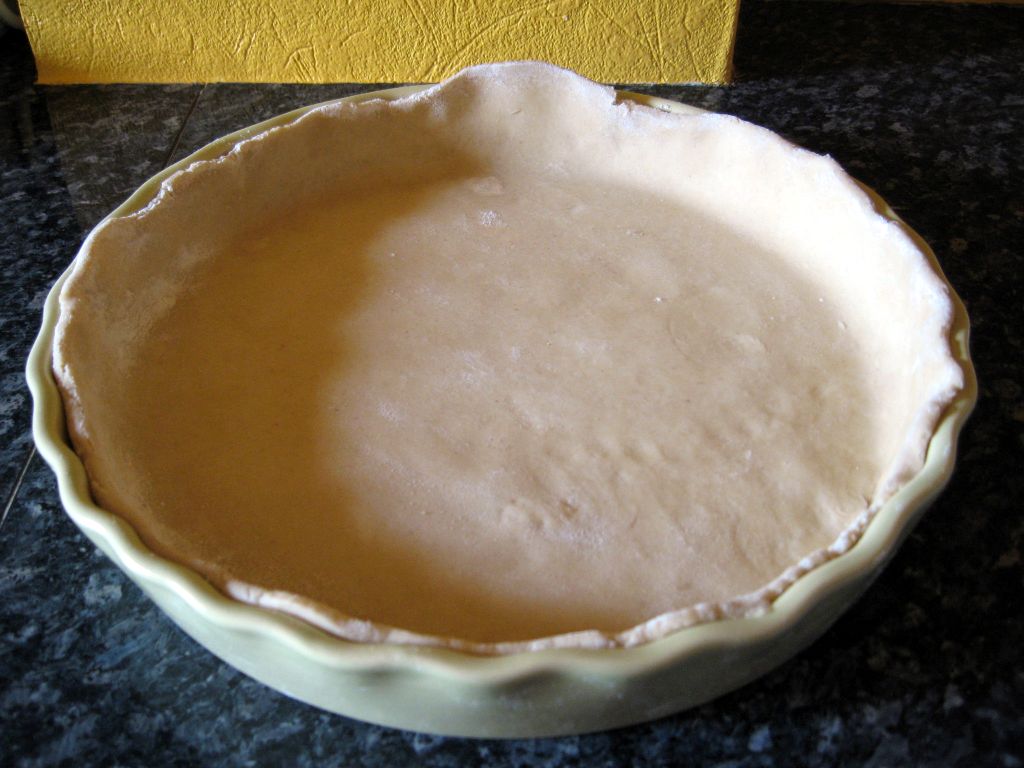
A top crust alone gives you all the crunch with none of the soggy-bottom risk, and it’s what most cooks do on leftover day. If you love a bottom crust, par-bake it first, the same way you’d blind bake a pumpkin pie shell, then add the filling.
Egg wash
Whatever you choose, brush the top with 1 egg beaten with 1 tablespoon of water or milk. It gives pie crust and puff pastry an even, glossy brown and helps biscuits color.
Step 5: Assemble and bake to 165°F
- Heat the oven to 400°F with a rack in the lower-middle position.
- Fill the dish with the hot filling, leaving about half an inch of space at the top.
- Cover. Drape the crust or pastry over, trim, crimp and cut 4 or 5 vents. For biscuits, arrange them on top with small gaps.
- Set the dish on a rimmed sheet pan to catch drips.
- Bake for about 30 to 40 minutes for pie crust or puff pastry, until deep golden with sauce bubbling through the vents. Biscuits usually need 20 to 25 minutes.
- Check the center with an instant-read thermometer pushed through a vent. It should read 165°F.
- Rest for 10 to 15 minutes so the filling thickens before you serve it.
That 165°F figure is the USDA’s target for reheated leftovers, measured with a food thermometer, and a pot pie is exactly that: cooked turkey being heated again. Because the filling goes in hot, it usually gets there well before the crust is done. Starting with cold filling from the fridge takes longer, so tent the top with foil if it browns before the center is hot.
Freezing: unbaked or baked
Pot pie freezes well either way, and the choice comes down to crust texture versus convenience.
Freeze it unbaked for the best crust
- Cool the filling completely in the fridge before topping it, so the pastry doesn’t start to melt.
- Assemble in a freezer-to-oven dish, skip the egg wash, wrap tightly in plastic and then foil, and label it.
- Bake from frozen at 375°F, covered with foil for the first half, then uncovered until browned and 165°F in the center. Expect roughly double the fresh baking time.
Freeze it baked for the fastest dinner
- Cool the baked pie, refrigerate it, then wrap and freeze it whole or in portions.
- Reheat covered at 350°F until the center reaches 165°F, uncovering at the end to re-crisp the top.
- The crust will be a little less flaky than a freshly baked one, but it’s still very good.
The FSIS guidance says it’s safe to reheat frozen leftovers such as casseroles without thawing them first, in the oven or microwave. For best quality, plan to eat frozen pot pie within the 3 to 4 months it gives for frozen leftovers.
FAQ
Can I use turkey that’s been in the fridge for five days?
No. The USDA window for cooked leftovers is 3 to 4 days. If you won’t get to the pie in time, freeze the turkey and make the pie later.
Can I use store-bought stock and crust?
Yes. Both work well. Choose a low-sodium stock so you can control the salt, since the turkey may already be seasoned.
Why is my filling runny?
Either the roux was too small for the liquid, the vegetables went in raw and released water, or the pie was cut too soon. Let it rest 10 to 15 minutes.
Can I make it in individual dishes?
Yes. Use ramekins or small ovenproof bowls, top each one and start checking about 10 minutes earlier. The 165°F center test still applies.
Your leftover-day game plan
The day after the big meal, shred the turkey and portion it: 3 cups into the fridge for pot pie in the next day or two, the rest into shallow containers in the freezer. Make a double batch of filling while you’re at it and freeze one unbaked pie for a busy night in December. For more ideas, browse our recipe collection or read our guide to flaky pie crust.
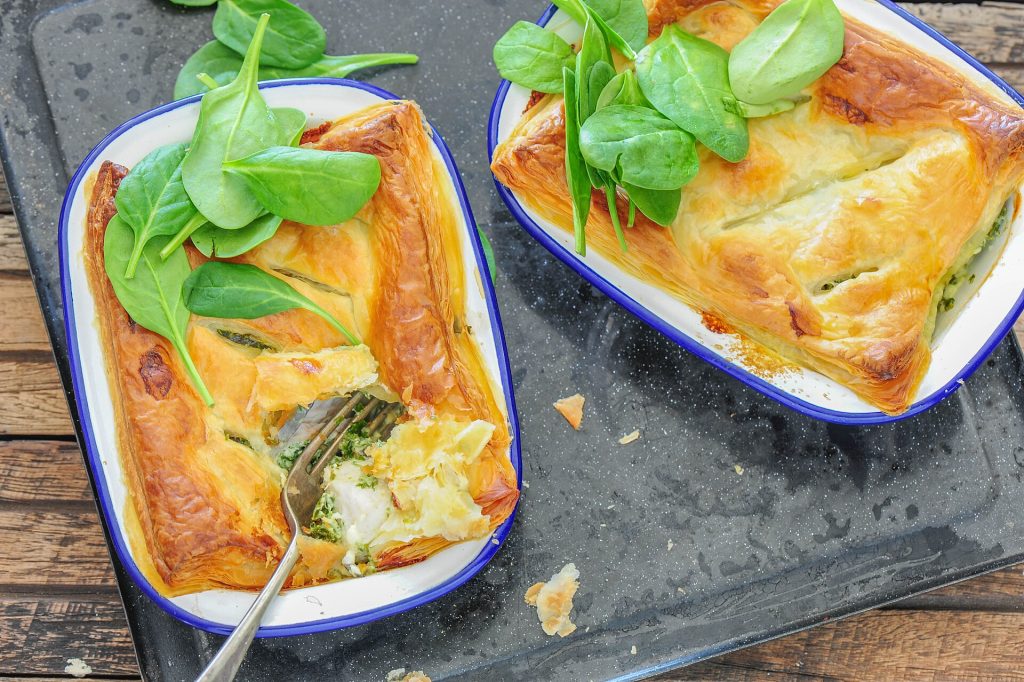
Featured photo: Flexitarian Pot Pies-2 by jules, BY 2.0.