The easiest way to split the bill at a restaurant is to agree on the method before anyone orders. Decide whether you’re splitting evenly or paying for what you had, tell the server early if you want separate checks, and work out tax and tip on the same basis for everyone. Most of the awkwardness comes from surprises at the end, not from the math.
To show how that plays out, we’ll follow one hypothetical dinner for six from the booking to the last payment request. The names and numbers are invented, but the choices are the ones every group faces: who drank, who shared, how to handle tax, and what to do when the restaurant has already added a charge.
Key takeaways
- Agree on even or itemised splitting before the first order goes in.
- Ask for separate checks at the start, not when the bill arrives.
- Etiquette experts suggest tipping 15–20% of the pre-tax total for table service.
- When drinks vary a lot, an itemised split is fairer, and asking for one is not cheap.
- A large-party automatic gratuity is a service charge, so check the bill before adding a tip on top.
Meet the table
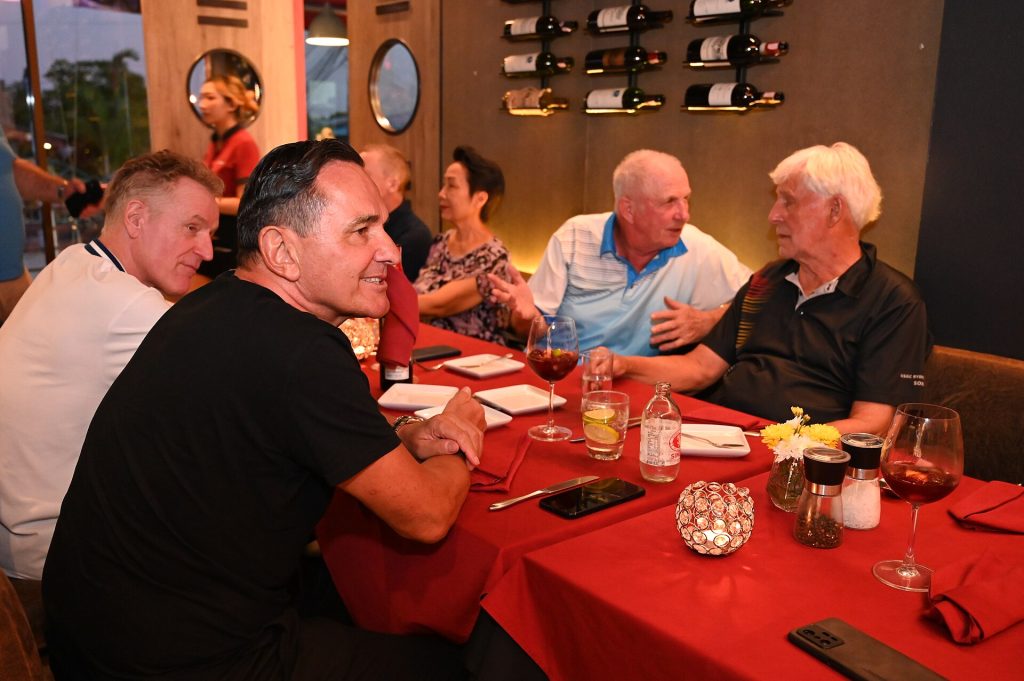
Say six friends book a Friday dinner at a neighbourhood bistro. Ana, Eli and Fay aren’t drinking. Ben, Carla and Dev each order a couple of cocktails or glasses of wine. The table shares three starters, and everyone orders their own main.
Here’s what the bill looks like before tax and tip. Assume a local sales tax of 8% for this example; yours will differ, so use your own rate.
- Ana: $28 main, no drinks, $6 share of starters. Subtotal $34.
- Ben: $34 main, $36 drinks, $6 starters. Subtotal $76.
- Carla: $30 main, $24 drinks, $6 starters. Subtotal $60.
- Dev: $38 main, $36 drinks, $6 starters. Subtotal $80.
- Eli: $26 main, no drinks, $6 starters. Subtotal $32.
- Fay: $24 main, no drinks, $6 starters. Subtotal $30.
- Table: $180 of mains, $96 of drinks and $36 of starters, for a $312 subtotal.
That spread, from $30 to $80 before tax, is exactly where hurt feelings start if the group splits six ways without talking about it.
Step 1: settle the plan before anyone orders
Etiquette expert Lizzie Post, co-president of The Emily Post Institute, suggests raising the question before you go out, so everyone knows what to expect. Writing in AARP’s Money Manners column, she says asking for separate checks when you’re not drinking isn’t cheap. It’s a perfectly reasonable request. If you forget to raise it beforehand, bring it up when the bill arrives.
In our example, Ana sends a message to the group chat the afternoon before:
“Looking forward to tonight. Since a few of us are skipping drinks, shall we each pay for our own and split the starters?” Nobody objects, because nobody has spent any money yet.
A quick plan before the food arrives costs ten seconds. Sorting it out over a crumpled receipt costs the whole evening.
Three ways the group could split
- Even split: simplest, and fine when everyone orders roughly the same.
- Itemised split: each person pays for what they ordered plus a share of anything communal.
- Hybrid: split food evenly and let drinkers cover their own drinks.
Step 2: choose between separate checks and one card
Once you know how you’re splitting, choose how you’ll pay. Tell the server early, ideally as you order, if you’d like separate checks. It’s much easier for them to ring items up to different seats from the start than to break up a finished bill.
Separate checks
Best when orders vary a lot and the restaurant is happy to do it. Each person sees their own tax and adds their own tip, so there’s no follow-up. If you’re a big group, it’s worth asking when you book whether the restaurant can do it.
One card, then a payment app
One person pays and everyone sends their share. It’s quick at the table, but someone has to do the math and chase payments. Check your app’s fees too: Venmo, for instance, charges nothing to send money from a balance, bank account or debit card, but 3% when you pay with a credit card.
Cash in the middle
Still works, but only if someone counts it before the server takes the folder. A short pile is an easy way to under-tip a server by accident.
Step 3: do the tax and tip math
Now the numbers. The Emily Post Institute’s tipping guide suggests 15–20% for sit-down wait staff, calculated on the pre-tax total. Our table picks 20%. That gives a simple multiplier: each person’s subtotal × 1.08 for tax, plus 20% of the subtotal for tip, which comes to subtotal × 1.28.
| Diner | Subtotal | Even split | Itemised (× 1.28) |
|---|---|---|---|
| Ana | $34 | $66.56 | $43.52 |
| Ben | $76 | $66.56 | $97.28 |
| Carla | $60 | $66.56 | $76.80 |
| Dev | $80 | $66.56 | $102.40 |
| Eli | $32 | $66.56 | $40.96 |
| Fay | $30 | $66.56 | $38.40 |
| Total | $312 | $399.36 | $399.36 |
Both columns add up to the same $399.36: $312 of food and drink, $24.96 of tax and a $62.40 tip. The only difference is who pays what. Under an even split, Fay pays $28.16 more than her own meal, while Dev pays $35.84 less. That gap is why itemising is worth the extra minute when drinks vary.
Math shortcuts that work at the table
- Add your own items plus your share of anything shared.
- Multiply by 1 plus your tax rate (1.08 at 8%).
- Add your tip percentage of the pre-tax subtotal: 20% is the subtotal divided by five.
- Round up to the nearest dollar so the server isn’t short by cents across six cards.
Step 4: check the bill for a service charge
Some restaurants add an automatic gratuity to larger tables, and a party of six can be enough to trigger it. Suppose the bistro adds 20% for parties of six or more. That changes the math, because the tip is already on the bill.
The IRS counts a large dining party automatic gratuity as a service charge, not a tip, because the customer didn’t choose it or set the amount. The US Department of Labor likewise says a compulsory charge for service, such as 15 percent of the bill, is not considered a tip under federal wage law. In practice, that means the restaurant decides how the money is distributed.
- Look above the total for a line labelled gratuity, service charge or similar before anyone adds a tip.
- If there’s also a blank tip line, it’s optional. Add extra only if service was outstanding.
- If you’re itemising, apply the service charge to each person’s subtotal the same way you’d apply a tip.
- If you’re unsure where the charge goes, it’s fine to ask the server politely.
For more on the difference, see our explainer on restaurant service charges vs tips, or browse our eating out guides.
FAQ
Is it rude to ask for separate checks?
No. Lizzie Post calls it a perfectly reasonable request, especially when some people aren’t drinking. Ask at the start of the meal to make it easy for the server.
Should I tip on the total before or after tax?
The Emily Post Institute’s guide suggests tipping 15–20% on the pre-tax amount for table service. Tipping on the post-tax total is a small, generous rounding up.
What if someone at the table doesn’t pay their share?
Settle the method before ordering, then have one person total the payment requests at the table. A single message with each person’s number, sent before you leave, avoids most chasing later.
How do we split shared plates fairly?
Divide communal dishes by the number of people who ate them, then add that share to each person’s own items before tax and tip.
Before your next group dinner
Next time you book for a group, send one line to the chat the day before: how you’re splitting, and whether you’ll need separate checks. Then pick somewhere everyone will enjoy from our restaurant directory, and brush up on how much to tip so the end of the meal is the easy part.
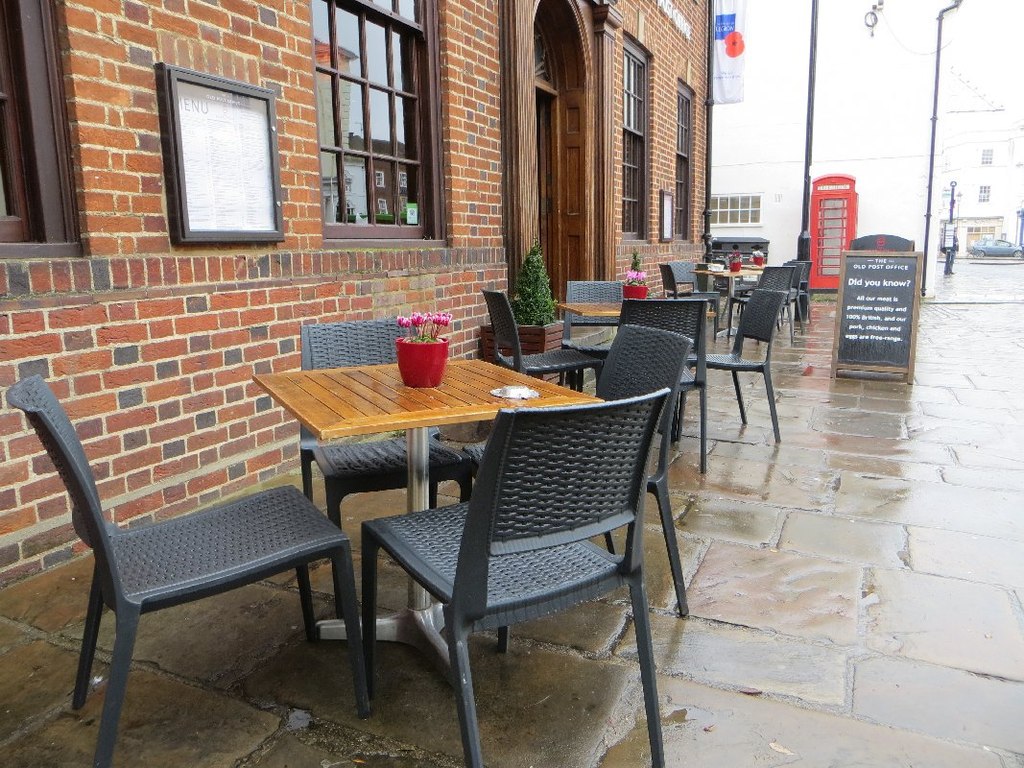
Featured photo: Empty tables – geograph.org.uk – 3783682 by Bill Nicholls, BY-SA 2.0.


.jpg)
