Sports bars have always lived and died by game day, but the menu is no longer an afterthought. Faced with fans who could just as easily stay home, operators are rethinking what they serve, how fast it arrives and how well it suits a crowd glued to the screens. The result is a new generation of game-day menus built around sharing, speed and experience. It is a quiet revolution in the kitchen, driven as much by data as by taste. Here is how sports bars are redesigning their menus around game-day crowds, and why it matters.
Part of what keeps fans in their seats is staying connected to the wider action. Between plates, plenty of people pull out their phones; a quick parimatch login on the Parimatch Canada app lets them keep an eye on live betting, betting odds and sports betting Canada markets, while sports betting apps and online sports betting run in the background and many simply watch sports online at the table. The food, the screens and the phone all become part of one shared experience.
Why game day is worth redesigning for
The stakes for operators are high. Industry research suggests that major games, playoffs and championships can account for 30 to 40 percent of a venue’s monthly income during peak sports seasons. And fans are picky about where they go: surveys find that around 73 percent choose a sports bar for the social atmosphere, while roughly 61 percent say food and drink quality is a key factor. In a global sports bar market worth more than 60 billion US dollars, getting the menu right is no small thing. A well-designed menu does not just feed the room; it keeps people there longer and spending more, turning a single match into hours of business.
How the menus are changing
So what does a modern game-day menu actually look like? A few clear trends stand out:
- Built for sharing: grazing boards, loaded appetizers and platters designed to feed a whole table.
- Fast and fuss-free: handheld items that can be eaten during play, timed for the rush at intermissions.
- Premium bar food: chef-driven burgers, elevated wings and craft drinks that push up the average bill.
- Something for everyone: mocktails, non-alcoholic options and plant-based dishes to widen the crowd.
- Game-day bundles: combo deals and event specials that reward bigger, longer-staying groups.
- Tech-friendly ordering: app and tablet ordering so nobody has to miss a play to flag down a server.
- Bold, global flavours: street-food-inspired snacks and loaded twists made to stand out on social media.
Example: Buffalo Wild Wings, the largest sports-bar brand in North America with over 1,750 locations, has leaned hard into this model, pairing its signature wings and sauces with a comprehensive broadcast package and fast-growing app-based ordering. The formula shows how food, screens and technology now work together to keep fans in their seats for a full game.
What it means for fans
For the average fan, all of this adds up to a better night out. Menus are easier to share, food arrives faster and there is more choice for mixed groups, whether someone wants premium wings, a plant-based burger or just a soda and some fries. The trade-off is that a full game-day spread can cost more than it used to, as bars gently nudge average spend upward. Still, for many people, the atmosphere and convenience are well worth it. And with more inclusive options than ever, it is easier to bring along friends who do not drink or eat meat.
Frequently asked questions
Q: Why do sports bars focus so much on shareable food?
A: Shareables suit the way groups watch sports, letting a table sample several items at once. They also encourage larger orders and keep service fast during busy intermissions.
Q: Are sports bar menus getting more expensive?
A: Often, yes. Many venues have moved toward premium, chef-driven dishes and craft drinks, which raises the average bill but also improves quality and choice.
Q: Do I still need to visit for the atmosphere?
A: For most fans, that is the whole point. Surveys show the social atmosphere is the top reason people choose a sports bar over watching at home, with food quality close behind.
The takeaway
Game-day menus have come a long way from a basket of fries and a pint. Today’s sports bars engineer their offerings around how real crowds eat, share and stay, blending fast service, premium food and broad choice with the buzz of a live match. For operators, it is a way to compete with the comfort of the couch. For fans, it means the best seat in the house now comes with a menu built to match the occasion.
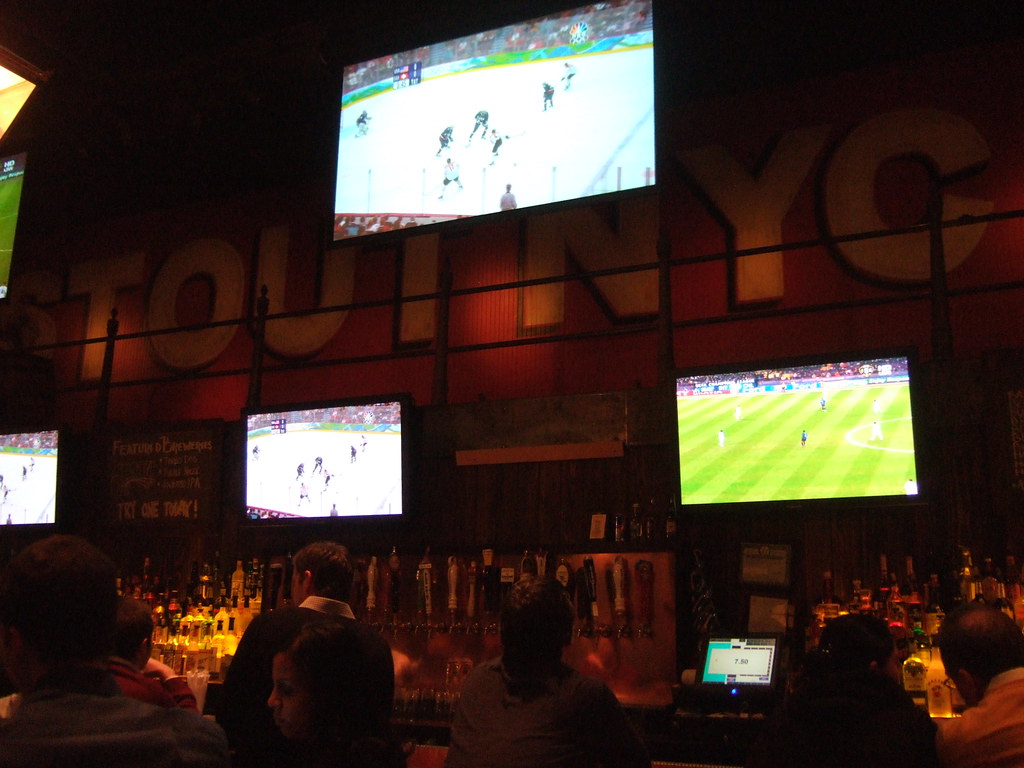
Featured photo: Stout, NYC. Sports bar. by JohnSeb, BY 2.0.