How long to rest meat depends on its size. As a working rule, give thin cuts like chops and chicken breasts about 5 minutes, steaks around 8 to 12 minutes, and a whole turkey about 20 minutes. For beef, pork, lamb and veal steaks, chops and roasts, USDA’s food-safety rule is a minimum of 3 minutes at 145°F.
Resting isn’t a chef’s affectation. Meat keeps cooking after it leaves the heat, and its temperature evens out from edge to centre. Cut too soon and you interrupt both.
Here is what is actually happening, the official numbers, and how to use them for everything from a weeknight steak to the holiday bird.
Key takeaways
- USDA says to rest beef, pork, lamb and veal steaks, chops and roasts for at least 3 minutes after reaching 145°F.
- Meat keeps rising in temperature after it comes off the heat. This is called carryover cooking.
- Rough guide: 5 minutes for thin cuts, 8 to 12 for steaks, about 20 for medium roasts and whole poultry.
- USDA advises letting a roast turkey stand for 20 minutes before carving.
- Pull large roasts a little early so carryover takes them to your target, not past it.
What happens while meat rests
Two things happen as meat sits. First, it keeps cooking. University of Wyoming Extension explains that the internal temperature continues to rise after cooking has stopped, which is known as carryover cooking. The hot outer layers keep pushing heat inward even though the pan or oven is no longer involved.
Second, the temperature evens out. The same extension article notes that resting lets the outside and inside even out, so the outside is no longer hotter than the centre, and allows juices to be reabsorbed into the fibres rather than running across the board.
Why size changes everything
Carryover depends on how much heat is stored in the meat and how hot the outside got. A thin pork chop has little stored heat and barely moves. A large rib roast cooked in a hot oven carries a lot, and its centre can keep climbing for a good while after it comes out. That is why resting times scale with size rather than following a single number.
The heat you put into a roast doesn’t switch off when the oven does. Resting is the last stage of cooking, not a pause after it.
The USDA 3-minute rule
USDA’s page on doneness versus safety says to cook all raw beef, pork, lamb and veal steaks, chops and roasts to a minimum internal temperature of 145°F, and to allow meat to rest for at least three minutes before carving or eating.
That rest is part of USDA’s guidance for whole cuts, not an optional extra, so don’t carve the second the thermometer reads 145°F. Ground meat and poultry have their own targets: USDA’s safe minimum for hamburger is 160°F, and whole or ground poultry is 165°F. Hit those numbers first; a rest then helps texture.
Use a thermometer, not colour
USDA is blunt that colour is unreliable. Ground beef, for instance, can turn brown before it reaches a temperature that destroys bacteria. An instant-read thermometer in the thickest part of the meat, away from bone, is the only way to know.
If you don’t own one yet, our guide to choosing a meat thermometer covers the options.
How long to rest meat, cut by cut
USDA sets the safety minimum. For juiciness and even doneness, most cuts benefit from a longer rest. The ranges below come from University of Wyoming Extension, with USDA’s turkey guidance alongside.
| Cut | Suggested rest | Source |
|---|---|---|
| Beef, pork, lamb or veal steaks, chops and roasts (safety minimum) | At least 3 minutes | USDA |
| Thin cuts: chicken breasts, pork chops, fish, burgers | About 5 minutes | UW Extension |
| Steaks | 8 to 12 minutes | UW Extension |
| Medium roasts and whole poultry | About 20 minutes | UW Extension |
| Large roasts and whole turkeys | 5 minutes per pound | UW Extension |
| Whole roast turkey | 20 minutes before carving | USDA |
Treat these as ranges, not stopwatch targets. A steak that rests 7 minutes rather than 8 will be fine. A roast that gets carved the moment it leaves the oven will not.
Steak, roast and turkey in practice
A weeknight steak
Sear it, check the centre with a thermometer, then move it to a board or a warm plate. Give it roughly 8 to 10 minutes while you finish a pan sauce or dress a salad. For a thicker steak, take it off a few degrees below your target so carryover brings it up.
A beef or pork roast
Big roasts carry the most heat, so resting matters most here. Plan the rest into your timing: take the roast out, let it sit for 20 minutes or so, and use that window to make gravy, crisp potatoes or warm plates. Pull it a little before your preferred doneness, since the centre will keep rising, but never rely on carryover to reach the 145°F safety minimum.
The holiday turkey
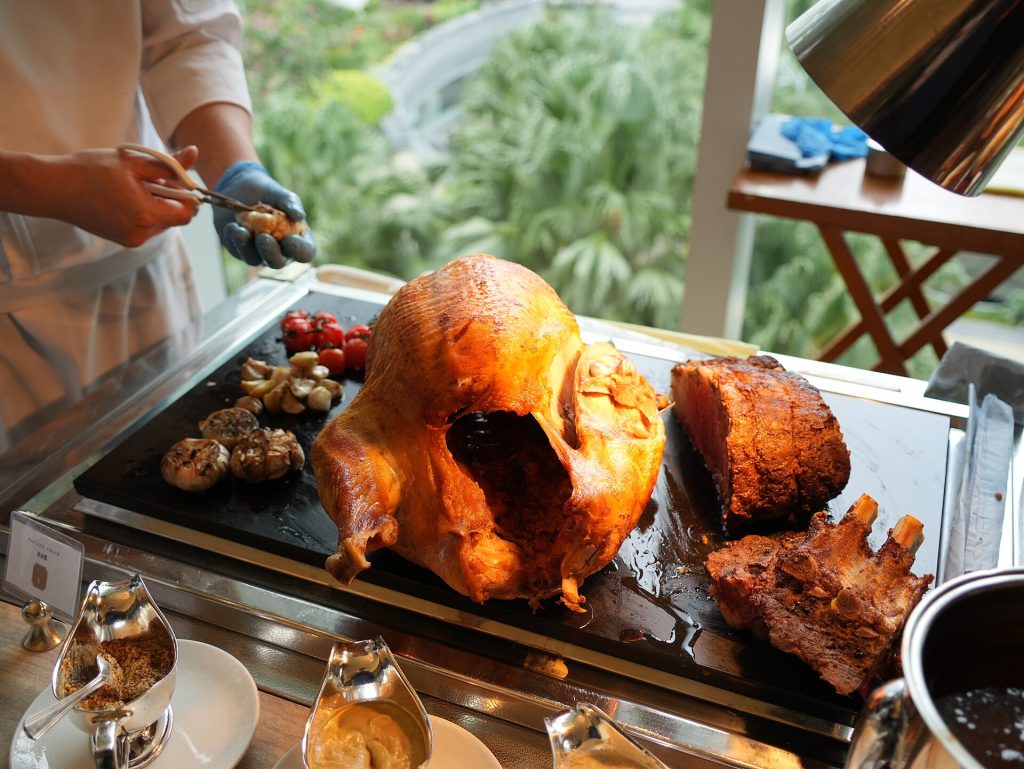
USDA’s turkey roasting guide says to roast at no lower than 325°F and check that the bird reaches 165°F in the innermost part of the thigh and wing and the thickest part of the breast. Then let it stand for 20 minutes before carving to allow the juices to set. USDA adds that the turkey will carve more easily, which anyone who has wrestled a steaming bird will appreciate.
To tent or not to tent
Tenting means resting the meat under a loose sheet of foil. It slows heat loss, which is useful for large roasts or when your kitchen is cold.
- Tent loosely. Wrapping tightly traps steam, which softens a crisp crust or crackling.
- Skip it for seared steaks and crisp-skinned poultry if the crust matters to you. A short rest uncovered keeps the surface dry.
- Rest on a board with a groove or on a rack over a plate so the meat isn’t sitting in its own juice.
- Save the juices. Whatever collects on the plate goes straight into the sauce or gravy.
More everyday fixes like this live in our cooking tips section.
Resting meat FAQ
Does resting meat make it cold?
Not in the time recommended. Thin cuts lose some heat, which is why their rest is short. Larger cuts hold heat well, and their centre may still be climbing. Warm plates and hot sauce make up the difference.
Do I need to rest chicken?
Chicken must reach 165°F to be safe. USDA’s 3-minute rest rule is written for beef, pork, lamb and veal, but a short rest of about 5 minutes for breasts still helps them stay juicy when sliced.
Do I rest burgers?
USDA says a burger cooked to 160°F is safe, regardless of colour. A brief rest of a few minutes is enough and keeps the juices from soaking the bun.
Can I rest meat too long?
Yes. Past a point it simply cools down. Stick roughly to the ranges above, and remember that USDA wants cooked food refrigerated within 2 hours.
Try it on your next roast
Next time you roast, build the rest into your plan: put the thermometer in, pull the meat when it’s close, and use the 20 minutes to finish your sides. Once you taste the difference, you won’t carve early again. Pick up a simple roast chicken recipe to practise on this week.
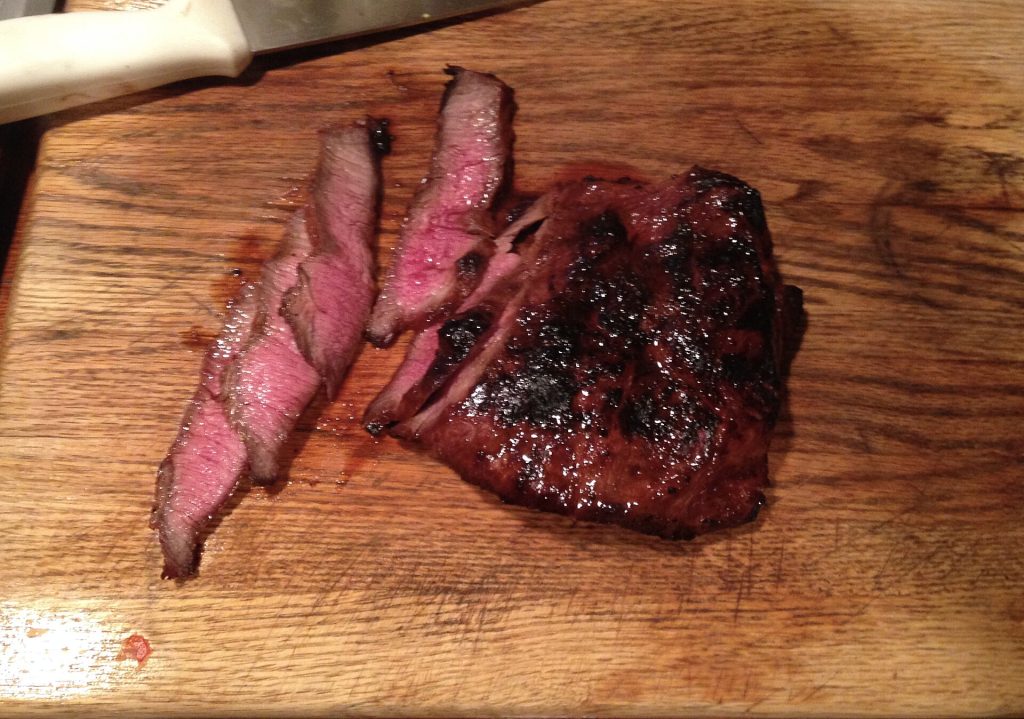
Featured photo: Grilled flank steak by Wikiuser100, BY-SA 4.0.
.jpg)

