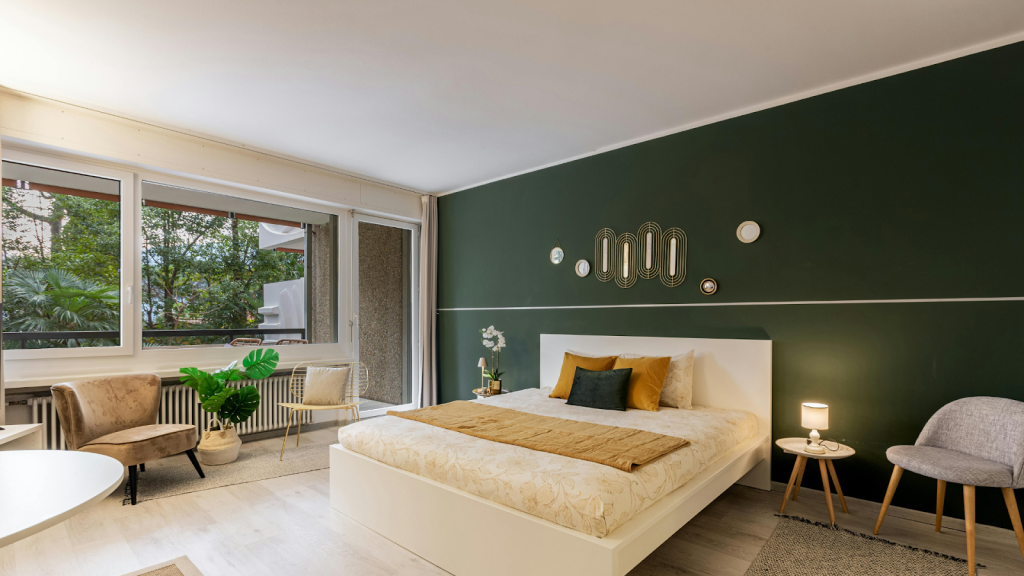
Here’s something most people miss: your bedroom actually tells the story of your whole house, even before anyone peeks into your living room. Strategic bedroom decor isn’t about prettying up one space; you’re building a visual language that echoes everywhere.
Think about it this way: of the new businesses that started in 2018, over one-fifth closed in their first year. Homes without a unified design approach? They suffer similar fates. Rooms feel disconnected, nothing quite clicks.
Bedroom Elements That Anchor Your Home’s Vibe
Creating a solid home visual identity means figuring out which bedroom pieces drive everything else. Let’s get into the choices that separate “fine” from “wow.”
Colors and What They Really Do
Your bedroom palette shouldn’t stop dead at the threshold. Pick your colors here, and you’re basically selecting the genetic code that’ll show up throughout your place.
Soft blues paired with warm grays can guide accent decisions in hallways and connecting areas. Bold statement walls? Absolutely doable, but you’ve got to plan transitions carefully or risk visual whiplash.
Architecture: The Stuff That Holds Everything Together
Crown molding, window frames, ceiling details—these aren’t decoration. They’re anchors. Your eye naturally tracks these elements from room to room.
Built-ins solve two problems at once: they boost design flow and tackle storage headaches. Flooring deserves serious consideration, too, particularly where your bedroom meets other zones.
Lighting Layers Nobody Talks About
Here’s where most folks mess up—they install one ceiling fixture and call it done. You actually need three types: ambient for overall brightness, task for specific activities like reading, and accent to showcase architectural moments.
Smart dimmers that adjust color temperature through the day? Game changer. Strategic mirror placement can bounce natural light around and make cramped bedrooms feel twice their size.
Building Cohesion Through Furniture That Actually Works
Once you’ve nailed the foundation, furniture selection brings your vision into physical reality. This is a function meeting form in the best possible way.
Choosing Pieces That Reflect You
This trips people up constantly they grab whatever’s discounted without thinking about scale. A massive king bed crammed into a 10×10 room doesn’t just look weird; it kills the whole flow.
For a simpler path to coordinated style, furniture for bedrooms deliver pre-matched pieces that naturally work together. Even full size bedroom sets strike the right balance for most spaces offering comfort without overwhelming the room. Today’s sets offer flexibility, letting you pair coordinating dressers and nightstands with standout bed frames that show off your personal taste.
Multi-functional furniture has become non-negotiable. Storage beds eliminate the need for bulky extra dressers. Nightstands with charging stations keep tech handy but tidy.
Mixing Materials Without the Mess
Don’t trap yourself in a matching wood-tone prison. Blending warm oak with cooler metal accents creates layers that single-material rooms can’t touch.
The secret? Keep undertones consistent—warm plays with warm, cool with cool. Hardware acts like jewelry, connecting different pieces through unified finishes.
Textiles: Where Touch Meets Visual Depth
Furniture builds structure, but textiles bring the softness and layering that make spaces feel finished. This elevates good design into great.
Your Bedding, Your Canvas
Forget thread count mythology—real fabric quality shows in drape and longevity. Natural fibers like cotton and linen breathe better than synthetic alternatives, creating genuinely comfortable sleep environments.
Pattern mixing follows straightforward rules: large-scale patterns with smaller companions, everything grounded by solid neutrals. Seasonal swaps keep things fresh without requiring major renovations.
Window Dressing That Actually Matters
Curtains do way more than block the sun—they frame architectural features and soften harsh lines. Layer blackout liners behind sheers for flexibility across different times.
Hardware finishes should connect with other metallic elements in your bedroom. Motorized options aren’t just convenient; they’re practical for those impossible-to-reach windows.
Rugs That Ground Everything
A properly proportioned rug anchors your bed and defines the sleeping area. Too small looks like an afterthought. Too big swallows the space.
Texture combinations add sensory richness—picture plush wool against smooth hardwood. Color blocking through floor coverings can carve out distinct zones in bigger bedrooms.
Walls: Where Personality Really Pops
Your vertical surfaces hold serious untapped potential for amplifying character and transforming basic rooms into memorable spaces. This is your expression zone.
Beyond Basic Paint Jobs
Accent walls succeed when placed thoughtfully. Pick the wall behind your bed or the first one you see entering—natural focal points.
Textured paint adds dimension without overwhelming. Ceilings remain criminally underused; that fifth wall offers opportunities most people completely ignore.
Wallpaper’s Comeback Story
Removable wallpaper revolutionized the game for renters and anyone commitment-shy. Experiment with bold patterns minus permanent consequences.
Feature walls outperform full-room coverage in most bedrooms. Pattern scale counts—big patterns suit spacious rooms, smaller patterns fit tighter spaces.
Finding Your Design Style DNA
With fundamentals established, pinpointing which design style genuinely represents you becomes critical. By the fifth year, the rate of business failure hits nearly 50 percent. Similarly, mismatched design styles that don’t reflect your authentic aesthetic create endless dissatisfaction.
Contemporary Minimalism for Clear Heads
Clean lines and neutral palettes foster serene environments that encourage rest. Quality beats quantity here—invest in fewer, superior pieces instead of filling space with mediocre stuff.
Decluttering isn’t purely aesthetic; it’s functional. Everything needs a home, making maintenance genuinely manageable.
Maximalist Energy and Pattern Freedom
Maximalism gets unfairly criticized, but intentionally controlled chaos creates rich, textured spaces. The trick? Maintain a cohesive color thread weaving through your pattern mixing.
Display collections with purpose rather than random scattering. Curated groupings demonstrate thoughtfulness instead of clutter.
Transitional Style Bridging Eras
This approach marries traditional and modern elements beautifully. Picture classic architecture with contemporary styling, or vintage furniture in unexpected contexts.
Timeless furniture with trendy accents allows seasonal updates without major investments. It’s practical and financially intelligent.
Smart Spending for Big Visual Payoff
Creating cohesive flow doesn’t require bottomless pockets—strategic moves deliver high-impact results without financial stress. Planning beats budget every single time.
High-Impact Changes on Tight Budgets
Paint remains the ultimate budget transformation tool. One gallon under $50 can completely shift a room’s energy.
Thrifted furniture gains new life through simple interventions. Fresh hardware, paint, or updated upholstery fabric costs drastically less than buying new.
Where to Splurge, Where to Save
Invest in daily-use pieces—your mattress, quality bedding, and solid lighting fixtures. Save on decorative elements you can easily swap later.
Phased renovations spread costs across time while letting you live with decisions before committing to the next phase. This prevents expensive regrets.
Knowing When You’ve Actually Succeeded
Avoiding typical mistakes sets you up for success, but recognizing when you’ve hit your goals requires specific signals. Here’s how you’ll know it’s working.
Practical Success Markers
Better sleep quality signals that your bedroom design ideas are functioning. If you’re sleeping more deeply, you’ve created the right environment.
Streamlined routines mean everything has designated storage. Morning chaos vanishes when your space supports daily patterns.
Emotional Success Indicators
You should feel either energized or relaxed (depending on intention) upon entering. Pride in showing guests your space indicates authentic achievement.
Reduced stress when entering proves your interior design tips created the sanctuary you required. Personal style should radiate without overwhelming functionality.
Questions People Always Ask
What’s step one for a bedroom home transformation with limited funds?
Start with fresh paint and ruthless decluttering—these demand minimal investment but deliver maximum visual punch. Removing excess costs nothing and immediately improves spatial feel.
How do small bedrooms look bigger through design?
Light colors, strategic mirrors, wall-mounted storage, and visible floor space create spatial flow. Multi-functional furniture prevents crowding while maintaining necessary features.
Does my bedroom need to match my whole house?
Not exactly—maintain visual identity threads through shared color accents or materials, but bedrooms can have distinct personalities. This personal sanctuary deserves its own character while complementing your overall aesthetic.
Wrapping Up
Your bedroom transformation establishes the narrative for your entire home’s visual identity. Strategic decisions around color, furniture, textiles, and wall treatments build cohesive aesthetics that feel purposeful instead of accidental.
Begin with foundational elements, develop through intentional furniture choices, and layer personal touches that make the space unmistakably yours. Small, strategic shifts often create bigger impacts than expensive overhauls—trust the journey and permit yourself to experiment along the way.