Hosting Thanksgiving for the first time is mostly a timing puzzle. Choose a short menu, buy about 1 pound of turkey per guest, start thawing it in the fridge several days ahead (USDA says to allow about 24 hours for every 4 to 5 pounds), write an oven schedule working back from dinner, hand out dishes to guests, and get leftovers into the fridge within 2 hours.
The cooking itself is not hard. What catches new hosts out is the frozen bird that is still icy on Thursday morning, or the single oven that suddenly needs to hold a turkey, stuffing, rolls and two pies at once.
So let us walk through it with a worked example. It is hypothetical, but the numbers are real and come from USDA and CDC guidance, so you can swap in your own guest list and dinner time.
Key takeaways
- USDA suggests about 1 pound of turkey per person; buy a little more if you want leftovers.
- Thaw in the fridge, allowing about 24 hours per 4 to 5 pounds; a 12 to 16 pound bird needs 3 to 4 days.
- Roast at no lower than 325°F until the thigh, wing and thickest part of the breast reach 165°F, then rest 20 minutes.
- Cook stuffing in a separate dish, and never thaw the turkey on the counter.
- Refrigerate leftovers within 2 hours in shallow containers and eat them within 3 to 4 days.
The scenario: ten guests, one oven
Say you have offered to host this year. US Thanksgiving falls on Thursday 26 November 2026, and you have said yes to ten people: you, your partner, both sets of parents, a sibling with a partner, and two friends. You have one standard oven, four burners and a fridge that is already fairly full. You want to eat at 4pm.
You have cooked plenty of Sunday roasts, but never a whole turkey, and never for this many people. Here is how the week plays out.
Step 1: Plan a menu you can actually cook
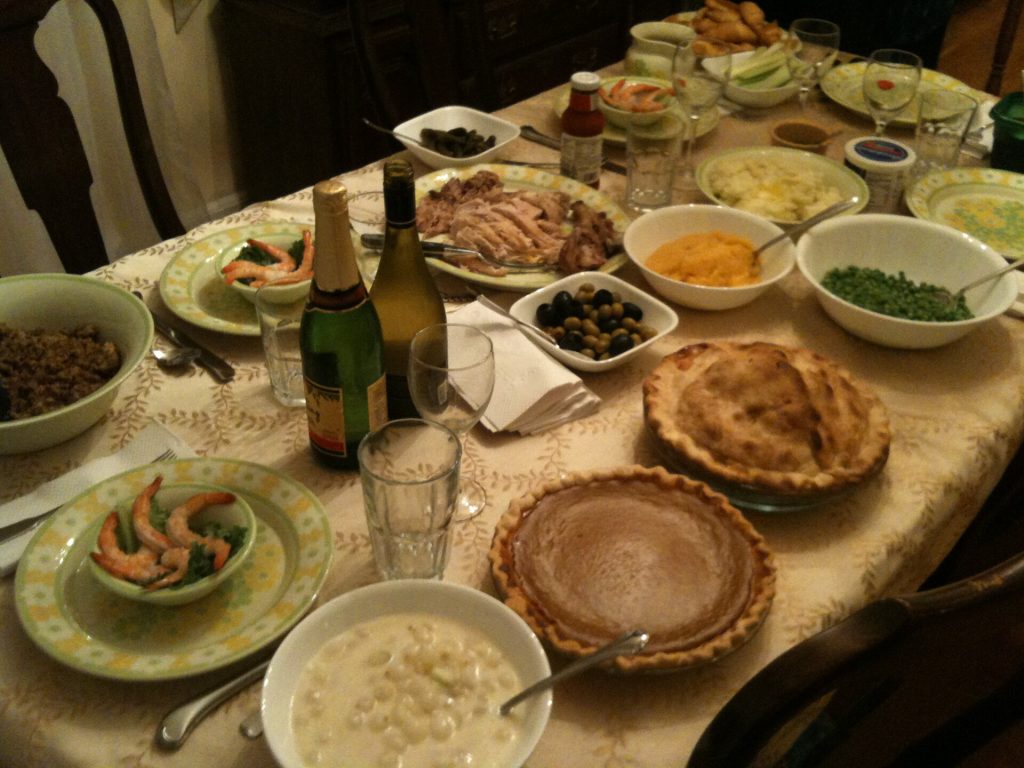
The biggest mistake is a menu that is too long. Ten people do not need twelve dishes. Pick the classics everyone expects, then give the rest away.
The host’s list
- Roast turkey and gravy (yours, since it needs the oven and the most attention).
- Stuffing, baked in its own dish.
- Mashed potatoes, which can be made on the stovetop while the turkey rests.
The guests’ list
- A green vegetable side, such as roasted green beans or Brussels sprouts.
- Sweet potatoes or a squash dish.
- Cranberry sauce, which keeps well and can be made days ahead.
- Rolls or bread.
- Two pies, made at home and brought ready to serve.
- Drinks and ice.
That is a full, generous table, and you only have three things to cook. If you want to make cranberry sauce or pie yourself, do it on Tuesday or Wednesday, never on the day.
Step 2: Buy the right size turkey
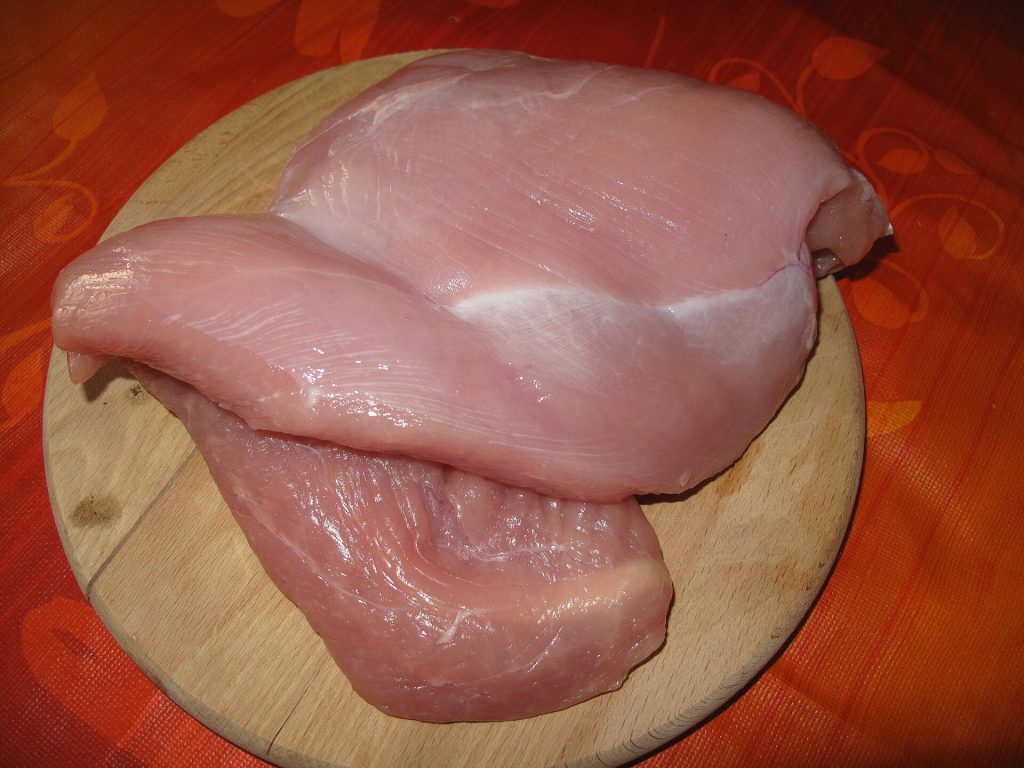
The USDA Food Safety and Inspection Service suggests allowing 1 pound of turkey per person. For ten guests that is a 10-pound bird. But a bird that small leaves little for sandwiches, and most first-time hosts want leftovers, so in our scenario you buy a turkey of about 13 pounds.
If you buy fresh rather than frozen, USDA advises buying it only 1 to 2 days before you cook it. Most first-timers buy frozen because it is easier to find early, and that means planning the thaw.
A turkey is a calendar problem before it is a cooking problem. Get the thaw right and the rest of the day falls into place.
Step 3: Start thawing on the weekend
USDA says to thaw in the refrigerator and to allow approximately 24 hours for every 4 to 5 pounds. Its chart gives these times for a fridge at 40°F or below.
| Turkey weight | Refrigerator thawing time |
|---|---|
| 4 to 12 pounds | 1 to 3 days |
| 12 to 16 pounds | 3 to 4 days |
| 16 to 20 pounds | 4 to 5 days |
| 20 to 24 pounds | 5 to 6 days |
Your 13-pound bird needs 3 to 4 days, so it goes into the fridge on Sunday 22 November. That gives it until Wednesday evening or Thursday morning, with a margin. USDA also notes that once thawed, the turkey can stay in the fridge for 1 to 2 days before cooking, so an early thaw is no problem.
If it is still frozen on Wednesday
There is a backup. The CDC describes a cold-water method: keep the turkey in a leakproof plastic bag, submerge it in cold water, change the water every 30 minutes and allow about 30 minutes per pound. USDA says to cook the turkey immediately after thawing this way.
What you must not do is leave it on the counter. The CDC warns that when a turkey stays at room temperature for more than 2 hours, its temperature becomes unsafe even if the centre is still frozen. The CDC also advises against washing raw turkey, since that can spread germs to other food.
Step 4: Write the oven schedule
With one oven, you need a written schedule, worked backwards from 4pm. USDA says to roast at no lower than 325°F, and its timetable for an unstuffed bird of 12 to 14 pounds is 3 to 3¾ hours. The turkey is done when a food thermometer reads at least 165°F in the innermost part of the thigh and wing and the thickest part of the breast. After that, USDA recommends letting it stand for 20 minutes before carving.
| Time | Task |
|---|---|
| 11:00am | Take turkey out of the fridge, pat dry, season; heat oven to 325°F |
| 11:45am | Turkey into the oven |
| 2:45pm | Start checking the temperature with a food thermometer |
| About 3:00 to 3:30pm | Turkey reaches 165°F; out of the oven, loosely cover and rest |
| As soon as turkey is out | Stuffing dish and any guest sides that need reheating go into the oven |
| 3:15pm | Mashed potatoes on the stove; make gravy from the pan juices |
| 3:40pm | Carve the turkey |
| 4:00pm | Dinner |
Notice what the schedule does. The turkey owns the oven until mid-afternoon, and the rest period becomes the window for everything else. That is why the guests’ dishes should arrive ready to serve or needing only a short reheat.
Stuffing goes in its own dish. USDA and the CDC both recommend cooking stuffing separately rather than inside the bird. Our foolproof turkey gravy fits into the same rest window.
Step 5: Delegate, then deal with leftovers
Hand out jobs, not just dishes
- One guest on drinks and ice, arriving early.
- One on table setting as soon as they walk in.
- One on washing up between courses, so the sink never overflows.
- One on leftovers, with containers ready.
Send the list a week ahead in a group message so nobody arrives with a third potato dish.
The 2-hour clock
Leftovers have a deadline. The CDC says to refrigerate them at 40°F or colder within 2 hours of cooking, or within 1 hour if they have been sitting somewhere above 90°F. FoodSafety.gov adds that you should divide leftovers into smaller portions and put them in covered, shallow containers so they cool quickly, rather than leaving them out to cool first. Slice the turkey off the bone instead of storing it whole.
- Eat refrigerated turkey, stuffing and gravy within 3 to 4 days.
- Freeze what you will not finish; FoodSafety.gov says frozen leftovers are best within 2 to 6 months.
- Reheat leftovers to 165°F, and bring sauces, soups and gravy to a rolling boil.
For more ideas on the long weekend after, see our turkey leftover recipes and the rest of our hosting and lifestyle guides.
FAQ
How big a turkey do I need for 10 people?
USDA suggests 1 pound per person, so at least 10 pounds. Go a few pounds bigger if you want leftovers.
When should I start thawing a frozen turkey?
Allow about 24 hours in the fridge for every 4 to 5 pounds. A 12 to 16 pound turkey needs 3 to 4 days, so start the Sunday before Thanksgiving.
How do I know the turkey is cooked?
Use a food thermometer. USDA says it is safe at 165°F, checked in the innermost part of the thigh and wing and the thickest part of the breast.
How long can Thanksgiving food sit out?
No more than 2 hours, or 1 hour above 90°F, according to the CDC. Then refrigerate it in shallow containers.
Your first move this week
Today, write two things on paper: your guest list with who brings what, and the date the turkey goes into the fridge. Then buy a food thermometer if you do not own one. With those three pieces in place, your first Thanksgiving is already mostly planned, and the day itself is just following the schedule.
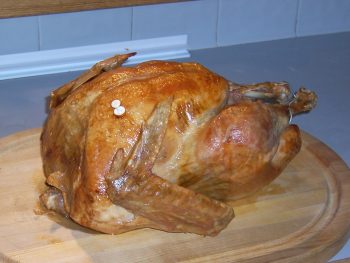
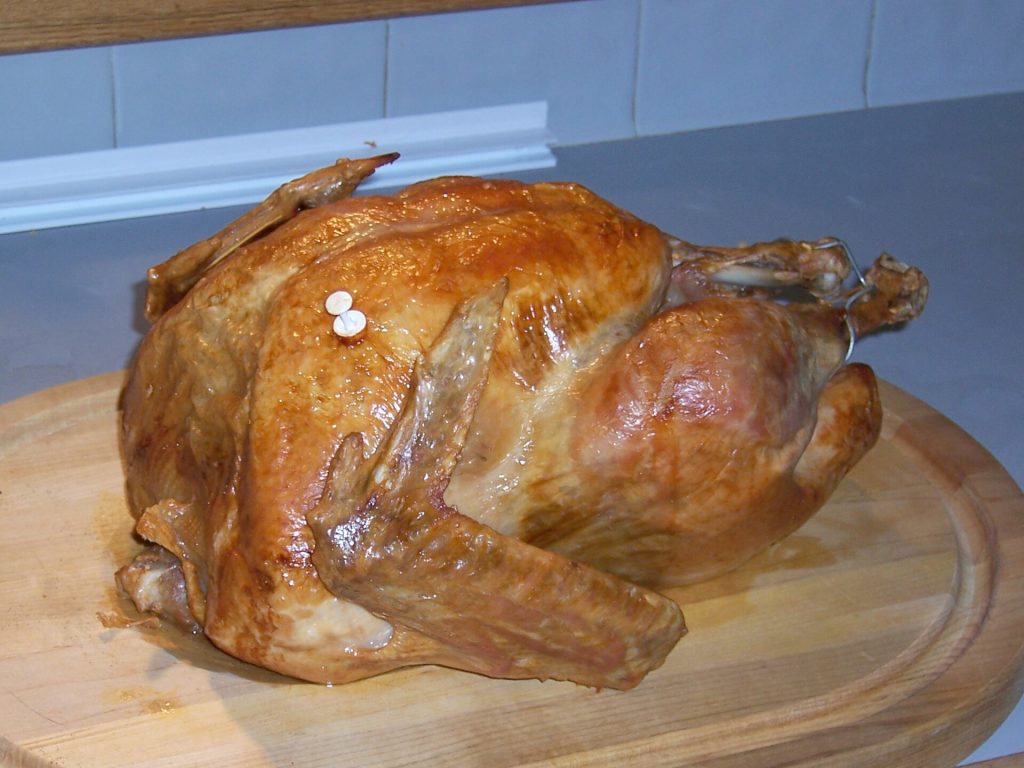
Featured photo: Thanksgiving Turkey by Patrick Fitzgerald from Atlanta, GA, USA, BY 2.0.