In the cast iron vs carbon steel skillet debate, the honest answer is that they’re close cousins. Both are iron-based, both need seasoning, and both sear beautifully. Cast iron is heavier and holds heat longer. Carbon steel is lighter, thinner and quicker to respond. Stainless steel is the odd one out: no seasoning, no fuss with tomato sauce, but food sticks unless you manage the heat.
Most home cooks end up owning two of the three. This comparison helps you decide which to buy first, based on how you actually cook.
Key takeaways
- Cast iron is the heaviest and slowest to heat, but it holds heat longest. Ideal for searing, frying and oven work.
- Carbon steel is lighter and thinner, heats and cools faster, and needs the same seasoning and care as cast iron.
- Stainless steel needs no seasoning and handles acidic sauces without a second thought.
- All three generally work on induction because they contain iron, but test stainless with a magnet.
- Long simmers of acidic food like tomato sauce can strip seasoning from cast iron and carbon steel.
The short version
- Want the best sear and don’t mind weight? Cast iron.
- Want restaurant-style responsiveness for eggs, fish and vegetables? Carbon steel.
- Cook a lot of tomato, wine and lemon dishes, or hate maintenance? Stainless steel.
The details below explain why, and where each one frustrates people.
Cast iron vs carbon steel vs stainless, side by side
| Cast iron | Carbon steel | Stainless steel | |
|---|---|---|---|
| Weight | Heaviest | Much lighter than cast iron | Varies, usually moderate |
| Heat-up speed | Slow | Fast | Fast to medium |
| Heat retention | Excellent | Good, cools faster | Moderate |
| Seasoning needed | Yes | Yes | No |
| Acidic foods | Brief cooking fine; long simmers strip seasoning | Same as cast iron | No problem |
| Induction | Yes, contains iron | Yes, contains iron | Most pans; check with a magnet |
| Dishwasher | No | No | Usually yes |
| Best for | Searing, frying, cornbread, oven roasting | Eggs, fish, stir-fries, quick sautés | Pan sauces, braises, acidic dishes |
Cast iron stores heat, carbon steel moves it, and stainless steel doesn’t care what you put in it.
Cast iron: the heat bank
Cast iron is poured into a mould, which makes it thick and heavy. That mass is the whole point. It takes a while to heat up, but once hot it holds its temperature when a cold steak hits the surface, which is why it produces such a deep crust.
Seasoning and care
University of Kentucky Cooperative Extension advises seasoning cast iron before use with a high-temperature oil such as canola, sunflower or safflower, baked on for one to two hours, to build a non-stick surface. Its care advice is simple and strict:
- Clean it right after cooking with hot water, and don’t let it soak, since cast iron left in water will rust.
- Never put it in the dishwasher.
- Dry it fully, then wipe on a thin layer of oil until it looks shiny but not sticky.
- On soap, the extension notes that opinions differ. A little mild soap on a well-seasoned pan is widely used; heavy scrubbing with detergent is what to avoid.
The acid question
The same extension guidance warns that acidic foods like tomatoes can remove the seasoning if they sit in the skillet too long. A quick deglaze with wine or a squeeze of lemon is fine. An hour-long tomato sauce is better made in something else.
Carbon steel: the nimble one
Carbon steel is also mostly iron, but it’s formed from sheet metal rather than cast, so the pan is thinner and much lighter. That changes how it cooks. It heats up and cools down faster than cast iron, so it responds quickly when you turn the burner up or down. That’s why it’s the classic pan for omelettes, crepes and stir-fries.
The trade-off is that it holds less heat. Crowd a carbon steel pan with cold meat and the temperature drops further than it would in cast iron. Preheat properly and cook in batches.
Handles, shape and the oven
Cast iron skillets usually have short, stubby handles, which makes them easy to slide into the oven for cornbread, a frittata or finishing a thick chop. Carbon steel pans tend to have longer handles and flared sides, built for tossing food and lifting the pan off the heat. Both are all metal, so they go from hob to oven without a second thought; just grab a thick towel or mitt, because the handle gets as hot as the pan.
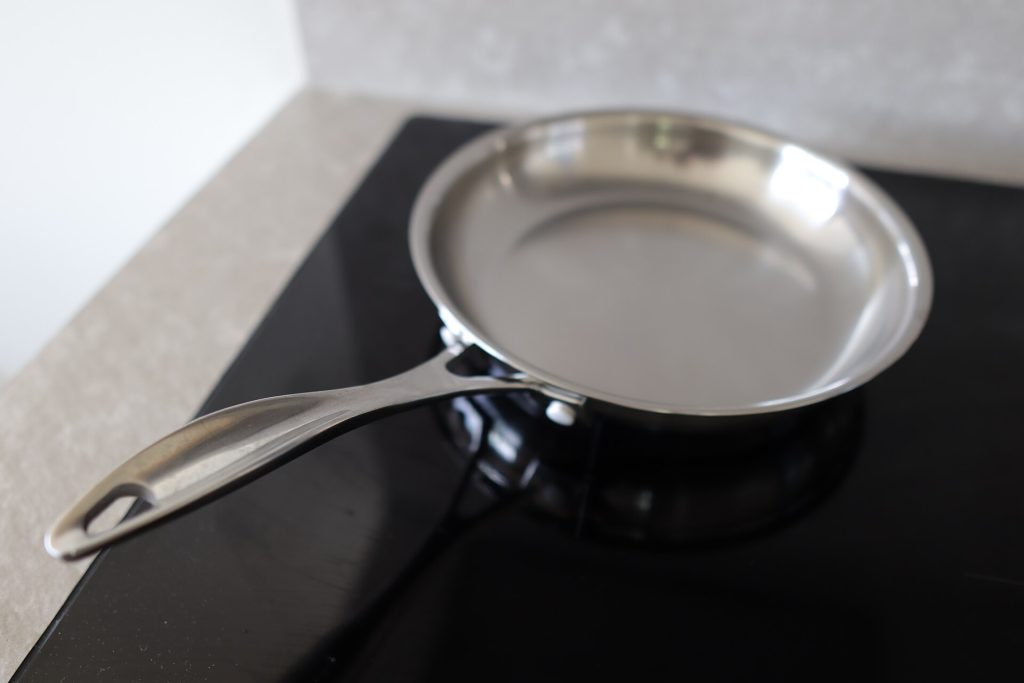
Stainless skillets vary. Most all-metal ones are oven-safe, but check the maker’s temperature rating, particularly if the pan has a plastic or silicone grip or a glass lid.
Care is the same routine
Season it, wash it with warm water, dry it immediately and oil it lightly, exactly as you would cast iron. Some new carbon steel pans ship with a protective coating that has to be removed first, so read the maker’s instructions before its first use. Expect it to darken and look patchy for a while. That’s the seasoning building up, not damage.
Stainless steel: the low-maintenance workhorse
Many stainless steel skillets are built with an aluminium or copper core sandwiched between layers of steel. The core spreads the heat, and the steel surface is tough, non-reactive and happy in the dishwasher.
Where it shines
- Tomato sauces, wine reductions and lemon butter, with no worry about seasoning or metallic flavours.
- Pan sauces. The browned bits that stick to stainless are exactly what you deglaze into a sauce.
- Low maintenance. No seasoning, no oiling, no rust worries.
Where it frustrates
Food sticks if the pan isn’t hot enough or you move it too soon. Heat the pan first, add oil, then add the food and leave it until it releases naturally. Eggs remain the hardest test; many cooks keep a separate pan for them.
A note on induction
Induction only works with magnetic cookware, which in practice means it must contain iron, as the Massachusetts Clean Energy Center explains. Cast iron and carbon steel are both iron-based, so they’re fine. Most stainless is compatible, but not all. Cornell Cooperative Extension of Tompkins County suggests the easiest check: hold a magnet to the bottom, and if it sticks, the pan will work.
Which skillet suits you
- The weekend searer: steaks, smash burgers, cornbread and roast chicken. Buy cast iron.
- The fast weeknight cook: eggs, fish, quick vegetables and stir-fries. Buy carbon steel.
- The sauce maker: tomato dishes, braises and anything deglazed with wine. Buy stainless.
- Wrists or lifting a concern: carbon steel or stainless, since a large cast iron skillet is genuinely heavy.
- Induction hob: any of the three, after a magnet test on the stainless.
Once you’ve picked, see our kitchen gear guides for what to pair it with, starting with a good chef’s knife.
Skillet FAQ
Is carbon steel better than cast iron?
Neither is better overall. Carbon steel is lighter and more responsive; cast iron holds more heat and is more forgiving for searing. Choose by the food you cook most.
Can I cook tomato sauce in cast iron?
Briefly, yes, in a well-seasoned pan. Long simmers can strip the seasoning, so use stainless or enamelled cookware for slow tomato sauces.
What if my cast iron rusts?
Scrub the rust away, wash, dry thoroughly, and re-season with a thin coat of high-temperature oil baked on in the oven.
Does stainless steel need seasoning?
No. Proper preheating and enough oil are what keep food from sticking.
Start with the one you’ll use most
Look at what you cooked last week. If most of it was seared, buy cast iron. If it was quick and delicate, go carbon steel. If it was saucy, go stainless. Then cook in it often; every pan gets better with use. For ideas, try our favourite one-pan dinners.
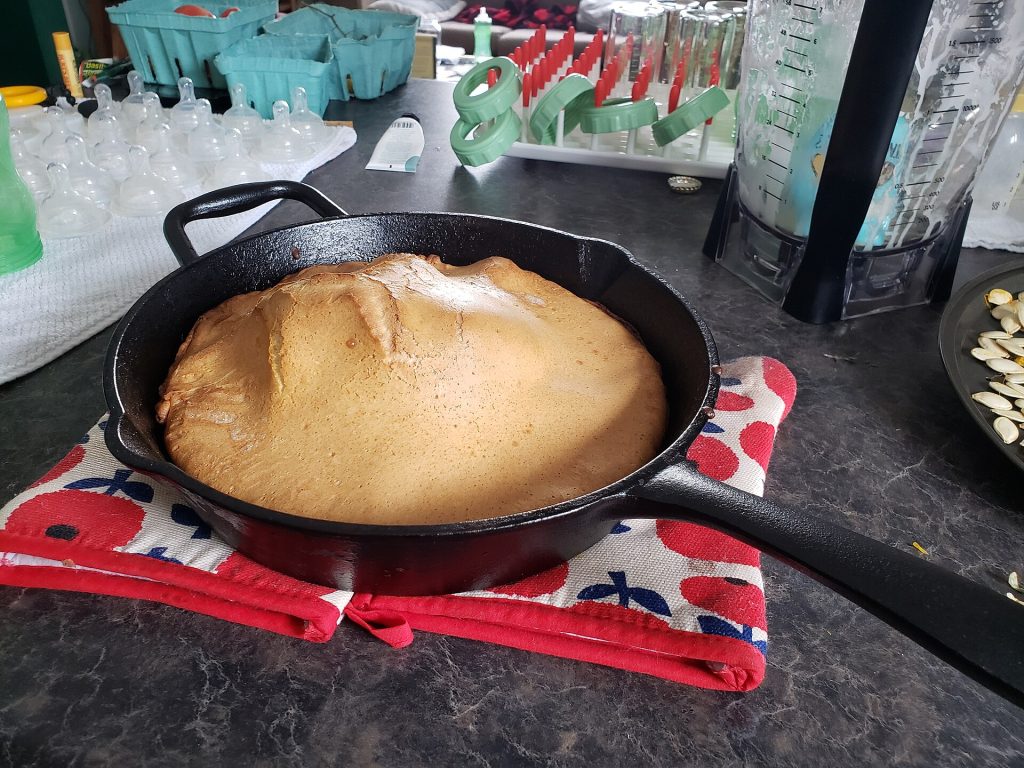
Featured photo: Cast iron dutch baby on oven mitts by Taylorderek, BY-SA 4.0.