Ordering healthy at restaurants is less about finding the one virtuous dish and more about a few habits: read how the food is cooked, get sauces and dressings on the side, and treat the portion as something you can share or box up. Those moves work on almost any menu, from a diner to a tasting counter.
A lot of popular advice misses the point. Salads get a halo, the word “grilled” gets trusted blindly, and gluten-free gets mistaken for a health claim. Meanwhile, the simplest levers, portion and preparation, get ignored.
Below we take six common myths one at a time and set them against guidance from the FDA, the National Institutes of Health and the American Heart Association. This is general eating-out advice, not medical guidance, so if you follow a diet for a health condition, your own clinician’s advice comes first.
Key takeaways
- Salads can carry as much fat as a main once dressing, cheese and crispy toppings pile on.
- “Grilled” is a good sign, but ask how the dish is finished; butter and sauces change it.
- FDA menu calorie rules apply to chains with 20 or more locations, not every restaurant.
- NIH notes restaurant portions have nearly doubled over a 20-year span; sharing or boxing half is the simplest fix.
- Gluten-free is a claim about gluten, not about calories or nutrition.
Six myths at a glance
Here’s the quick version before we go myth by myth.
| Myth | Fact |
|---|---|
| A salad is always lighter than a main | Dressing, cheese and fried toppings can make it as heavy as a burger |
| Grilled always means healthy | Grilling is a good method, but butter, glazes and sauces still count |
| Every restaurant has to show calories | Only chains with 20 or more locations are covered by FDA menu labeling |
| The plate is one portion | Restaurant portions have grown; many plates are really two meals |
| Sauce on the side changes nothing | It puts you in charge of how much you use |
| Gluten-free food is healthier | The label is about gluten only; it says nothing about nutrition |
Myth 1: The salad is always the lighter choice
A salad starts as vegetables, which is why it gets a health halo. What arrives at the table can be a different story: creamy dressing, a handful of cheese, candied nuts, bacon and crispy fried chicken or tortilla strips on top. Built like that, it’s a main course in disguise.
The American Heart Association suggests asking for dressings, cheese, toppings and sauces on the side, and steering away from menu words like extra crispy, creamed and stuffed. Apply both to the salad menu and you’ll usually end up with a genuinely lighter lunch.
Build a better salad
- Pick grilled, roasted or poached protein instead of fried.
- Ask for dressing on the side and use about half.
- Keep one rich topping, such as cheese or avocado, rather than three.
- Add extra vegetables where the menu allows swaps.
Myth 2: Anything labelled grilled is a safe bet
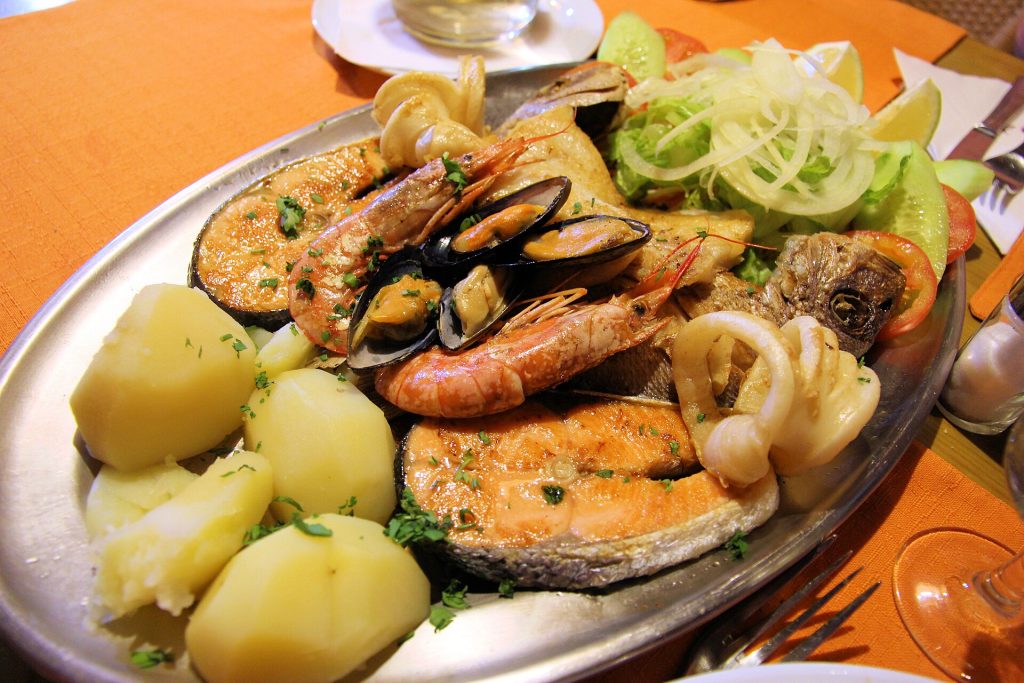
The AHA lists grilled, sautéed, roasted, steamed, baked and poached as the preparation methods to look for, so grilled is a genuinely good sign. The myth is that the word ends the conversation. A grilled steak can be brushed with butter before it leaves the kitchen, and grilled chicken can arrive in a sweet glaze or on a bed of creamy mash.
The fix is simple: ask. The AHA encourages diners to ask how a dish is prepared and to request healthier cooking oils. Most kitchens are used to requests like “no butter on top” or “sauce on the side”, and a good server will tell you what’s added at the end.
Myth 3: Every menu shows the calories
Calorie numbers on menus feel like they’re everywhere now, but the rule has limits. Under the FDA menu labeling requirements, calorie counts are required at restaurants and similar food businesses that are part of a chain with 20 or more locations operating under the same name and selling substantially the same menu. The compliance date was May 7, 2018. Your local independent bistro isn’t covered.
Where the rule does apply, menus must also carry a statement that 2,000 calories a day is used for general nutrition advice but calorie needs vary, and tell you that more nutrition information is available on request. That written information covers total calories, fat, saturated fat, trans fat, cholesterol, sodium, carbohydrates, sugars, fiber and protein.
How to use the numbers
- Compare two dishes you’d happily eat, rather than hunting for the lowest number on the menu.
- Ask for the full nutrition sheet if you’re watching sodium; it’s often the surprise.
- At independent restaurants, fall back on preparation and portion cues.
How it’s cooked and how much lands on the plate matter more than any single menu buzzword.
Myth 4: One plate means one portion
Restaurant plates are generous, and that’s the biggest lever most of us ignore. The National Heart, Lung, and Blood Institute notes that the amount of food on your plate when eating out nearly doubled over a 20-year period. Its portion distortion comparisons show a bagel growing from a 3-inch, 140-calorie version to a 6-inch one of about 350 calories, and a plate of spaghetti and meatballs rising from about 500 calories to 1,020.
You don’t have to leave hungry to respond to this. The AHA’s suggestion is to share an entrée or set aside half to take home before you start eating, and to split extras like appetizers, fries and desserts.
- Ask for a box when the food arrives, not at the end.
- Order a starter and a side instead of a main.
- Share dessert; three bites is usually all you wanted anyway.
Myth 5: Sauce on the side makes no difference
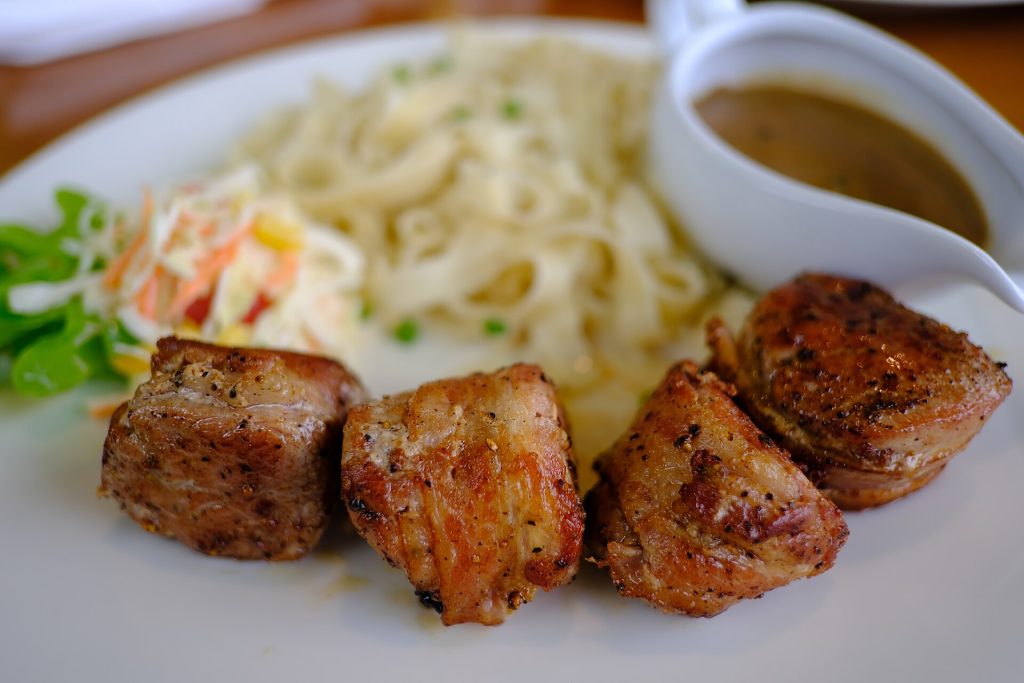
Dressing, gravy, butter and sauces are where a lot of a dish’s richness hides. When they’re poured on in the kitchen, you get the kitchen’s idea of the right amount. When they come on the side, you decide.
That’s why the AHA recommends asking for them on the side. Dip your fork into the dressing before each bite of salad, or spoon a little sauce over the part you’re eating. You still get the flavour, usually with much less of the sauce.
Myth 6: Gluten-free means healthier
Gluten-free options are a real help for people who need them, but the label isn’t a nutrition claim. According to the FDA gluten-free labeling rule, gluten-free means a food contains less than 20 parts per million of gluten. The rule is about gluten alone, and naturally gluten-free foods can carry the label without any special health benefit.
On restaurant menus, the FDA rule applies to packaged foods rather than restaurant dishes, though the agency recommends that restaurants making a gluten-free claim follow the same definition. If you need to avoid gluten for medical reasons, ask directly about shared fryers and prep surfaces. If you don’t, judge a gluten-free pasta or brownie the way you’d judge any other: by preparation and portion.
FAQ
What is the healthiest thing to order at a restaurant?
There’s no single dish. A good pattern is vegetables plus a grilled, baked, roasted or poached protein, with sauces on the side and a sensible portion.
Do all restaurants have to post calories?
No. FDA menu labeling applies to chains with 20 or more locations selling substantially the same menu items. Independent restaurants usually aren’t covered.
Is it rude to ask for changes to a dish?
Simple requests like dressing on the side or no butter on top are routine. Keep them short, and accept that some dishes can’t be changed.
Does gluten-free mean lower in calories?
No. The FDA definition only covers gluten content, so a gluten-free dish can be just as rich as the regular version.
Your plan for the next meal out
Next time you eat out, try just two moves: ask for sauces and dressings on the side, and decide before the first bite how much you’ll take home. For more ideas, read our eating out guides, learn how to read a restaurant menu, pick your next spot from the restaurant directory, and keep healthy eating at home simple the rest of the week.
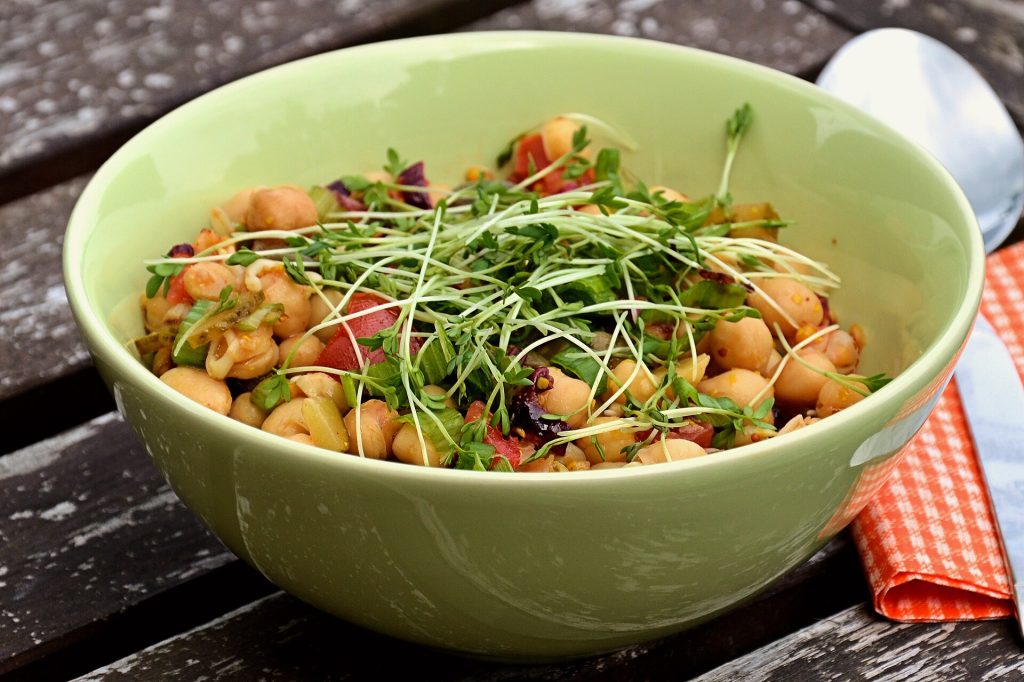
Featured photo: Plant-fruit-bowl-dish-food-salad-1200225-pxhere by Unknown authorUnknown author, CC0.