A good fall pantry checklist does four jobs: clear out what’s gone stale or unsafe, decode the dates on everything else, store staples so they last, and restock before holiday baking starts. Do it in one afternoon in October and you’ll go into November knowing exactly what you have, with fresh baking powder and no surprise moths in the flour.
The checklist below works shelf by shelf. Tick things off as you go, and use the storage table in the middle as a reference you can come back to all year.
Key takeaways
- “Best if Used By” is a quality date, not a safety date, and most date labels aren’t federally required.
- Throw out cans that are bulging, deeply dented on a seam, or heavily rusted.
- Low-acid canned goods keep 2 to 5 years; high-acid ones like tomatoes keep 12 to 18 months.
- Test baking powder and baking soda before holiday baking; both lose strength over time.
- Tight-lidded containers, not plastic bags, are the best defence against pantry pests.
Empty, sort and clean the shelves
Start with a clean slate. Pulling everything out lets you see what you actually own, and it’s the only way to spot a pest problem in the back corners.
- ☐ Take everything off one shelf at a time and put it on the counter.
- ☐ Group items by type: baking, grains and pasta, cans, oils and vinegars, spices, snacks.
- ☐ Vacuum corners and crevices, then wash shelves with soap and water and let them dry.
- ☐ Wipe sticky jars and bottle necks before they go back.
- ☐ Set aside a box for unopened, in-date food you won’t use, to donate.
That vacuum-then-wash step comes straight from the University of California’s pest management program, which recommends it to remove insect eggs and pupae that hide in cracks.
Read date labels the right way
Date labels cause more pantry waste than almost anything else. The USDA’s Food Safety and Inspection Service is clear that, except for infant formula, product dating isn’t required by federal regulations, and most dates are about quality, not safety. USDA estimates that 30 percent of the food supply is lost or wasted at the retail and consumer levels, and confusion over dates is part of that.
- Best if Used By / Before: when the product will be at its best flavour or quality. Not a purchase or safety date.
- Sell-By: how long the store should display the product. Not a safety date.
- Use-By: the last recommended date for peak quality. Not a safety date, except on infant formula.
- Freeze-By: when to freeze the product to keep peak quality. Not a purchase or safety date.
USDA says food stored properly stays safe past these dates until spoilage is evident. So an old box of pasta isn’t dangerous; it may just taste flat. Use your eyes and nose, and let quality decide.
A date on the box tells you when food tastes best. Your nose and the condition of the package tell you whether it’s still worth keeping.
- ☐ Move anything past its best-by date to the front so it gets used first.
- ☐ Taste-test old crackers, nuts and cereals; toss anything stale or rancid.
- ☐ Write the opening date on flour, sugar and oil with a marker as you put them back.
Check cans, oils and baking staples
Cans
The USDA’s shelf-stable food guidance says to store cans somewhere cool and dry, ideally below 85°F, and never above or beside the stove, under the sink or in a damp garage or basement.
- ☐ Discard any can that is swollen or bulging.
- ☐ Keep cans with small dents you can lay a finger into; discard deeply dented cans, especially on a seam.
- ☐ Keep cans with light surface rust that rubs off; discard heavily rusted ones.
Oils and flours
Penn State Extension’s guide to storing staple ingredients says vegetable oil keeps 6 to 12 months unopened and 1 to 6 months once opened, in a cool, dark place. Nut and seed oils such as walnut and sesame keep for less time. Whole wheat flour has natural oils that go rancid quickly at room temperature, so the same guide recommends refrigerating it year-round.
- ☐ Sniff every opened oil and replace any that smells stale or off.
- ☐ Move whole wheat and other whole-grain flours to the fridge or freezer.
- ☐ Keep white flour in a sealed container; it lasts longer at room temperature than whole wheat.
Leaveners and spices
Baking powder and baking soda are the two ingredients most likely to let you down mid-recipe. Penn State Extension offers two quick tests.
- ☐ Baking powder: stir 1 teaspoon into ⅓ cup hot water. Vigorous foaming means it still has rising power.
- ☐ Baking soda: add 1 tablespoon of vinegar to 1½ teaspoons of soda. If it fizzes, it’s still good.
- ☐ Ground spices: check aroma after six months; if cinnamon or ginger smells faint, replace it before pie season.
- ☐ Whole spices: cinnamon sticks, whole nutmeg and cloves can keep their quality beyond two years.
How long pantry staples keep
Use this table when deciding what to keep. The times are for quality, not safety, and assume good storage.
| Staple | How long it keeps | Where to store it |
|---|---|---|
| Low-acid canned goods (meat, beans, most vegetables) | 2 to 5 years | Cool, dry cupboard below 85°F |
| High-acid canned goods (tomatoes, fruit) | 12 to 18 months | Cool, dry cupboard below 85°F |
| All-purpose and bread flour | Up to 2 years refrigerated; indefinitely frozen | Airtight container |
| Whole wheat flour | Best kept cold year-round | Refrigerator or freezer |
| Vegetable oil | 6–12 months unopened; 1–6 months opened | Cool, dark place |
| Ground spices | Check after 6 months | Airtight, away from heat and light |
| Whole spices | Beyond 2 years | Airtight, away from heat and light |
| Honey | Essentially indefinitely | Tightly covered at room temperature |
Sources: USDA FSIS for canned goods; Penn State Extension for flour, oil, spices and honey.
Keep pantry pests out
Pantry moths and beetles love the bags of flour, grains and nuts that pile up before the holidays. The UC program’s advice is refreshingly low-tech, and it says insecticides aren’t recommended for pantry pests at all.
- ☐ Check packages for webbing in tight corners or tiny holes; both are signs of infestation.
- ☐ Throw away any food with evidence of pests. It can’t be salvaged.
- ☐ Store flours, grains, nuts and pet food in containers with tight-fitting lids, not plastic bags.
- ☐ Keep rarely used flours, spices and grains in the freezer if you have room.
- ☐ Put out a pheromone trap labelled for pantry pests to catch any stragglers after a clean-out.
Restock for holiday baking
Now shop with a list built from what you found. This is a typical baseline for a season of cookies, pies and quick breads; adjust it to your family’s favourites.
- ☐ All-purpose flour, plus a smaller bag of whole wheat for the freezer
- ☐ Granulated, brown and powdered sugar
- ☐ Fresh baking powder and baking soda
- ☐ Pure vanilla extract
- ☐ Ground cinnamon, ginger, nutmeg and cloves, if yours failed the sniff test
- ☐ Chocolate chips and cocoa powder
- ☐ Nuts for pies and cookies, stored in the freezer
- ☐ Rolled oats, cornstarch and salt
- ☐ Canned pumpkin and evaporated milk
- ☐ Neutral oil and a stick or two of butter in the freezer
Keep brown sugar soft by storing it in a tightly closed container with a slice of apple or bread, a tip from the same Penn State guide. For more make-ahead ideas, see our holiday baking tips and the rest of our kitchen lifestyle guides.
FAQ
Is food safe after the best-by date?
Usually, yes. USDA says best-by dates are about quality, and properly stored food stays safe until you see signs of spoilage. Infant formula is the exception.
How often should I clean out my pantry?
A full reset once or twice a year works for most households, with a quick check of flours and grains every few months for signs of pests.
Can I freeze flour?
Yes. Penn State Extension says all-purpose and bread flour can be stored indefinitely in the freezer, and freezing is also a good way to protect it from pests.
What should I do with dented cans?
Small dents you can lay a finger into are fine. Discard cans with deep dents, sharp points or dents on a seam, along with any that are bulging or heavily rusted.
Your pantry reset weekend
Pick one afternoon this month, grab a marker, a box for donations and a roll of labels, and work through the checklist shelf by shelf. By the end you’ll have a clean pantry, a restock list and fresh leaveners ready for your first batch of pumpkin bread.
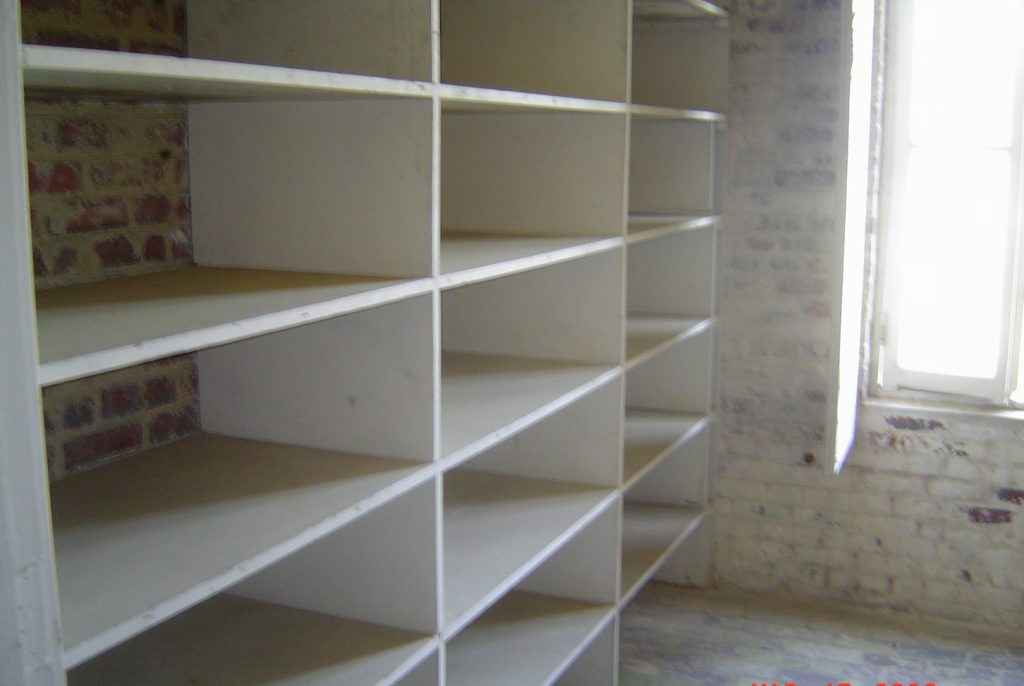
Featured photo: Atalaya pantry by User:Doug Coldwell, BY-SA 3.0.